
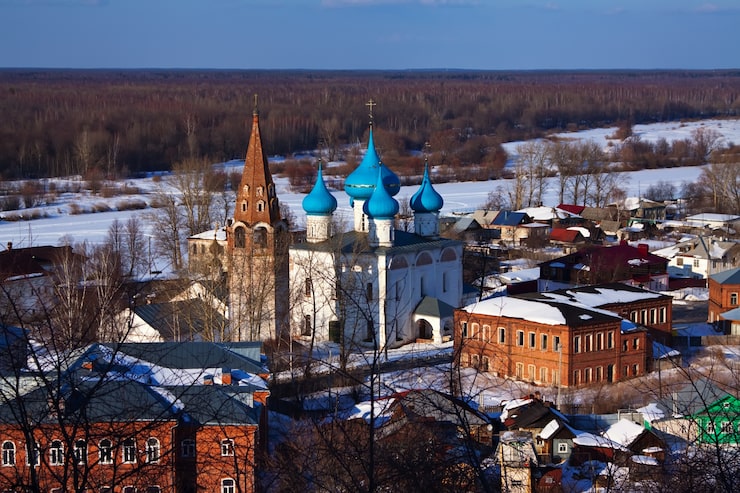
Russia has taken a significant step in fostering closer relations with China by implementing a visa-free policy for Chinese citizens. This new policy, which was signed into law by Russian President Vladimir Putin, allows Chinese nationals to travel to Russia for various purposes such as tourism, business, and family visits without the need for a visa. The reciprocal arrangement is designed to enhance tourism, trade, and exchanges between the two nations, contributing to their mutual economic growth.
Russia’s Visa-Free Policy for Chinese Nationals
As part of a broader diplomatic effort to strengthen bilateral ties, the Russian government has introduced a new measure that permits Chinese citizens to stay in Russia for up to 30 days without the need for a visa. This move is part of a series of measures aimed at fostering stronger cultural, scientific, and economic connections between the two countries. The visa-free arrangement covers a range of purposes, including business trips, tourism, participation in cultural or sporting events, and even transit.
The executive order, signed by President Vladimir Putin, went into effect immediately upon announcement and will remain valid until September 14, 2026. This policy is seen as a reciprocal gesture in response to China’s earlier decision to grant Russian nationals the same privileges, thus deepening the bonds between the two nations.
Immediate Impact: Surge in Travel Interest
The announcement of the visa-free policy has created an immediate surge in interest among Chinese citizens for trips to Russia. Popular online travel platforms, such as Qunar, reported a dramatic increase in search activity for Russian travel options. In the hours following the announcement, searches for flights from Hangzhou to St. Petersburg more than tripled, while searches for Beijing to Moscow flights rose by 44 percent. This surge highlights the excitement and eagerness among Chinese citizens to visit Russia under the new policy.
Li Yanqiu, a 35-year-old resident of Beijing, expressed her enthusiasm about the new policy. Having previously visited Kazan, a city in western Russia, on a business trip in 2018, Li was impressed by the country’s natural beauty and culture. Now, she sees this as an ideal opportunity to explore other parts of Russia, particularly Lake Baikal in Siberia and Moscow, with her family.
Boosting Cross-Border Tourism
According to Wei Changren, the founder of btiii.com, a tourism financial news platform, two primary routes are traditionally popular among Chinese travelers visiting Russia: Moscow and St. Petersburg, and Russia’s Far East region. The new visa-waiver policy is expected to significantly boost cross-border tourism between the two nations, as it simplifies travel logistics and encourages more Chinese citizens to explore Russian cities.
The Principle of Reciprocity: A Bilateral Agreement
This new visa-free initiative is based on the principle of reciprocity. The policy follows China’s recent implementation of a similar measure for Russian nationals. On September 15, China introduced a one-year trial of a 30-day visa-free stay for Russian citizens holding ordinary passports. This reciprocal arrangement is aimed at enhancing people-to-people exchanges and facilitating tourism, business, and other forms of collaboration between the two countries.
The visa-free status granted to Russian nationals in China, like the one extended to Chinese nationals in Russia, is set to expire on September 14, 2026, aligning with the timeline of Russia’s own policy. This mutual understanding reflects both countries’ desire to further deepen their strategic cooperation.
Russian Tourists Explore China’s Popular Destinations
Russian citizens have already started to take advantage of China’s visa-free policy. Inna Klochko, a 53-year-old from Vladivostok, recently visited Harbin in Northeast China. Klochko, who had previously visited the city twice, was thrilled with the ease of travel under China’s new visa-free arrangements. During her trip, she enjoyed Harbin’s European-style architecture, its delicious cuisine, and relaxing hot springs, which contributed to her desire to return.
Inna particularly appreciated the ease with which she could navigate China’s customs procedures. Previously, applying for a visa could be a time-consuming and cumbersome process, but now, travelers like Klochko can complete the process electronically using a mobile app, significantly reducing wait times at customs.
The tourism industry has already felt the positive effects of this policy. Harbin Trip of Garden International Tour Co, a local travel agency, reported that it has received more than 400 Russian tourists in just the past two months, marking a 30 percent increase in business year-on-year. Russian visitors typically travel from cities like Vladivostok and Khabarovsk and frequently visit other major Chinese destinations such as Beijing, Shanghai, and Xi’an.
A Strategic Move for Economic and Cultural Growth
Zhang Jinshan, a researcher of tourism planning and development at Beijing Union University, highlighted the long-standing relationship between Russia and China, particularly due to their shared land border. This geographical proximity provides China with a large outbound tourism market, making the visa-waiver policy an essential driver for future tourism growth.
Zhang emphasized that the reciprocal visa-waiver policy is poised to stimulate not only tourism but also contribute to revitalizing traditional industrial zones in Northeast China and Russia’s Far East region. These regions stand to benefit economically as people-to-people exchanges increase, driving demand for services and infrastructure improvements.
Moreover, Russia’s decision to implement the visa-free policy is part of its broader strategy to strengthen its strategic cooperation with China. As both countries have been actively promoting economic and trade exchanges, facilitating easier travel will likely lead to greater opportunities for business collaboration and increased investment in both regions.
Conclusion: A Bright Future for Russian-Chinese Relations
The new visa-free policy between Russia and China marks a milestone in their diplomatic and economic relationship. By removing travel barriers, both countries stand to gain not only in tourism but also in business, culture, and people-to-people exchanges. The success of these initiatives is expected to lay the foundation for even closer ties in the years to come, with both nations looking forward to a future of deeper cooperation and mutual growth.
The post Russia Opens Doors to Chinese Tourists: No Visa Needed! What This Means for China and Russia’s Economic Boom appeared first on Travel And Tour World.
