

Navi Mumbai International Airport (NMIA) has started operation, a major achievement for the city of Mumbai and the infrastructure development of the whole nation. It paves the way for the city of Mumbai to be at par with international airports in metropolitan cities such as London, New York, Tokyo, and Shanghai, which have multiple airports to handle the growing number of air travelers. The opening of NMIA will mark a new beginning for the city of Mumbai as a multi-airport city to ensure scalability and sustainability for the aviation segment in the days to come.
This project is owned and carried out by Adani Airports Holdings Limited (AAHL), a wholly owned subsidiary of Adani Enterprises Limited (AEL). NMIA is one of the largest Greenfield projects for an airport in India. It is proposed to reduce pressure on Chhatrapati Shivaji Maharaj International Airport (CSMIA) and showcases the efficiency of the Adani Group in carrying out large projects that have a direct relation to India’s economic development.
A Landmark Event for Mumbai’s Travel and Tourism Impact
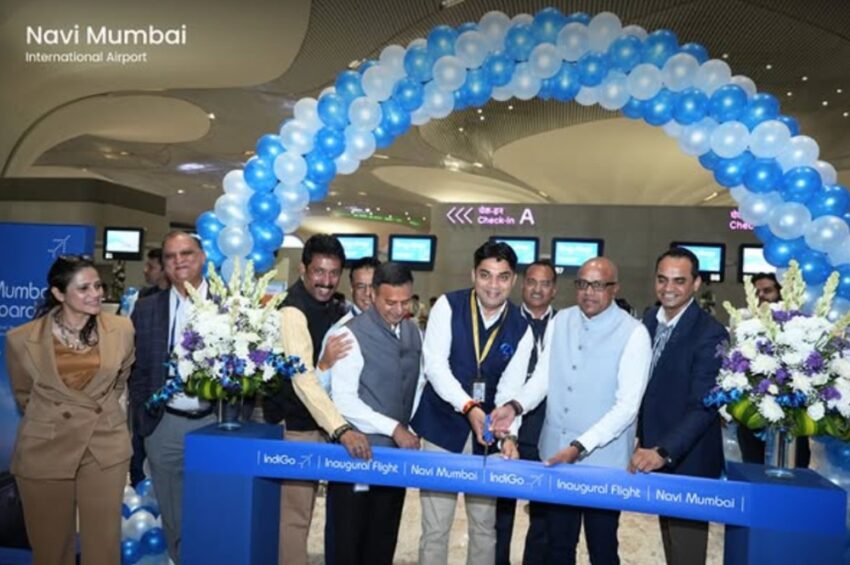
The opening of NMIA marks an important shift in Mumbai’s travel landscape, offering new opportunities for tourists, business travelers, and the aviation industry at large. The inaugural commercial flight, IndiGo flight 6E460 from Bengaluru, landed at 08:00 hours and was welcomed with a traditional water cannon salute. On its first day of operation, NMIA handled 48 flights, connecting nine domestic destinations, and served over 4,000 passengers, signaling strong travel demand right from the start.
The peak traffic recorded between 05:00 and 07:00 hours indicates early success in attracting passengers, showcasing the airport’s operational readiness and efficiency. The positive travel impact of this development will likely reverberate through Mumbai’s broader tourism and economic landscape, making it easier for both domestic and international visitors to explore the city and surrounding regions.
Expanding Mumbai’s Travel Connectivity with a Multi-Airport System
The commencement of operations at NMIA introduces a true multi-airport system for Mumbai, one that is crucial for handling the city’s increasing aviation demands. As one of the world’s fastest-growing urban centers, Mumbai requires expanded infrastructure to cater to the growing tourism and business travel sectors. This new airport will reduce the pressure on CSMIA, which has been operating at near full capacity for years, and provide additional travel routes to meet increasing passenger demand.
For travelers, the new airport means more options and shorter flight times between popular destinations, facilitating easier and quicker access to Mumbai and the broader Maharashtra region. Additionally, the multiple-airport system will allow for more efficient travel connections, enabling visitors to explore the city with greater flexibility and ease, boosting tourism growth in the region.
Travel Impact: Increasing Regional Connectivity and Tourism Growth
The new NMIA will have a direct travel impact by significantly enhancing regional connectivity for both domestic and international travelers. With an expanded aviation network, the airport will serve as a gateway for tourists to explore Mumbai and the broader Maharashtra region. The increased connectivity also strengthens India’s tourism industry, providing visitors with more convenient and efficient travel routes to key cultural, business, and leisure destinations across the country.
As tourism demand rises, the new airport will help spread the tourism load more evenly, preventing overcrowding at existing hubs. This will allow for a more sustainable growth model where regional areas can benefit from increased travel and tourism spending, further diversifying the economic impact of tourism in Mumbai.
Supporting Sustainable Travel and Tourism Growth
The sustainability of travel is central to NMIA’s design and ongoing operations. The airport has been developed with environmentally conscious measures, ensuring that tourism growth is achieved in a manner that minimizes its impact on the surrounding environment. This focus on sustainable tourism development ensures that the region can continue to attract tourists while preserving the natural beauty and cultural heritage that make Mumbai and Maharashtra such valuable destinations.
The implementation of green building standards and eco-friendly practices in the airport’s infrastructure aligns with India’s long-term goals of fostering sustainable tourism that benefits local communities and preserves natural resources. By focusing on responsible growth, NMIA sets a precedent for future airport developments, promoting a balance between economic growth and environmental stewardship.
Government Support and Investments for Tourism Infrastructure
Government support plays a key role in bolstering the region’s tourism infrastructure. Initiatives focused on tourism development, such as new hospitality facilities, improved public transit, and enhanced public services, will ensure that Mumbai remains ready to handle the anticipated influx of visitors. Moreover, projects like the Metro Mumbai Destination Development Strategy are designed to ensure tourism growth remains sustainable, with a focus on preserving the cultural and natural resources that make Mumbai such an attractive destination.
As travel demand for Mumbai continues to rise, investments in tourism infrastructure are expected to further enhance the visitor experience, improving overall travel accessibility while ensuring that Mumbai remains an appealing destination for international and domestic tourists alike.
A Glimpse into the Future: Strengthening Mumbai’s Travel and Tourism Position
Looking forward, NMIA is set to play a key role in shaping Mumbai’s travel and tourism future. With continued investment in aviation infrastructure, route development, and tourism marketing, the airport will serve as a cornerstone of Mumbai’s tourism economy. By offering more international connections and facilitating easier travel, NMIA is expected to significantly impact the region’s tourism growth, providing opportunities for both business and leisure travel.
The new airport is also a stepping stone towards building a global aviation hub for Mumbai, facilitating global connectivity and helping the city strengthen its position as an international business and tourism destination. With its focus on sustainability, infrastructure expansion, and enhanced tourism services, NMIA will contribute to the long-term growth of both the aviation sector and tourism industry.
Empowering Mumbai’s Future Tourism Growth
The commissioning of the Navi Mumbai International Airport is expected to be a major change-over for Mumbai; in that, Mumbai is poised to enter the league of exemplary destinations for regional travel and tourism expansion. NMIA is poised to ensure easy connectivity with Mumbai as well as other regions.
The positive travel impacts resulting from NMIA will continue to emerge in the coming years with improvements in international connectivity. NMIA will be at the forefront of ensuring that Mumbai is transformed into one of the prime destinations globally, while ensuring that the region is an attractive place for future travelers while maximizing growth.
Image Sourxe: Navi Mumbai International Airport
The post Navi Mumbai International Airport Begins Commercial Operations, Marking a Major Expansion in Aviation Capacity and Regional Connectivity Growth of Mumbai appeared first on Travel And Tour World.
