
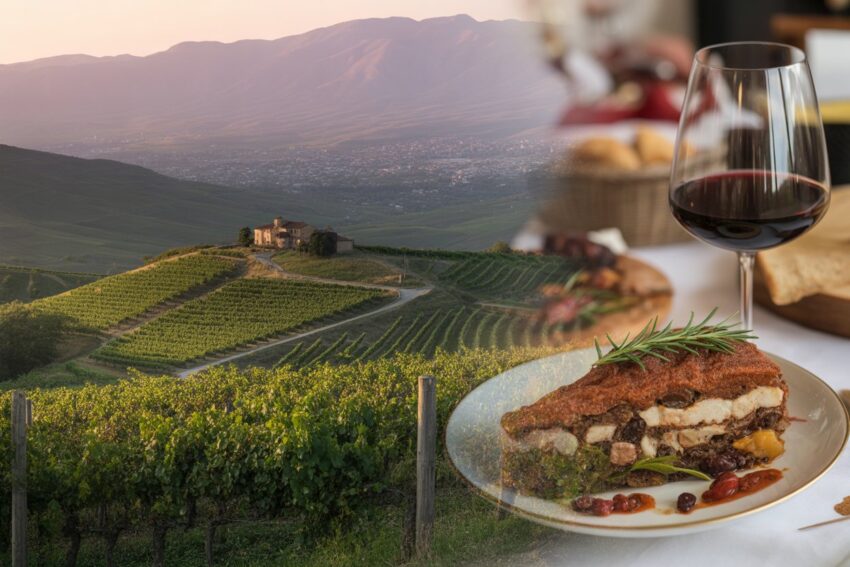

Wine is not just a drink in Georgia – it’s an essential part of the very fabric of the nation’s identity, deeply interwoven with its history, cuisine, and culture. For centuries, wine has been more than a mere beverage; it has been used as a healing remedy, a staple in Georgian cuisine, and a symbol of tradition. With an ancient history that traces back to the origins of viticulture, Georgia is often regarded as the cradle of wine, and the wine culture here transcends generations, weaving itself into every aspect of Georgian life.
Wine is central to Georgia’s identity. From traditional remedies and intricate cooking techniques to modern-day rituals and innovations, it is the cultural and culinary soul of the country. Let’s dive into how wine has shaped Georgia’s past, present, and future, making it a country where every bottle tells a story.
Wine as Georgia’s Traditional Remedy: More Than a Beverage
In Georgia, wine has always been much more than just something to drink. For centuries, wine was revered for its supposed medicinal properties. Before the advent of modern medicine, wine was considered a remedy for a wide range of ailments. Wine vinegar mixed with hot red wine and honey was often used as a cure for conditions like anemia, fatigue, and digestive issues.
One notable example is Ghvinis Tbili—meaning “wine’s heat”—a traditional drink originating from the Guria region. This concoction of red wine and spicy seasonings was believed to be an effective remedy for stomach discomfort, especially after indulging in fatty foods. Such ancient remedies reflect a deep-rooted belief in the healing power of wine, which was passed down through generations.
Beyond its medicinal uses, wine was used to elevate spirits and connect people. Whether shared at family gatherings or consumed during religious rituals, wine has always had a transformative role in the Georgian way of life.
Wine and Grape Juice in Georgian Cuisine: The Backbone of Flavour
Georgia’s culinary traditions have always been enriched by wine. Wine and grape juice are essential ingredients in many Georgian dishes, enhancing the flavour and texture of everything from meats and vegetables to desserts. Wine’s role in Georgian cuisine is profound, and its use transcends the ordinary – it is both a flavouring agent and a central component of the national identity.
Some of the most iconic Georgian dishes, like chakapuli (a spring dish made with veal or lamb, fresh herbs, plums, and tarragon, finished with white wine), showcase the ability of wine to bring balance and depth to food. The dish is a prime example of how wine is used to elevate the entire experience, uniting complex flavours. In Racha, the use of wine in dishes like Ghvinitbili (crushed walnuts with garlic, caraway, salt, and boiled wine) exemplifies how deeply wine is embedded in regional Georgian food practices.
Georgian culinary traditions often incorporate wine in unusual and delightful ways, such as Majigaro, a dish made from wine dregs, mixed with flour, salt, garlic, and boiled over an open flame. Even in modern-day Georgian food culture, cheese is now often aged in wine, particularly the robust Saperavi variety, which has become a popular practice in the Georgian food scene.
Red and White Wine: Rituals and Regional Specialties
In Georgia, wine is not only for consumption; it is an integral part of spiritual and regional rituals. For centuries, Boghlitso—a dish made of bread dipped in red wine—was a staple for monks and religious figures. This simple yet meaningful tradition reflects how wine has transcended the dining table to become a sacred ritual.
The Ghvinitbili from Racha, a region where food traditions often blend with mysticism, offers another example of wine’s role in sacred and regional rituals. The dish consists of wine, crushed walnuts, garlic, and spices, and it’s often eaten as a snack during cultural or religious events. Similarly, kharcho, a savory Georgian soup, traditionally gains its deep, hearty flavour from the addition of red wine, a custom prevalent in the Western Georgian regions, particularly with duck dishes.
In spring, the dish chakapuli is prepared with veal or lamb, fresh herbs, and plums, and it is traditionally finished with white wine, uniting the seasonal produce and transforming it into something extraordinary. Wine has the remarkable ability to heighten and elevate flavours, and Georgians have mastered this craft over centuries.
Wine in Vegetables and Sauces: Adding Depth and Character
Wine vinegar is indispensable in many Georgian dishes, especially in vegetable and walnut-based recipes. Without it, many signature Georgian dishes would lose their characteristic aroma and depth. One prime example is the kindzmari sauce, which is used primarily with fish. This sauce owes its complex flavour to the wine vinegar, which adds a tangy yet earthy note that balances the dish perfectly.
Even contemporary Georgian dishes, like salmon in wine sauce, use wine to bring harmony to the flavours. The simplicity of just using coriander, pepper, salt, and wine demonstrates the perfect synergy between Georgian cuisine and wine. It’s no surprise that wine has been an integral part of the national culinary tradition for thousands of years.
Desserts and Healing Comforts: Grape-Based Sweets as a Georgian Tradition
Georgian desserts also showcase the creative use of wine. Ghvinis Khavitsi, a dessert from Guria, is a sweet treat made from red wine and honey. Traditionally, it was given to women after childbirth and those suffering from colds. The wine is boiled with water to reduce the alcohol content and is then sweetened with sugar and honey. The result is a comforting, porridge-like dish believed to fight off illness.
Churchkhela, a beloved Georgian sweet, has become an icon of the country’s culinary tradition. Made from boiled grape juice and nuts, this chewy delicacy was once considered essential for soldiers during military campaigns due to its durability and nourishing properties. Another famous sweet, pelamushi, made from boiled grape juice, continues to be a staple in Georgian households.
These desserts have transcended mere food; they carry a deep cultural significance. They represent not just the flavours of Georgia but the country’s long history of resilience, healing, and shared experiences.
A Living Heritage: The Enduring Legacy of Wine in Georgia
From ancient remedies and ritualistic dishes to modern culinary innovations, wine remains a vital part of Georgia’s identity. It is deeply embedded in the country’s history, culture, and traditions, a connection that has survived for millennia. Georgian wine is not just a beverage; it is a symbol of the resilience, creativity, and hospitality that defines the Georgian people.
Today, wine continues to play a central role in Georgian society. It unites families, friends, and communities in celebrations and rituals. Georgian winemakers are increasingly looking towards the future, blending ancient techniques with modern innovations to bring new life to this age-old tradition. As wine culture flourishes in Georgia, the world continues to discover the magic of this extraordinary country.
Georgia’s wine culture offers an unparalleled connection to the land, history, and people. It is a testament to the enduring legacy of wine that has transcended generations and shaped the soul of the country. Every bottle of Georgian wine carries a story – a story of tradition, resilience, and unbreakable bonds.
The post Georgia’s Secret to Immortality: How Wine Shapes the Country’s Culture, Cuisine, and Health appeared first on Travel And Tour World.
