
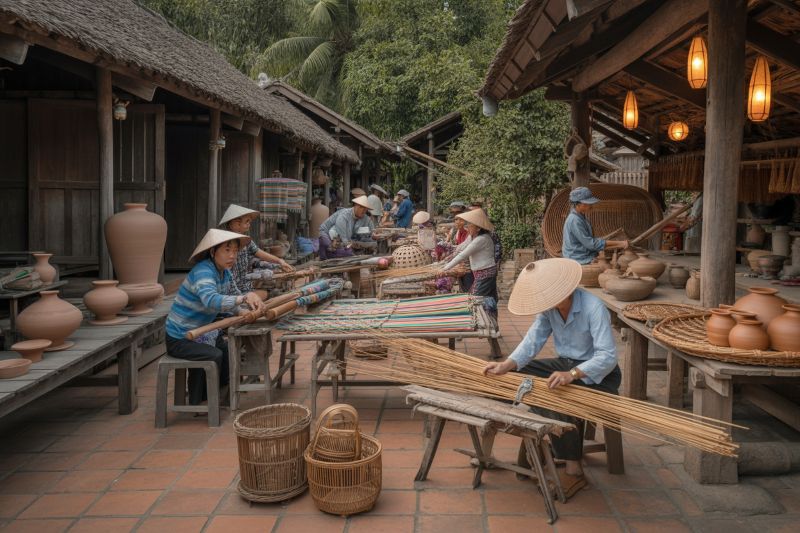

Vietnam, a land of cultural heritage, gives tourists a rare experience through its old craft villages, where the ancient craft traditions are still alive. Just forty km south of the capital, a trip to the most artistic villages in the region shows a bright picture of the survival of the country’s craftsmanship, heritage and dynamic culture.
Cuu Village: A Glimpse into Vietnam’s Past
Cuu Village is a hidden gem, offering a peaceful, nostalgic charm that speaks volumes about Vietnam’s rich architectural and cultural legacy. Once renowned for its wealth, Cuu Village today captivates visitors with its century-old houses and distinctive architecture that blend the old with the new. Its ornate village gates, styled like an open book, welcome guests into a living testament of the village’s history.
The village is home to traditional banyan trees, village wells and communal courtyards, as well as French-style villas built during the colonial period. These mansions, once symbols of prosperity through the village’s booming suit-making industry, are still preserved, offering a glimpse into a bygone era.
Chuyen My: The Heart of Lacquer Inlay
Chuyen My, another stop on this cultural journey, is known for its intricate lacquer inlay art. This art form, passed down through generations, still flourishes here. The village’s ancestral temple, dedicated to the founder of the lacquer inlay craft, stands as a national heritage site, cementing its historical importance.
Visitors to Chuyen My can experience the meticulous craftsmanship of lacquer inlay, with artisans happily showcasing their work. The village has developed its tourism infrastructure, including an exhibition center and a product display hub, to ensure that its traditions are both preserved and shared with the world. With a rich blend of history and modern innovation, Chuyen My remains a testament to Vietnam’s cultural endurance.
Van Tu: Tailoring the Tradition
No visit to these craft villages is complete without a stop at Van Tu, the tailoring capital of Vietnam. Famous for its tradition of creating bespoke Western suits, Van Tu has maintained its craft for over a century. Today, the village boasts nearly 1,000 tailoring establishments, some of which have expanded their reach to international markets.
Dao Ngoc Hung, a local entrepreneur with over 30 years in the tailoring business, shared how the industry is evolving. In addition to producing high-quality garments, many shops in Van Tu now offer tourists the chance to witness the suit-making process, from fabric selection to fittings. With a dedication to preserving and promoting their heritage, the tailoring shops serve as both working studios and educational spaces, giving visitors an insight into a traditional craft.
A Collaborative Effort to Preserve Vietnam’s Heritage
The Hanoi Department of Tourism has played an integral role in preserving these villages’ unique cultures. Through initiatives like the Essence Convergence tour packages, the department aims to highlight the nation’s cultural diversity and craftsmanship. The tour offers a window into the villages of Dai Thanh, Hong Van, Ngoc Hoi, and Chuyen My, with each location telling its own unique story of history, art, and craftsmanship.
Chuyen My, in particular, has collaborated with the Hanoi Department of Tourism to improve its tourism services and attract more international visitors. This partnership underscores the importance of maintaining Vietnam’s craft traditions while also integrating modern tourism development.
Sustainability and Innovation: A Future for Craft Tourism
Chuyen My and Van Tu are prime examples of how tradition can coexist with innovation in tourism. In addition to preserving their craft, these villages are embracing new technologies. Chuyen My, for example, has launched an e-commerce platform, offering online sales and promoting products via social media to reach global customers. This integration of modern commerce with traditional artistry not only sustains the craft but also boosts the local economy.
The villages of Cuu, Chuyen My and Van Tu are setting an example for other regions in Vietnam, showing that cultural preservation and tourism development can go hand in hand. These villages offer more than just historical sites; they provide a living, breathing testament to the enduring spirit of Vietnam’s heritage.
A Rich Cultural Experience for All
For those seeking a deeper connection to Vietnam’s culture, these villages offer an unmatched opportunity. Visitors can explore centuries-old craftsmanship, engage with local artisans, and experience the vibrancy of a living history that is still very much alive today. Whether it’s learning the art of lacquer inlay, watching a tailor craft a bespoke suit, or simply wandering through tranquil, historical streets, these villages offer a window into Vietnam’s soul.
The combination of the past and the present in Cuu, Chuyen My and Van Tu is not only a rich cultural tapestry that deserves to be explored but also an open-air museum that needs to be preserved. The villages nearby Hanoi have a distinct and enlightening experience to offer, which is a world away from the usual tourist route, where guests can be part of the authentic Vietnamese heritage.
The post Journey Through Vietnamese Craft Villages: Hanoi’s Richest Tourism Secrets Revealed! appeared first on Travel And Tour World.
