
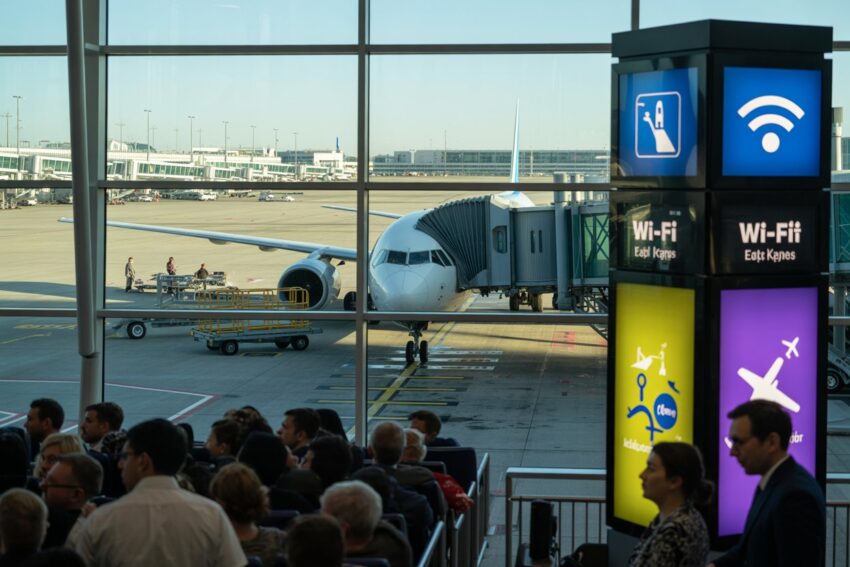

Europe’s largest budget airline Ryanair, based in Ireland, has announced it will not adopt Elon Musk’s Starlink satellite internet service on its aircraft, bucking a broader industry trend toward high-speed in‑flight connectivity. Chief Executive Michael O’Leary explained that the installation would add extra fuel costs due to aerodynamic drag and weight, calculating a roughly 2 percent fuel penalty. Given Ryanair’s short flight profiles and ultra‑low‑cost positioning, the airline says its customers are unlikely to pay extra for Wi‑Fi on flights that typically last around an hour. Meanwhile, a growing number of carriers — from Lufthansa Group to British Airways and others — are equipping aircraft with next‑generation satellite internet systems to enhance the passenger experience. This development affects travelers’ comfort expectations and choice of airline for future trips.
Why Ryanair Said No to Starlink
Ryanair’s leadership argues that Starlink antennas require mounting equipment that could increase fuel consumption due to added weight and drag. For a carrier whose flights average roughly one hour — often between secondary airports within Europe — this cost is significant. Ryanair’s business model prioritizes keeping fares extremely low and turnaround times quick, and it believes that most passengers on short flights do not place high value on Wi‑Fi connectivity.
Elon Musk, founder of SpaceX and Starlink, publicly responded online to challenge Ryanair’s claims, asserting that the airline’s figures are inaccurate and that actual fuel impacts are closer to 0.3 percent with modern equipment.
Airlines Embracing Starlink and Satellite Internet
While Ryanair declines onboard connectivity, other carriers are actively embracing it:
- Lufthansa Group and its subsidiaries (including Austrian Airlines and Brussels Airlines) have announced plans to equip hundreds of aircraft with Starlink‑powered internet, offering passengers high‑speed, gate‑to‑gate connectivity.
- British Airways is rolling out a major Starlink deal to provide free Wi‑Fi for all passengers, aiming to differentiate its onboard experience.
- United Airlines, Air Canada, Qatar Airways, and others have integrated or plan to integrate Starlink as part of broader Wi‑Fi offerings.
This contrast highlights divergent strategies: budget carriers prioritise cost efficiency, while full‑service and premium airlines use connectivity as a competitive advantage.
Advantages for Travelers
Better In‑Flight Connectivity with Starlink
For passengers flying with airlines that adopt Starlink, high‑speed satellite internet means the ability to stream video, conduct video calls, check work emails, and stay connected in real time during flights — a major plus for business travelers and long‑haul leisure flyers.
Starlink’s low‑latency service also enhances the quality of connection compared with older air‑to‑ground systems, making the differentiation clear for passengers seeking premium travel experiences.
More Choice and Competitive Services
The decision by some airlines to offer advanced Wi‑Fi puts pressure on competitors to improve their service offerings or risk losing passengers who value connectivity. Travelers can choose carriers aligning with their preferences, whether that is lowest fare or best connected experience.
Disadvantages and Traveler Considerations
Reduced Connectivity Options on Budget Flights
Ryanair’s choice means that travelers on its flights — often short European hops — may miss out on in‑flight internet access, limiting entertainment and productivity options. This could be a disadvantage for passengers who value staying connected even on short flights.
Cost vs. Value Trade‑Off
While Ryanair argues that passengers won’t pay for Wi‑Fi on short sectors, some passengers might prefer the option even at a modest additional cost. The lack of choice on this airline could push passengers toward carriers that provide connectivity even on shorter routes.
Longer Term Market Dynamics
If connectivity becomes a standard expectation — especially for business travelers or families — Ryanair’s stance may influence travel decisions, potentially affecting market share on competitive routes where similar fare levels exist.
What Travelers Should Know
Passengers considering flights within Europe or booking carriers like Ryanair should keep these points in mind:
- Not all airlines provide in‑flight Wi‑Fi; this remains a differentiator.
- High‑speed satellite internet like Starlink is being integrated by many full‑service carriers.
- On budget carriers focused on cost‑efficiency, connectivity options may be absent or limited.
- Checking airline amenities before booking can help travelers align expectations with service offerings.
Conclusion
Ryanair’s decision not to install Starlink satellite internet on its fleet reflects a strategic choice rooted in cost control, short flight durations, and a low‑cost business model. While this approach helps maintain exceptionally low fares for passengers, it places the airline at odds with competitors that are embracing high‑speed in‑flight connectivity to enhance the travel experience. For travelers, this means understanding that aboard some European flights, especially budget short‑haul sectors, high‑speed internet may not be available. At the same time, carriers investing in satellite Wi‑Fi deliver a superior connected experience that can make travel more convenient and productive. As connectivity becomes more prevalent, travelers should weigh their priorities — cost versus connectivity — when choosing flights.
The post Europe’s Biggest Airline Rejects Starlink In-Flight Internet and Sparks Debate on Connectivity and Travel Comfort appeared first on Travel And Tour World.
