
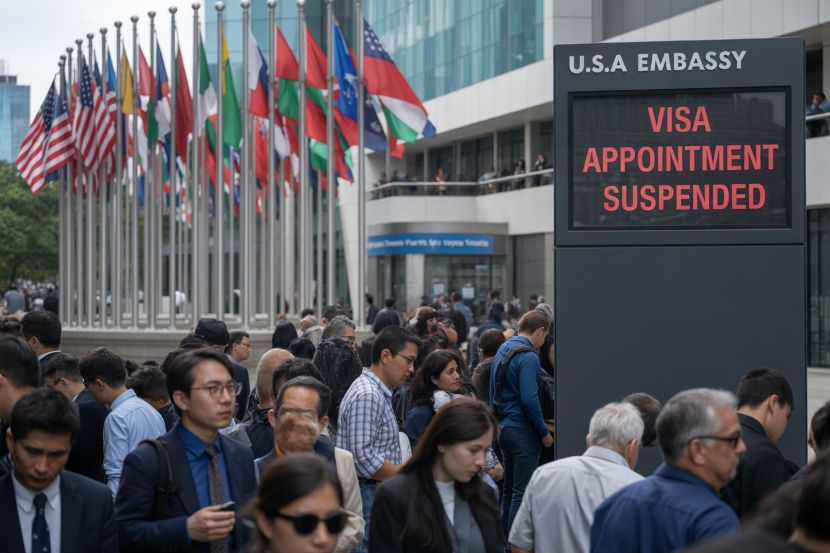

In a significant shift, the U.S. State Department has indefinitely suspended all immigrant visa processing for citizens of 75 countries starting from 21 January. This unprecedented move, aimed at addressing concerns over the public charge rule, will impact immigrants from nations spanning Africa, the Middle East, Central and South Asia, as well as the Caribbean. While non-immigrant visas, including tourist, student, and business visas, will remain unaffected, these applicants will face heightened security and public-charge screening. This change is expected to create considerable challenges for tourism, international travel, and global workforce management, especially as businesses struggle to navigate the complex visa landscape.
Understanding the Visa Suspension: How This Affects Immigrant and Non-Immigrant Visa Holders
On 18 January, the U.S. State Department introduced a sweeping decision to suspend all immigrant visa services for citizens of 75 countries. Starting 21 January, consular posts worldwide are ordered to cancel all immigrant visa appointments and cease issuing new visas for applicants from the targeted nations. This sweeping measure primarily impacts immigrant visa applicants aiming to move permanently to the U.S.
Countries from every region are included in the suspension. Africa, including Nigeria, Ethiopia, and Sudan, is particularly affected, as well as nations in the Middle East like Iran, Iraq, and Syria. In Central Asia, countries such as Afghanistan and Pakistan are included, and the Caribbean sees nations like Haiti and Cuba on the list.
While this move aims to address concerns over immigrants’ reliance on government welfare programs, it has stirred significant unrest among businesses and multinational corporations that rely on visa-sponsored employees for various professional roles.
Impact on Multinational Workforce Planning and Global Travel
The suspension is set to disrupt workforce planning, particularly in sectors that depend on foreign talent, such as nursing, management transfers, and tech. Companies utilizing the EB-1C and EB-3 visa routes will have to rethink strategies for hiring foreign workers, particularly those already in the U.S. or those waiting for visa approvals. For instance, nurses from affected countries may have to explore alternative visa routes, and management staff transferred through corporate sponsorships may face delays or uncertainty.
Businesses must shift focus toward stateside adjustment of status or adjust their immigration policies to better navigate this visa bottleneck. This will also extend to start-ups or businesses in industries facing critical skill shortages, such as semiconductors, energy, and defense. These sectors may turn to other avenues such as National Interest Waivers to bypass the suspension, although this process is likely to be time-consuming.
What This Means for Global Tourism: Tips for Travelers
Though the suspension specifically targets immigrant visas, non-immigrant visas, such as those for tourists, students, and business travelers, are still operational. However, travelers from suspended nations should anticipate stricter screening, especially regarding public-charge requirements and security measures.
For tourists planning to visit the U.S., it’s essential to stay informed of the latest updates on visa processing times and application procedures. Travelers from affected countries may want to consider consulting immigration attorneys or services like VisaHQ to better understand the new visa requirements and explore options for re-entry into the U.S. should they face travel disruptions.
What to Do If You’re in the U.S. and Considering International Travel
For foreign nationals currently in the U.S. who plan to travel internationally, this news carries added uncertainty. Re-entering the U.S. after international travel could become increasingly difficult for individuals from countries on the list, as they may face delays or even be denied re-entry without a specialized visa. Travelers should carefully consider the risks of international travel before departure.
It’s also crucial for travelers to check whether their visa or green card status would allow them to re-enter the U.S. once the suspension is in place. Some may find that their return is not guaranteed unless specific waivers or permits are obtained in advance.
Navigating New Visa Pathways for Tourism and Business Travel
For tourists and international business travelers, this is a time to explore alternative routes for visiting the U.S.. In some cases, visa waiver programs or third-party consulates may be available for certain countries. Travelers should also monitor the Visa Bulletin for updates on which countries are most likely to face continued delays or visa suspensions.
Here are a few tips for travelers from affected countries:
- Stay Updated: Ensure you’re up-to-date with any changes to visa policies by regularly visiting official government websites like the U.S. State Department’s Visa Services page.
- Consider Visa Alternatives: For business and leisure trips, look into non-immigrant visa options such as B-1/B-2 tourist/business visas, or explore visa waiver programs.
- Consult Legal Experts: For those facing complex visa issues, it’s highly recommended to seek advice from immigration attorneys who specialize in U.S. travel visas.
- Monitor Flight Availability: Travelers should be cautious about booking international flights too far in advance. Given the potential for delays, it may be wise to book more flexible tickets.
A Future of Uncertainty: What’s Next for Immigrant and Non-Immigrant Visa Applicants?
The indefinite suspension of immigrant visa processing for 75 countries is expected to have far-reaching consequences for both immigrant and non-immigrant applicants. While this policy aims to protect U.S. taxpayers and limit welfare dependence, it also creates significant challenges for businesses, international workers, and tourists who rely on the U.S. as a destination for travel, work, and study.
As the visa processing landscape shifts, affected nations and applicants must remain adaptable. Businesses, in particular, need to plan for potential workforce shortages and the increased need for alternate visa options.
Travelers from the impacted countries are urged to carefully consider their travel plans to the U.S., adjusting to longer visa processing times, enhanced security screenings, and unpredictable entry conditions.
The post Impact of U.S. Immigrant Visa Suspension on 75 Nations Including Sudan, Iraq, Pakistan, and Cuba: A Major Shift for International Travel and Workforce Management – Everything You Need to Know appeared first on Travel And Tour World.
