
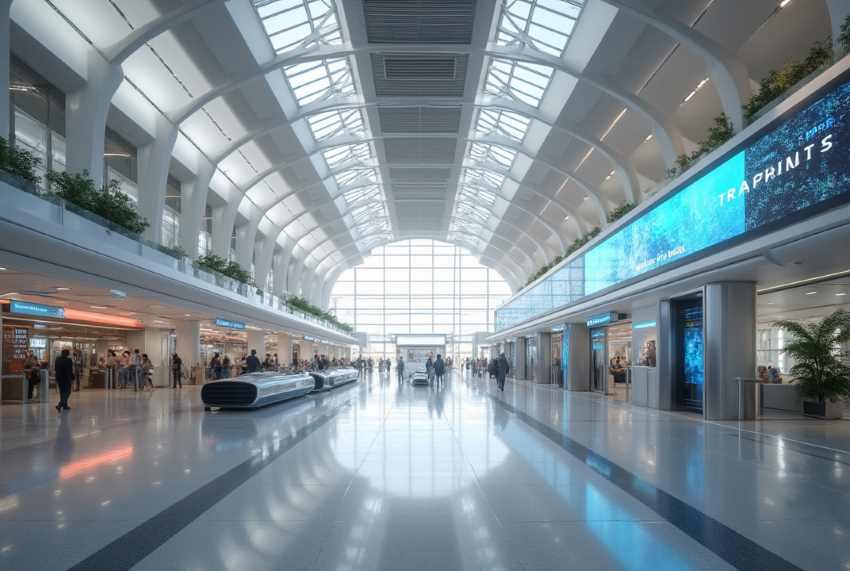

San Francisco International Airport (SFO) is a recognized leader in the aviation industry. This year, Travel and Tour World (TTW) has awarded SFO the title of most innovative airport in the Americas for 2026. This award demonstrates SFO’s sustained improvement and deployment of new technologies, especially artificial intelligence (AI), automation, and sustainability. SFO’s focus on operational efficiency and the improvement of customer experiences has allowed the facility to remain a leader in aviation industry technology. SFO defines what the future of global aviation should look like by exemplifying how to address the increasing demand for air travel.
Aviation and Automation of the Future
The implementation of smart airport technologies is one of the many innovative advancements SFO has pioneered in the airport industry. SFO has deployed technology across almost all customer and operational interactions. Intelligent technology is used to automate the screening of passengers. This process has improved in both screening efficiency and accuracy, while also maintaining safety standards.
The introduction of biometric systems at SFO has transformed how passengers travel through the airport. Passengers can now cross security, boarding, and customs with the ease of facial recognition and fingerprint scans. This transition to biometric processing for customs has improved wait times and created a more enjoyable travel experience. Additionally, SFO’s predictive operations platform uses artificial intelligence to optimize and manage operational traffic, predict delays, and improve the handling of baggage.
It is this commitment to AI and automation that helps SFO’s operational flexibility. Providing support to the growing demand of passenger traffic is accomplished by the use of innovative technology. During peak travel times, SFO is improving its ability to provide a high level of passenger service with the flow of operational technology.
Smart Infrastructure and a Sustainable Future
SFO continues to be an industry leader for sustainability. With the investment in smart technology and infrastructure, SFO is improving its sustainability efforts. SFO’s commitment to sustainable technology is evident in the airport’s efforts to reduce its carbon footprint and improve its overall environmental performance. SFO utilizes systems powered by artificial intelligence to effectively monitor and control the impact that the airport has on the overall environment.
SFO goes beyond saving energy with its new automated systems. Moving baggage, scanning tickets, and assisting passengers can all be done using their new smart systems. They have automation and integrated sensors to optimize and track their operations with agility. They can track and manage their resources in real time to improve efficiency in the airport.
SFO is still a leader in airport automation, and the combination of smart systems with data-driven decision-making processes allows SFO to be a leader. These new smart systems contribute to the operational flexibility of the airports and help with the current goal of the industry to improve sustainable travel and to decrease the ecological footprint of aviation.
The contribution of data to the operations and management of SFO
SFO has data-driven strategies for operational management, both in the present and in the future. The airport has built a data platform that analyzes and processes data in real time. The data is generated from different departments, and the processes are optimized through automation. During peak periods, SFO is able to quickly adapt to any changes through its data-driven systems, enabling SFO to enhance air operations and optimize passenger services.
A digital twin SFO uses as one of the major approaches. It is a cutting-edge technology that serves as a real-time virtual representation of the airport. It allows SFO to run tests, challenges, and changes to its operations. Thanks to SFO’s AI-driven insights and predictive tools, the airport can manage its resources effectively. This means SFO is ready to adapt to the more advanced changes in air travel.
SFO’s ability to integrate data across all operational units has also improved its airport’s resilience. With the number of customers visiting the airport increasing every day, SFO’s real-time informed data becomes more critical to streamlining the operational workflow and maintaining safety for the customers while maximizing the level of service to a high demand.
Technology Role in Passenger Experience
SFO focuses on improving customer experience and is utilizing technology to make journeys more personalized and convenient. One of the primary offerings includes the use of Artificial intelligence to provide tips to customers. Customers can receive suggestions on the best times to check in, receive updates on flight statuses, and request customized directions to make their journey easier and more streamlined.
Smart technology enables SFO to further reduce wait times, particularly at long security and luggage retrieval lines. AI is used in predictive analytics frameworks to better understand the flow of traffic to minimize congestion so AirPods can make timely departures. SFO has also added biometric processing and mobile boarding, allowing customers to enjoy the focus on their journey rather than the airport procedures.
Passengers enjoy the efficiency and comfort offered by the mobile technology. SFO ensures passengers can travel through the airport with little delay and maintain their comfort.
A Center for the Future of Air Travel
As the first airport in the Americas for 2026, San Francisco International Airport (SFO) proves to be a benchmark for the future of air travel. By innovating in the areas of smart tech, data utilization, and sustainability, SFO is currently molding the future of air travel. The airport transformed and modernized itself to meet the challenges of air travel, and also took the initiative to create the future of intelligent airports.
The rapidly advancing world of aviation ensures SFO’s most important focus of technology-driven innovation is constantly redefining itself. SFO’s ability to merge AI, automation, and sustainable practices into a single seamless operation is a standard that all airports must measure themselves against. San Francisco International Airport is a transportation hub and also a monument that defines the future of intelligent air travel.
SFO has positioned itself to be a leader in the smart airport movement by efficient use of technology to improve sustainability and passenger experience. As airports around the world continue to improve their technology and operations to replicate the success of SFO, SFO will remain a leader in the future of global aviation. San Francisco International Airport is more than a conventional airport; it is a visionary facility paving the way for the future of travel.
The post Discover How San Francisco International Airport Is Shaping The Future Of Smart Travel appeared first on Travel And Tour World.
