
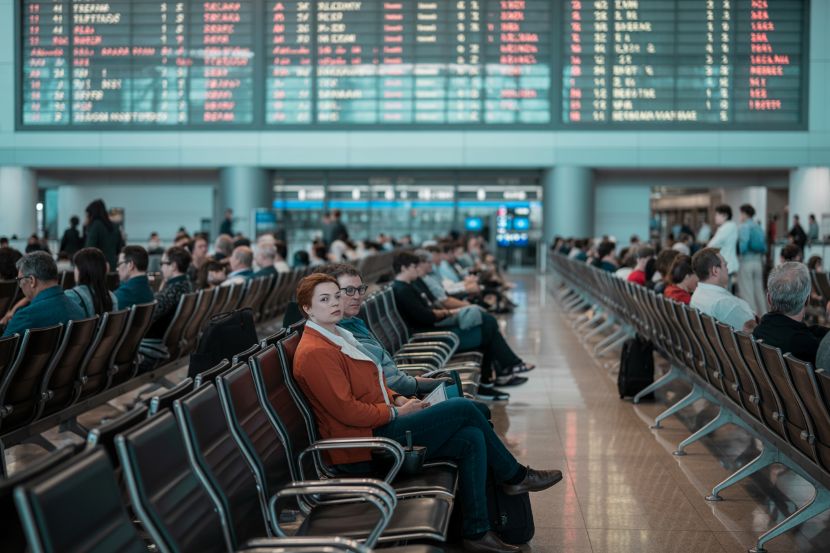

Travellers at Toronto Pearson, Montreal, Bogota, Paris Charles de Gaulle and Amsterdam Schiphol airports began their journeys with frustration rather than excitement today, as three international carriers reported a combined 87 cancelled flights and 229 delays. The disruption affected passengers on scheduled services with Porter Airlines, Avianca and Air France, turning routine travel plans into a scramble for customer service and alternate connections.
Families bound for holidays, business travellers heading to urgent meetings, and long‑awaited reunion trips were all impacted. For many passengers, the news of cancellations arrived just as they approached departure gates, while others endured long waits in departure lounges, clutching boarding passes and hoping for clarity. What promised to be a smooth travel day instead became a test of patience and resilience.
Major Disruption Figures: Porter Airlines, Avianca and Air France
According to operational reports from airport flight boards and airline statements, Porter Airlines cancelled 40 flights and recorded 83 delays across its North American network, especially affecting services in and out of Toronto Pearson International Airport and Montreal Trudeau Airport. These interruptions hit both domestic and regional routes, leaving travellers in limbo.
Avianca, Colombia’s flagship carrier, reported 23 flight cancellations and 32 delays, predominantly affecting flights into and out of El Dorado International Airport in Bogota and regional South and Central American connections. Many passengers en route to the United States and Canadian destinations faced rescheduling chaos.
Air France, the French national carrier, faced a similar wave of disruption with 24 flights cancelled and 114 delays, causing widespread passenger inconvenience at Paris Charles de Gaulle Airport (CDG) and Amsterdam Schiphol Airport — two of Europe’s busiest international gateways.
Combined, the cancellations totalled 87 flights, while the delays soared to 229 occurrences, underscoring a broader strain on global air travel infrastructure.
Air France Cancelled Flights:
| Flight Ident | Aircraft Type | Origin | Destination | Scheduled Departure Time |
|---|---|---|---|---|
| AFR7592 | A320 | Paris Orly (ORY/LFPO) | Bastia Poretta (BIA/LFKB) | Sun 08:00AM CET |
| AFR2 | B77W | Charles de Gaulle/Roissy (CDG/LFPG) | John F Kennedy Intl (KJFK) | Sun 08:40AM CET |
| AFR4 | B77W | Charles de Gaulle/Roissy (CDG/LFPG) | John F Kennedy Intl (KJFK) | Sun 10:40AM CET |
| AFR6110 | A318 | Paris Orly (ORY/LFPO) | Toulouse-Blagnac (TLS/LFBO) | Sun 12:10PM CET |
| AFR62 | A359 | Charles de Gaulle/Roissy (CDG/LFPG) | Newark Liberty Intl (KEWR) | Sun 12:30PM CET |
| AFR6 | B77W | Charles de Gaulle/Roissy (CDG/LFPG) | John F Kennedy Intl (KJFK) | Sun 01:40PM CET |
| AFR50 | B77W | Charles de Gaulle/Roissy (CDG/LFPG) | Washington Dulles Intl (KIAD) | Sun 01:55PM CET |
| AFR692 | B772 | Charles de Gaulle/Roissy (CDG/LFPG) | Raleigh-Durham Intl (KRDU) | Sun 02:00PM CET |
| AFR6115 | A318 | Toulouse-Blagnac (TLS/LFBO) | Paris Orly (ORY/LFPO) | Sun 04:15PM CET |
| AFR6222 | A318 | Paris Orly (ORY/LFPO) | Nice Cote d’Azur (NCE/LFMN) | Sun 04:40PM CET |
| AFR8 | B77W | Charles de Gaulle/Roissy (CDG/LFPG) | John F Kennedy Intl (KJFK) | Sun 04:40PM CET |
| AFR1446 | E190 | Bordeaux-Merignac (BOD/LFBD) | Amsterdam Schiphol (AMS/EHAM) | Sun 06:15PM CET |
| AFR6229 | A318 | Nice Cote d’Azur (NCE/LFMN) | Paris Orly (ORY/LFPO) | Sun 06:25PM CET |
| AFR2608 | A320 | Paris Orly (ORY/LFPO) | Marseille Provence (MRS/LFML) | Sun 08:25PM CET |
| AFR1447 | E190 | Amsterdam Schiphol (AMS/EHAM) | Bordeaux-Merignac (BOD/LFBD) | Sun 09:00PM CET |
| AFR63 | A359 | Newark Liberty Intl (KEWR) | Charles de Gaulle/Roissy (CDG/LFPG) | Sun 05:15PM EST |
| AFR3 | B77W | John F Kennedy Intl (KJFK) | Charles de Gaulle/Roissy (CDG/LFPG) | Sun 05:40PM EST |
| AFR149 | B772 | Murtala Mohammed Intl (LOS/DNMM) | Charles de Gaulle/Roissy (CDG/LFPG) | Mon 12:05AM WAT |
| AFR5 | B77W | John F Kennedy Intl (KJFK) | Charles de Gaulle/Roissy (CDG/LFPG) | Sun 06:40PM EST |
| AFR51 | B77W | Washington Dulles Intl (KIAD) | Charles de Gaulle/Roissy (CDG/LFPG) | Sun 07:00PM EST |
Heathrow, Pearson and CDG: Travel Hubs Feeling the Strain
Airports across Canada and Europe became focal points of operational stress as travellers arrived unaware of the full scale of disruption. In Toronto, travellers queued for re‑booking assistance at Porter counters, with some facing wait times exceeding two hours. At Montreal, families with young children were left waiting for announcements regarding alternate flights or hotel vouchers.
In Bogota, Avianca passengers experienced similar frustration, with delayed services stacking up through the morning and early afternoon. The airline attributed the disruptions to a combination of staff scheduling conflicts and unexpected maintenance requirements, though specific reasons varied by route.
Across the Atlantic, Air France passengers faced significant delays at Paris Charles de Gaulle and Amsterdam Schiphol, with long queues at information desks and gate areas. Several long‑haul services to intercontinental destinations were affected, leading many travellers to make last‑minute adjustments to connecting flights.
Passenger Experiences: Long Waits, Frantic Rebooking and Emotional Strain
The human side of travel disruption became immediately apparent across social media and airport lounges. One couple travelling from Montreal to Paris recounted how their 08:00 departure was abruptly cancelled without prior notice, leaving them scrambling for seats on flights later that day. Another family bound for a medical appointment in Amsterdam flew into unforeseen delays, with children growing restless after hours of waiting.
“I understand that cancellations happen,” said one frustrated traveller in Toronto, “but the communication has been poor and we were left with more questions than answers.”
Such human stories reflect not just the inconvenience of cancelled departures or postponed schedules, but the emotional toll that travel uncertainty can take. Many passengers missed crucial events, lost hotel reservations, and faced unexpected travel expenses with little support.
What Government Oversight Means for Disrupted Passengers
Across North America and Europe, aviation consumer protection frameworks exist to support passengers through disruptions. In the United States and Canada, aviation authorities require airlines to offer refunds or alternate travel arrangements when flights are cancelled or significantly delayed through no fault of the passenger. Similarly, in the European Union and the UK, regulators uphold standards for passenger compensation, re‑routing options and assistance during delays.
These protections are designed to ensure travellers are not left stranded or financially disadvantaged, though applying them during peak travel disruption can be complex. Air travel regulators emphasise the importance of documenting all travel disruptions, retaining boarding passes, and seeking official airline notices for compensation or re‑booking claims.
Despite such frameworks, the sheer volume of impacted passengers often strains customer service channels, leading to extended wait times for refunds or re‑routed itineraries.
Airline Responses and Operational Challenges
Porter Airlines acknowledged the disruptions, citing “unforeseen operational challenges” that impacted their schedule reliability. The airline stated its teams were working to re‑accommodate affected passengers and prioritise flights for the busiest routes.
Avianca echoed similar sentiments, attributing delays and cancellations to “operational adjustments during a period of peak travel demand”, and pledged to increase staffing at key hubs to improve passenger handling.
Air France issued a formal apology to its passengers, emphasising efforts to reschedule flights and offering support services to those impacted. From the airline’s perspective, weather variations, crew rotations and aircraft availability all contributed to the tight operational margins that ultimately led to service impacts that day.
Though these explanations offer context, many passengers questioned why planning was insufficient to prevent such widespread disruption.
Broader Context: An Industry Under Pressure
Aviation analysts note that recent years have placed extraordinary demands on global airline networks. Post‑pandemic recovery, heightened passenger volumes, staffing bottlenecks and supply chain challenges for aircraft parts have all contributed to fragile schedules and reduced resilience to variations in daily operations.
In Europe and North America, peak travel seasons often strain airport capacity and flight crew availability. When cancellations occur, the impact can cascade across hubs, leading to further delays as aircraft and crews are repositioned to meet subsequent schedules.
Industry commentators suggest that while occasional disruption is inevitable, the synchronised scale of today’s cancellations and delays indicates both operational stress and the need for greater investment in scheduling flexibility and customer communication infrastructur
Passenger Rights: What Affected Travellers Should Know
Passengers facing cancelled or delayed journeys are generally entitled to compensation or support services under the consumer protection rules of their respective regions. These may include:
- Re‑routing on the next available flight
- Refunds for unused tickets
- Meals, accommodation and travel vouchers during extended delays
- Financial compensation where applicable under regional aviation law
Experts recommend that passengers retain all travel documentation and seek official confirmation of disruptions to support any claims.
Final Thoughts: Travel Frustration, Resilience and Looking Ahead
For many passengers starting their journeys from Toronto, Montreal, Bogota, Paris and Amsterdam, today’s travel disruption was more than a statistic — it was a deeply felt experience that tested patience and altered plans. Frustration gave way to weary acceptance as travellers rebooked flights, awaited updates, and sought support from airline staff.
Yet for all the inconvenience, there remains a resilient spirit among air travellers, willing to adapt and persevere through uncertainty. As airlines continue to refine operations and regulators uphold passenger protections, the hope is that future disruptions will be met with smoother solutions and clearer communication.
In the end, thousands of passengers who found themselves delayed or grounded today will remember not just the cancellations and queues, but how those around them coped, collaborated and ultimately reached their destinations despite the obstacles. The human desire to connect, explore and reunite continues to outpace the setbacks — one flight at a time.
The post Thousands of Passengers Grounded in Canada and Europe Today as Porter Airlines, Avianca, and Air France Cancel 87 and Delay 229 Flights, Stranding Travellers in Toronto, Montreal, Bogota, Paris, Amsterdam and More appeared first on Travel And Tour World.
