
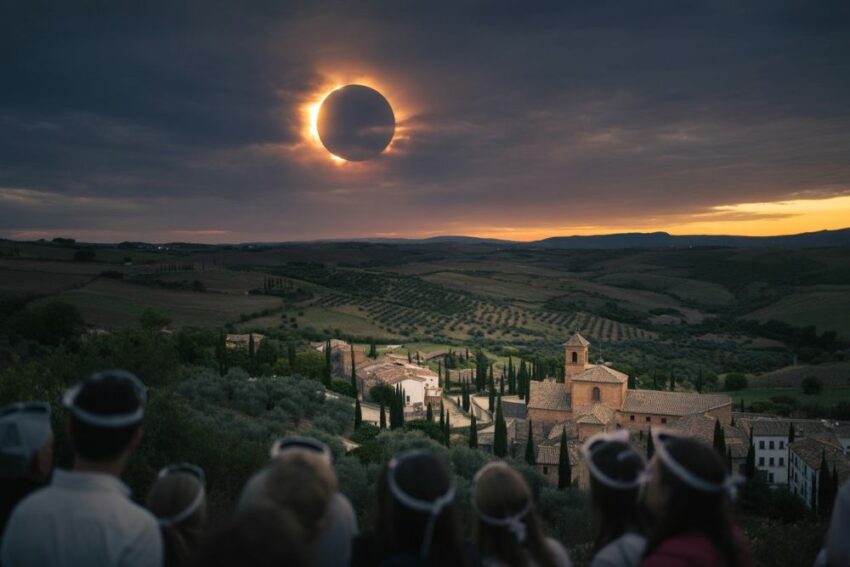

As Spain prepares for a historic tourism tsunami, millions of travelers are set to descend on its rural heartlands. From Galicia in the north to Ávila and Mallorca, Spain is bracing for an unprecedented surge of eclipse chasers. The total solar eclipse on August 12, 2026, is drawing an estimated 10 million people to these areas, eager to witness one of nature’s most spectacular events. This once-in-a-lifetime phenomenon will pass across northern and eastern Spain, transforming rural locales, usually far from the tourist radar, into hotspots for stargazers and thrill-seekers alike. The eclipse’s path of totality will cross iconic regions, providing rare views for those lucky enough to be in its way. As tourism surges, these towns and cities are preparing for a boom, with local businesses, transport, and services gearing up to accommodate the massive influx of visitors.
The upcoming total solar eclipse in August 2026 is generating a significant surge in tourism bookings across Spain, especially in its rural areas. Expected to draw around 10 million visitors, this celestial event is anticipated to provide an extraordinary opportunity for Spain to boost both its national tourism and its burgeoning astrotourism sector.
Surge in Bookings Ahead of the Eclipse
The eclipse, scheduled for August 12, 2026, will be visible across the Iberian Peninsula, including Mallorca, which will be in the path of totality. This path will stretch from the northwest of Spain, beginning in Galicia, across central and eastern Spain, all the way to Mallorca. The maximum duration of totality is expected to be around one minute and 45 seconds, making it a rare and highly anticipated event. It will also be visible partially in other parts of Spain, contributing to an influx of visitors keen to witness this rare phenomenon.
This phenomenon is not just about the sky turning dark for a few minutes. For many, it’s about the experience of witnessing a rare natural event in a destination that adds to the allure. The eclipse is coinciding with Spain’s peak tourist season, further amplifying interest as many families traditionally take time off for holidays during this period.
Local Celebrations and Fiestas Boost Eclipse Tourism
Spain’s local fiestas, which also take place in August, will coincide with the eclipse, making this period even more attractive to travelers. These festivals, part of the rich cultural fabric of the country, offer visitors the chance to experience Spain’s vibrant traditions and festive atmosphere. In regions where the eclipse will be most visible, tourists can expect a blend of natural wonder and cultural immersion.
As the eclipse approaches, rural locations such as Soria, Valladolid, and Teruel have already reported an 820% increase in accommodation bookings, according to Airbnb data. Hotels and private rentals are cashing in on the surge, raising prices in response to the high demand. Even Zaragoza has reported that hotel capacity for the week of the eclipse has reached an impressive 96%, showing just how large the interest is in these rural locales.
A New Focus on Rural Spain
Traditionally, Spain’s rural areas, such as Soria and Valladolid, have not been major tourist destinations. However, the solar eclipse has brought them into the spotlight. The Spanish Government forecasts that up to 10 million people could visit rural Spain during this period, posing both challenges and opportunities for local infrastructure and services. For example, rural towns and villages will have to accommodate this massive influx of tourists, which could strain transportation, public services, and accommodations. Despite these challenges, the event is seen as a unique opportunity to promote astrotourism—a sector focused on tourism tied to astronomical events like the eclipse—and to put Spain’s countryside and small towns on the global tourism map.
With the eclipse drawing significant international attention, Spain is embracing the opportunity to highlight these lesser-known areas, potentially transforming them into astrotourism hubs for future astronomical events.
Logistics and Challenges Ahead
As tourism professionals and local officials prepare for the event, there are concerns about the logistical challenges posed by the large numbers of visitors. The rural areas of Spain, while offering an idyllic setting for viewing the eclipse, often lack the necessary infrastructure to handle the sheer volume of tourists expected. Transportation networks, such as trains and buses, will need to be scaled up to accommodate the massive increase in visitors, while local services such as restaurants and shops may also need to adjust to meet the demand.
Moreover, Spain’s Government and local authorities are taking steps to ensure the event’s success by promoting sustainable tourism practices and collaborating with tourism organizations. They are also working on improving accessibility and creating a seamless experience for travelers.
The Future of Astrotourism in Spain
For many experts, this eclipse represents more than just a one-off event. They view it as a potential catalyst for the growth of Spain’s astrotourism sector. Spain, already renowned for its rich cultural heritage, is now positioning itself as a top destination for astronomical events. The Spanish Government sees this as an opportunity to strengthen its profile globally, especially in rural regions that have long been overlooked by traditional tourism.
By capitalizing on events like the solar eclipse, Spain hopes to attract more visitors to its rural areas year-round, especially those looking for unique and off-the-beaten-path experiences. The government’s efforts to promote astrotourism could pay long-term dividends, particularly in regions with clear skies and limited light pollution, ideal conditions for stargazing.
Spain Sees an Eclipse of Opportunity
As millions of people flock to Spain for the once-in-a-lifetime solar eclipse in August 2026, the event is not only set to captivate observers but also drive a wave of tourism to areas that are typically off the radar for many international visitors. Spain’s rural towns are preparing to welcome tourists with open arms, offering an unforgettable combination of nature, culture, and history.
While the logistical challenges are significant, Spain’s commitment to promoting sustainable and astrotourism could turn this eclipse into a turning point for its rural tourism sector. For now, the anticipation is palpable as the countdown to the total eclipse begins, and tourists from around the world prepare to witness one of the most stunning natural spectacles on Earth.
The post Spain’s Rural Heartlands from Galicia to Ávila and Mallorca Brace for Historic Tourism Tsunami as 10 Million Eclipse Chasers Flock for August 12, 2026 Total Solar Spectacle: Unprecedented Surge Seen Across Northern & Eastern Spain appeared first on Travel And Tour World.
