
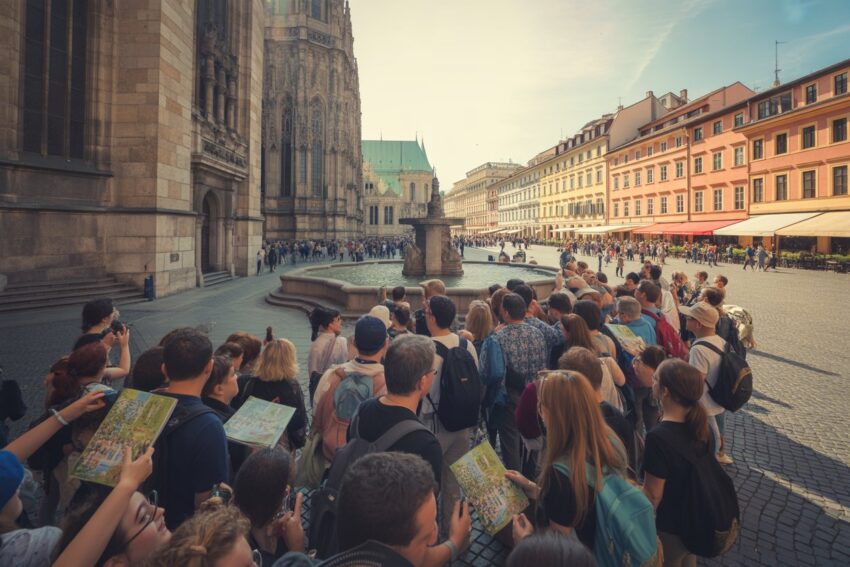

After an astonishing rebound in global tourism, where international arrivals surged to a record-breaking 1.52 billion in 2025, the mood in some of the world’s most visited places is less than celebratory. While tourism numbers have hit unprecedented heights, it’s becoming increasingly clear that the infrastructure meant to support these millions of travelers is struggling to keep pace. From the streets of Barcelona to Paris, the effects of overtourism are being felt deeply by locals, who are now questioning whether their cities still belong to them.
The situation is particularly alarming in Europe, where several cities have already experienced the pressures of rapid tourism growth. In Barcelona and Mallorca, residents voiced their frustrations through protests, some even using squirt guns to spray tourists. Meanwhile, workers at the Louvre Museum in Paris staged a walkout, demanding relief from overcrowding and chronic understaffing.
These protests and disruptions stem not just from inconvenience but from a deeper issue of imbalance. The demand for tourism has exploded, yet the systems designed to absorb the influx—such as hotels, public services, and staffing—have not recovered at the same speed. This mismatch is spilling over from traditional tourist areas into residential neighborhoods, housing markets, and the daily lives of local residents.
Overtourism: A Growing Issue in Europe’s Most Popular Destinations
In places like Jamaica, where less than 1% of the coastline is accessible to local residents, and the Cyclades islands in Greece—home to destinations like Santorini and Mykonos—the strain of constant tourism has led to severe environmental degradation. In fact, these regions have now been added to UNESCO’s Heritage-in-Danger list due to the long-term effects of tourism. The environmental toll isn’t the only issue; the gentrification and displacement of locals is now a widespread concern, as rising property prices push many residents out of their neighborhoods.
This complex reality leaves the question: Is America headed down the same path as Europe, or has it already arrived at that crossroads?
The global surge in tourism is not only reshaping the streets of cities like Paris and Barcelona but could soon impact iconic U.S. destinations like New York City, San Francisco, and Miami. As travel numbers hit new highs, many American cities are beginning to feel the pressures of overtourism. Residents in some parts of the U.S. are starting to question whether their homes and neighborhoods are being overrun by tourists—and if tourism is helping or hurting the local economy.
How Overtourism is Changing Neighborhoods and Housing Markets
The housing market is one of the most visible ways tourism is reshaping local communities. With the influx of visitors, property owners in tourist-heavy cities are turning residential units into short-term vacation rentals through platforms like Airbnb. This has led to a shortage of long-term rental housing, particularly in cities like San Francisco and Los Angeles, where skyrocketing rents have displaced long-time residents.
This shift is not just an issue for large cities. Smaller towns and neighborhoods in popular tourist destinations across the U.S. are also feeling the pressure as visitors flood into local markets. In many cases, long-time residents are being pushed out by the higher demand for short-term rentals, creating a vicious cycle where communities become unrecognizable to those who once called them home.
The housing crisis sparked by overtourism is becoming one of the most pressing issues for local governments in tourist-heavy regions. As the issue grows, city leaders in the U.S. and Europe are looking for ways to balance the economic benefits of tourism with the well-being of local residents.
Europe’s Overcrowded Tourist Destinations: Lessons for U.S. Cities
While European cities like Venice, Barcelona, and Paris have experienced the brunt of overtourism, they offer important lessons for American cities. The need for better urban planning, sustainable tourism practices, and investment in infrastructure cannot be overstated. As the U.S. faces its own tourism surge, it must learn from Europe’s mistakes and proactively address issues like overcrowding, environmental degradation, and housing displacement before they spiral out of control.
In Europe, the solution isn’t simply to restrict access to popular tourist sites. Instead, it’s about creating more sustainable ways to share these spaces with visitors without sacrificing the quality of life for locals. This includes spreading tourism to less-visited areas, improving transportation infrastructure, and introducing policies that protect local residents from the effects of tourism-driven gentrification.
Is the U.S. Ready for the Coming Overtourism Crisis?
With tourism in the U.S. predicted to grow rapidly in the coming years, particularly in areas like California, New York, and Florida, local governments must take a proactive approach to avoid the mistakes made by European cities. The challenge is to ensure that the benefits of tourism are felt by everyone, not just businesses and property owners. This means making sure that residents can afford to live in their own neighborhoods, that public spaces are accessible to all, and that the cultural fabric of these cities remains intact.
For travelers, this may mean rethinking how they engage with destinations. As overtourism continues to grow, being more mindful of where and how we travel can help reduce the strain on these vulnerable areas. By spreading tourism to less crowded destinations, visiting during off-peak seasons, and supporting businesses that contribute to local communities, we can help preserve these iconic locations for future generations.
Conclusion: Balancing Growth with Sustainability
The global travel boom has made it clear that tourism is no longer just a seasonal industry—it’s a driving force of economic growth and a key part of many cities’ identities. However, without proper planning and thoughtful policy, the surge in tourism can easily tip from beneficial to damaging. From the challenges seen in Europe to the emerging issues in the U.S., cities around the world must adapt to these new realities. The goal is to balance the growth of tourism with the needs of local residents, ensuring that neighborhoods remain livable, communities thrive, and tourists can continue to explore the world’s most beloved destinations without overwhelming them.
The post The Global Travel Boom Is Reshaping Cities: How Tourism is Damaging Neighborhoods in Europe and Could Do the Same in the US appeared first on Travel And Tour World.
