
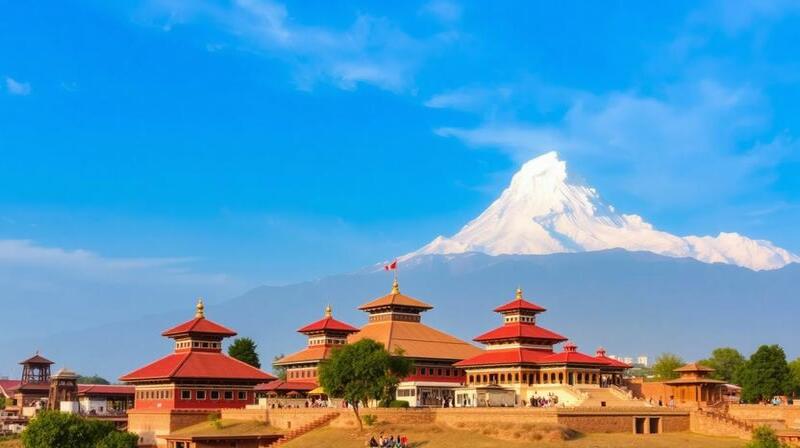

Nepal’s tourism sector has entered 2026 with renewed confidence as strong January arrivals from the US alongside India, China, Bangladesh and Australia pushed international visitor numbers well above both last year and pre-pandemic levels.
Nepal has opened 2026 on a confident note, welcoming 92,573 international visitors in January, a performance that signals not just recovery but renewed momentum for the country’s tourism economy. Fresh data from the Nepal Tourism Board shows arrivals climbed fifteen percent compared to January 2025 and stood fourteen percent higher than January 2019, a clear indication that Nepal has moved beyond simply bouncing back from the pandemic years.
January is traditionally a steady, not spectacular, month for tourism in the Himalayas. That is what makes this growth particularly telling. It reflects a broader shift in travel patterns, where Nepal is no longer viewed only as a seasonal trekking destination but as a year-round experience combining nature, culture, wellness, adventure, and spiritual travel.
India once again emerged as Nepal’s strongest tourism pillar. With 26,624 visitors, Indian travellers accounted for nearly twenty-nine percent of total arrivals. Proximity, open-border travel, cultural ties, and expanding air and road connectivity continue to make Nepal a natural short-haul escape for Indian tourists seeking mountain landscapes, religious sites, and cooler climates.
China followed as the second-largest source market with 9,101 visitors, contributing close to ten percent of arrivals. This figure carries added weight as Chinese outbound travel continues to normalise following extended travel restrictions in recent years. The steady return of Chinese tourists suggests improving confidence in regional travel and highlights Nepal’s appeal in the broader Asian market.
The United States ranked third with 8,406 visitors, underlining Nepal’s enduring popularity among long-haul travellers drawn to trekking, heritage tourism, and immersive cultural experiences. Bangladesh placed fourth with 5,814 arrivals, while Australia rounded out the top five with 4,957 visitors, reinforcing Nepal’s reach across diverse and distant markets.
A closer look at regional data reveals how balanced Nepal’s tourism rebound has become. South Asia accounted for thirty-nine point three percent of all visitors, confirming the region’s role as the backbone of Nepal’s inbound tourism. Other Asian countries contributed twenty-six point one percent, showing that Nepal is increasingly embedded within wider Asian travel circuits.
Europe remained an important long-haul contributor with twelve point three percent of arrivals, while travellers from the Americas represented ten point eight percent. Oceania accounted for five point seven percent, reflecting steady interest from Australia and New Zealand. Smaller but notable shares came from the Middle East at one percent, Africa at zero point four percent, and other regions at four point five percent, together pointing to Nepal’s truly global footprint.
Tourism officials see the January performance as more than a statistical win. It reflects rising international confidence in Nepal as a safe, accessible, and rewarding destination. Infrastructure upgrades, improved airport operations, expanded flight networks, and consistent destination marketing are all contributing to smoother visitor experiences. At the same time, Nepal’s emphasis on sustainable tourism and community-based travel is resonating with travellers who are increasingly conscious of environmental and social impact.
Another factor driving growth is diversification. Beyond trekking in the Everest and Annapurna regions, travellers are exploring heritage cities, wildlife reserves, wellness retreats, religious circuits, and adventure sports. Short-break tourism, digital nomad stays, and regional leisure travel are adding new layers to Nepal’s visitor economy.
The January surge also carries economic implications. Higher arrivals mean increased demand for hotels, guides, transport providers, restaurants, and local artisans, spreading income across urban centres and rural communities alike. Tourism remains one of Nepal’s most powerful engines for employment and foreign exchange, and early-year growth provides a strong foundation for the months ahead.
While peak trekking seasons in spring and autumn traditionally dominate arrival numbers, the current trend suggests Nepal is steadily reducing its dependence on seasonal tourism alone. If momentum continues, 2026 could become a milestone year, not just in terms of visitor volume but in how tourism contributes to broader economic stability.
As global travellers seek destinations offering authenticity, natural beauty, and meaningful experiences, Nepal appears well positioned. January’s figures show a country that has regained its footing and is now stepping forward with confidence, signalling that Nepal’s tourism story is entering a new and more resilient chapter.
The post US Joins India, China, Bangladesh and Australia Driving Nepal’s Confident Tourism Start to 2026 with January Visitor Growth appeared first on Travel And Tour World.
