
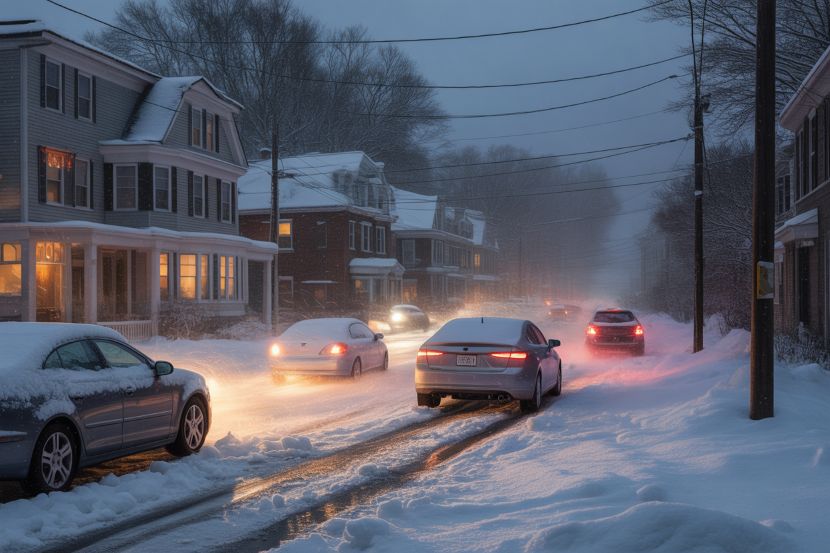

The North Shore of Massachusetts experienced a powerful snowstorm on February 7, 2026, with intense snowfall causing disruptions throughout the region. Local weather reports and government advisories indicate that the storm dumped heavy snow at a remarkable rate of up to 3 inches per hour, leading to low visibility and hazardous conditions on the roads. Cities like Beverly, Gloucester, and Salem were among the hardest hit, where the snow rapidly accumulated, creating near-whiteout conditions that made travel dangerous.
The Massachusetts National Weather Service (NWS) issued warnings of hazardous weather as the storm intensified throughout the day, with snowflakes falling thick and fast. Meteorologists noted that these conditions were caused by a fast-moving winter clipper system, which brought frigid air and moisture together to create the snowstorm that impacted Eastern New England, especially along the North Shore.
Blizzard-Like Conditions Impact North Shore Travel and Visibility
The snowstorm quickly took a toll on daily activities in the region. Snow accumulation reached double-digit inches in some places before the heaviest snow bands even set in. As a result, visibility dropped significantly as snowflakes piled up on roads, sidewalks, and vehicles. In several towns, drivers struggled to navigate the snowy streets, and emergency response units were on high alert due to the low visibility and increased risk of accidents.
Local drivers faced severe travel disruptions, with many roads blanketed in snow that accumulated rapidly. Travel advisories were issued by local authorities, warning against unnecessary travel and urging caution on snow-covered streets. The snowfall rates of 3 inches per hour were described as intense, particularly in coastal cities such as Beverly and Gloucester, where snowstorms often result in high winds and drifting snow. The region faced a near-whiteout as snowflakes and wind combined to dramatically reduce visibility.
What Caused the Intense Snowstorm in Massachusetts?
The snowstorm, which began earlier in the morning on February 7, was part of a larger weather system moving across New England. According to meteorological reports, an Arctic airmass was responsible for bringing extremely cold temperatures to the region, while a winter clipper system – a fast-moving weather system typical in the Northeast – helped to generate the heavier-than-usual snowstorm. These systems are known for creating localized snow bands that can produce extremely heavy snowfall in short bursts.
As snow continued to fall, meteorologists from the National Weather Service noted that it was not just the accumulation of snow that posed a risk, but also the rapid rate at which snow fell. These factors created a perfect storm for low visibility and dangerous conditions, making it almost impossible to safely navigate roads, especially without snow tires or chains.
Snowstorm Alerts Issued by National Weather Service
By midday on February 7, the National Weather Service had issued multiple winter weather alerts for the North Shore region, advising residents and travelers to stay indoors or exercise extreme caution if they had to venture out. Alerts included winter storm warnings and snow advisories, urging all vehicles to stay off the roads during the peak hours of the storm.
A meteorologist with the National Weather Service mentioned, “These are the types of snowstorms that can severely affect travel conditions with little to no warning. The heavy snow and low visibility are significant safety risks for motorists and pedestrians alike.”
As the storm continued, additional advisories were issued for the Cape Ann area, which was also under the threat of snow accumulation at rates exceeding 2 to 3 inches per hour. With wind chill warnings accompanying the heavy snow, temperatures plummeted, creating freezing conditions across the region. For local businesses and residents, these conditions were a reminder of the power of winter weather in New England, where the storms can escalate quickly and unexpectedly.
The Impact of the Snowstorm on Local Communities
Cities along the North Shore, including Salem, Beverly, and Lynn, were among the first to experience the brunt of the storm. Roadways became dangerously slick, forcing many schools and businesses to close their doors for the day. The accumulation of snow on rooftops, streets, and vehicles posed risks of sliding ice and snowdrifts, with crews working tirelessly to clear snow from roads and public spaces.
Local authorities noted that emergency response times were slowed down due to snowdrifts blocking entryways and streets. Law enforcement and fire departments focused on keeping the public informed with updates on the storm’s progress, urging people to stay safe and avoid unnecessary travel.
Looking Ahead: Snowstorm Aftermath and Recovery Plans
While the snowstorm is expected to subside in the coming days, the aftermath will require careful management from local and state agencies. Emergency services and public works crews have been working around the clock to clear streets and maintain safety, especially as temperatures remain low and ice continues to form in some areas.
As the storm moves out of the region, authorities are urging people to remain cautious of slippery conditions and to keep updated with weather forecasts. With the snowstorm behind them, residents of the North Shore can expect clearer skies and calmer weather, but the impact of the storm will still be felt in the days ahead.
Conclusion: Massachusetts Braces for More Winter Weather
In conclusion, the North Shore of Massachusetts experienced a powerful winter storm with intense snowfall rates, severe low visibility, and major disruptions to daily life. As 3 inches of snow fell per hour during the peak of the storm, local authorities urged people to stay safe, avoid travel, and keep abreast of the latest updates. The storm’s intensity serves as a stark reminder of the harsh winter weather that can sometimes appear without warning in New England.
Residents are now focusing on the aftermath, with authorities making swift efforts to clear snow and ensure public safety. For those planning to travel in or around Massachusetts, caution is advised in the days to come as the snowstorm continues to leave its mark on the region.
The post Massachusetts North Shore Faces Chaos as 3 Inches of Snow Fall Every Hour, Travel Grind to a Halt – See the Shocking Snowstorm That Took Over the Region! appeared first on Travel And Tour World.
