
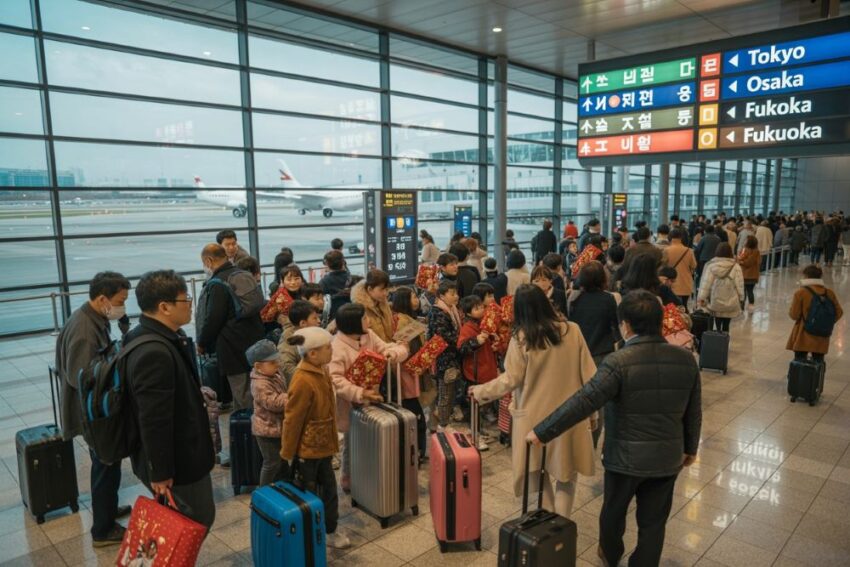

As South Koreans prepare for the Lunar New Year in 2026, a significant shift in travel preferences is emerging. South Koreans flock to Japan for Lunar New Year getaways, overtaking domestic travel choices traditionally dominated by destinations like Seoul, Busan, and Jeju Island. This year’s shorter Seollal holiday – just five days including weekends – has played a crucial role in this change. With limited time off, many are opting for quick overseas trips to nearby Japan, where direct flights offer an easy escape. This contrasts sharply with previous years, where domestic travel was more popular during the extended breaks. The trend highlights a surge in overseas travel preferences in 2026, with Japan topping the charts as the most searched international destination for the season. As this shift unfolds, it marks a new phase in how South Koreans approach their holiday travel plans, focusing on short-haul escapes rather than long domestic stays.
Japan Reigns Supreme in Search Data as Top Overseas Choice
Data compiled by global travel search platform Skyscanner reveals Japan accounted for more than half of all flight searches from South Korean travellers for the upcoming Lunar New Year break. With 51.6 per cent of total flight queries directed towards Japanese cities, the archipelago emerged as the clear favourite holiday location. Among Japanese destinations, Fukuoka, Osaka and Tokyo stood out as the most in‑demand cities, eclipsing other international and domestic choices.
This represents a dramatic reversal from the previous year. In 2025, when a nine‑day holiday without the need for annual leave allowed for extended time off, domestic destinations such as Busan, Seoul and Jeju Island dominated searches – accounting for 57 per cent of queries.
Japan’s appeal remains robust due to its proximity to South Korea, short flight times and diverse urban and cultural experiences suitable for short breaks. Connectivity between cities like Seoul and Fukuoka is already high, and Japanese travel experiences range from bustling cityscapes to traditional onsen towns and seasonal winter festivals attractive during the Lunar New Year period.
Calendar Reality: Short Holiday Sparks Overseas Demand
A core reason for this year’s shift lies in the structure of the holiday itself. Unlike the generous nine days available last year that allowed travellers to include ancestral rituals and extended domestic trips, the 2026 break is officially only five days when weekends are included. This compressed schedule has pushed travellers to focus on destinations they can reach quickly and enjoy fully within a limited timeframe.
Travel industry analysts have noted that limited days off encourage short‑haul getaways rather than long family visits or domestic excursions that require more planning and time in transit. As a result, Japan’s location close to Korea – with flight times often under two hours – makes it an ideal choice for families and groups wishing to make the most of the brief break.
Economic Factors Add to Japan’s Appeal
Beyond calendar pressures, economic considerations are also influencing travel decisions. While official government output on exchange rate impacts is pending, travel commentary highlights that the relative weakness of the Japanese yen has made travel to Japan more affordable for South Korean tourists. With a favourable currency exchange, travellers can stretch their spending on accommodation, food and activities, making short‑haul international trips even more cost‑effective.
This affordability combined with well‑established flight routes and no visa requirements for many travellers contributes to Japan’s strong appeal. South Korean passports currently provide visa‑free or visa‑on‑arrival access to 187 countries, including Japan, ranking among the most powerful globally.
China and Vietnam Trail as Secondary Choices
While Japan led the rankings by a large margin, other short‑haul regional destinations also attracted attention from Korean travellers. China and Vietnam each accounted for a similar share of searches, albeit significantly lower than Japan’s commanding lead. This reflects broader East Asian travel patterns where proximity, cultural familiarity and ease of access play strong roles in destination choice.
Skycom data and other travel trend reports also point to rising interest in Southeast Asian destinations around the Lunar New Year period, driven by improving connectivity, competitive flight prices and expanded tourism offerings.
Only One Domestic Destination Makes the Top Ten
Remarkably, Jeju Island was the sole South Korean domestic location to appear in the top 10 flight search destinations for this holiday period, with an 11.6 per cent share of queries. This underscores how the appeal of quick overseas getaways has overtaken traditional domestic tourism for this particular break.
Jeju has long been a favourite domestic destination for Koreans due to its natural beauty, volcanic landscapes and relaxed island atmosphere. However, this year’s comparative slide in domestic searches highlights the extent to which overseas travel has surged at the start of 2026.
Broader Asia-Pacific Travel Trends Reflect Rising Mobility
Korean travel demand during Lunar New Year also reflects wider Asia‑Pacific travel trends this year. Travel data across the region points to significant increases in outbound travel from various Asian markets, including China, where outbound flight bookings have risen sharply, particularly for short‑haul and regional destinations such as Thailand, Singapore and South Korea.
At the same time, longer‑haul interest has also grown, with notable upticks to European and North American destinations. However, Korean travel remains primarily focused on destinations that offer high cultural value, enjoyable experiences and convenient travel logistics within shorter breaks.
Shifting Cultural Priorities and Travel Behaviour
Beyond logistics and economics, there are deeper cultural shifts at play. Reports from major news outlets indicate a generational change where traditional holiday gatherings around ancestral rites are becoming less central for some families. Instead, travel – often with multiple family members — is becoming a key way for families to connect, explore and make new memories during festive breaks.
Industry observers have noted phrases such as “planes instead of ancestral tables” gaining currency in Korean media to describe this trend. It emphasises a growing preference among younger travellers to prioritise experiences and time together in new environments over conventional customs, especially when holiday length is limited.
Impacts on the Aviation and Tourism Sector
The spike in international searches and bookings has implications for airlines and tourism operators. Airlines serving routes between Korea and Japan have reported increased early bookings for the long weekend period, pressuring seat availability and prompting some carriers to adjust flight schedules to capture demand.
For tourism authorities in both Korea and Japan, this trend presents both opportunities and pressures. Korea’s domestic travel sector may need to adapt its offer to recapture interest during festive breaks, while Japan’s travel industry can leverage this surge to foster longer‑term inbound tourism relationships.
What This Means for Travellers
For Korean travellers planning trips during this Lunar New Year holiday, the data suggests prioritising early flight and accommodation bookings, especially for popular Japan destinations. Given the concentrated demand, travellers may experience higher costs or limited availability closer to departure dates.
Travellers should also pay attention to visa requirements – although not burdensome for many Korean passport holders – and stay informed about local travel advisories or entry requirements for chosen destinations.
Looking Ahead: A New Travel Normal?
The Lunar New Year data from early 2026 may well indicate a broader transition in travel habits for South Koreans. As travellers seek deeper, more flexible and internationally oriented experiences, short‑haul overseas travel is likely to remain a strong feature of holiday patterns beyond this season.
What began as a simple shift driven by holiday calendar constraints now signals how quickly travel behaviour can evolve in response to economic, cultural and logistical forces shaping the global tourism landscape.
The post South Koreans Flock to Japan for Lunar New Year Getaways, Overtaking Domestic Travel Preferences Amid Shorter Seollal Holiday: A Surge in Overseas Travel Trends in 2026 appeared first on Travel And Tour World.
