
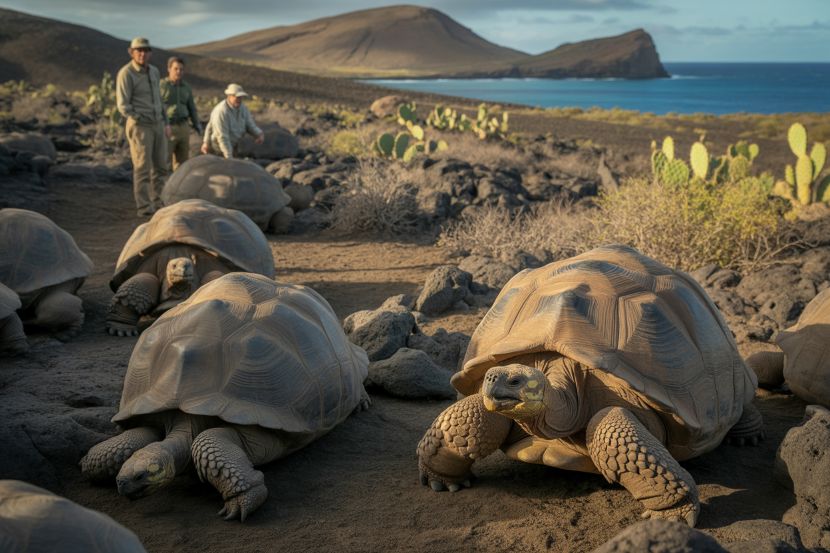
The Galápagos Islands have experienced an exciting conservation breakthrough, which enabled scientists to reintroduce 158 giant tortoises to Floreana Island after scientists designated the species as extinct from the area more than 100 years ago. The Floreana Ecological Restoration Project reached this important achievement because scientists worked together for many years, while travellers provided their valuable assistance. The Lindblad Expeditions-National Geographic Fund supports this restoration project, which demonstrates how travel enthusiasts can support major environmental restoration efforts through their travel activities.
The return of these iconic giant tortoises to their native habitat is seen as a triumph for both the local ecosystem and global conservation efforts. The tortoises, once essential in maintaining the ecological balance on Floreana, now have the chance to once again thrive in their native environment, contributing to a healthier, more resilient ecosystem. The release was held at Galápagos National Park, where ongoing efforts to restore the island’s biodiversity are spearheaded by local and international conservation organizations.
A Decade of Collaboration for Ecological Restoration
The Floreana Ecological Restoration Project, initiated over a decade ago, is a collaborative effort involving Galápagos National Park Directorate (DPNG), the Charles Darwin Foundation, Island Conservation, and the Jocotoco Foundation for Conservation. With unwavering commitment from local community members, scientists, and government agencies, the project has worked tirelessly to restore Floreana’s fragile ecosystem, focusing on eliminating invasive species, restoring native habitats, and eventually reintroducing endemic species like the giant tortoises.
This effort has been greatly supported by Lindblad Expeditions-National Geographic Fund, which has contributed more than USD 1 million since 2015 to the restoration work. Through the generous donations from travellers who take part in Lindblad’s expedition cruises, this important work continues, showcasing how travel can play a crucial role in preserving the world’s natural wonders.
The Role of Tortoises in Restoring Ecosystems
Giant tortoises are more than just iconic creatures of the Galápagos; they are critical to maintaining the health of the island’s ecosystem. As ecosystem engineers, tortoises help distribute seeds, maintain soil health, and create habitats for other wildlife. Their return to Floreana represents a tangible step forward in rebuilding an ecosystem that once thrived with endemic species and natural harmony. The tortoises’ burrowing habits, in particular, aid in spreading seeds of native plants, which are essential for the rejuvenation of the island’s flora.
For travellers, this project offers an extraordinary example of how eco-tourism can be a force for good. It reinforces the idea that exploration and conservation are intrinsically linked, with travellers not only witnessing the natural wonders of the world but also supporting their preservation.
A Model for Global Conservation
The success of the Floreana restoration efforts is already being recognised internationally as a model of island ecosystem recovery. The project is an example of how long-term planning, scientific collaboration, and community involvement can lead to complete ecological restoration on inhabited islands. The success of Floreana Island’s tortoise reintroduction proves that when various stakeholders come together, a complete ecological recovery is not only possible, but achievable.
The Floreana Project continues to gain momentum as more species are introduced over the next decade, with each step being carefully planned and scientifically managed. The careful monitoring of the tortoises’ adaptation to their new habitat will guide further reintroduction efforts and ensure that the species continues to thrive in its natural environment.
A Lasting Legacy for Conservation and Travel
The successful reintroduction of giant tortoises to Floreana Island is a landmark moment in conservation history. For travellers participating in Lindblad Expeditions-National Geographic cruises, the project offers a unique opportunity to see first-hand how their contributions support the restoration of ecosystems and the protection of endangered species. As the Floreana Project progresses, it exemplifies the powerful impact of conservation tourism and how travellers can make a positive difference while enjoying the world’s most fascinating destinations.
Floreana Island will regain its function as a sanctuary for its unique biodiversity through the collaborative efforts of scientists and local communities and travel enthusiasts. Travelers who back Lindblad Expeditions-National Geographic Fund projects assist in preserving the world’s most valuable ecosystems for upcoming research and exploration activities.
The post Giant Tortoises Return to Floreana Island as Part of Groundbreaking Restoration Efforts: All You Need To Know appeared first on Travel And Tour World.
