
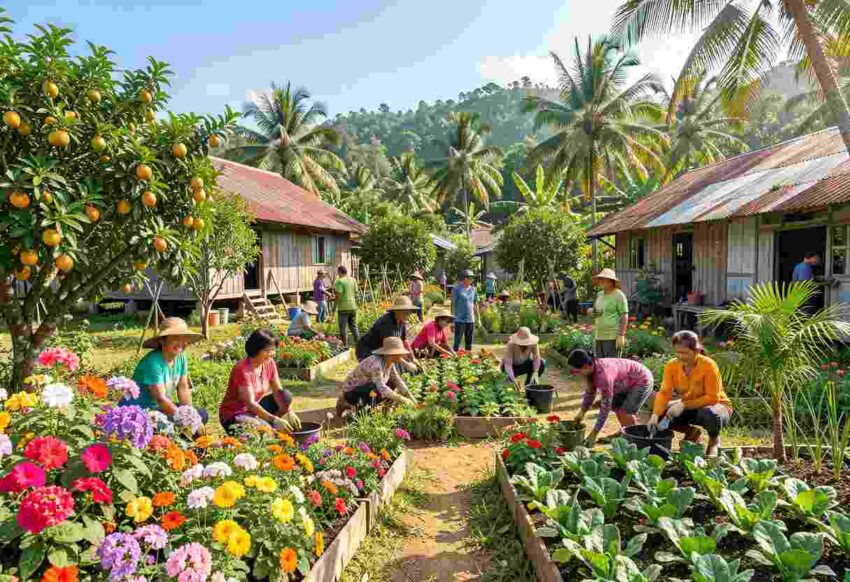
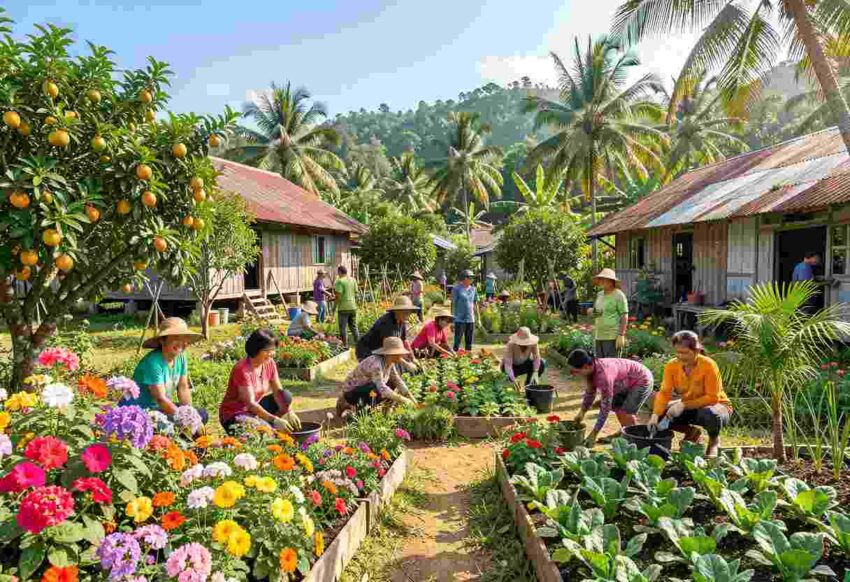
Amid the growing appeal of experiential travel in the Philippines, Barangay 30 Suyo in Laoag City has quietly blossomed into a new beacon of agro-tourism. What was once idle land is now a thriving flower farm that welcomes visitors with scenic views, local hospitality, and the vibrant energy of community-driven progress.
Just a short 10-minute drive from downtown Laoag, this emerging destination is redefining how travelers experience Ilocos Norte. Instead of just admiring its famous architectural landmarks and coastal landscapes, visitors can now step into a living, breathing farm where every bloom tells a story of teamwork, resilience, and environmental care.
From Empty Lots to a Blossoming Tourist Haven
The transformation of Barangay 30 Suyo into an agro-tourism site has been led by local officials and volunteers who saw potential in their own backyard. Under the steady hands of the community, idle plots have been reshaped into lush rows of flowering plants, vegetable gardens, and fruit-bearing trees — all cultivated with purpose and passion.
Spearheaded by the barangay council and youth members from the 4-H Club, this initiative demonstrates how agriculture and tourism can coexist beautifully. The Suyo flower farm was not developed for leisure alone; rather, it was envisioned as a living attraction, an educational site, and a sustainable livelihood source rolled into one.
Visitors are greeted by a colorful mosaic of flowers, the aroma of fertile soil, and the lively chatter of locals tending to their plants — an immersive scene that showcases rural life at its finest. The entire farm radiates the spirit of community harmony, where traditional farming values blend seamlessly with modern eco-tourism goals.
A Tourism Experience Rooted in Purpose
Every corner of the Suyo flower farm has been designed to engage travelers—not just through sights and scents, but through interaction. Guests are encouraged to take leisurely walks through the floral lanes, experience hands-on farming by harvesting fruits and vegetables themselves, and learn how communities are finding new purpose through sustainable practices.
Local youth, guided by community leaders like barangay councilor and 4-H Club president Edmar Tagama, have been central to this transformation. Their energy and creativity have helped turn the site into a space that bridges generations and inspires travelers to see farming beyond its utilitarian image.
Here, tourism feels personal — every flower planted, every fruit harvested, and every guest welcomed contributes to a bigger cycle of economic empowerment and environmental awareness. The garden stands as a visual reminder that mindful tourism and local livelihood can grow side by side.
Inspired by the HAPAG KAY PBBM Movement
Barangay 30 Suyo’s agro-tourism garden takes inspiration from the national HAPAG KAY PBBM movement, a program that promotes urban and peri-urban agriculture. By integrating urban spaces with sustainable food production, the initiative aims to achieve food accessibility and affordability while strengthening communities through active participation.
Suyo’s residents have embraced these ideals wholeheartedly, creating a community garden that supports both subsistence and tourism. Travelers visiting the site are not only offered a glimpse into an agricultural lifestyle but also introduced to a model of resilience where every patch of land is used to its fullest potential.
In many ways, Barangay 30 Suyo embodies the growing movement across the Philippines toward agro-tourism — a form of travel that values authenticity, sustainability, and shared cultural experience over commercial excess.
The “Pick and Pay” Experience and Local Farm Life
What makes the Suyo agro-tourism flower farm truly distinctive is its interactive approach. Instead of simply observing the landscape, travelers are invited to engage directly with it. A “pick and pay” system allows guests to handpick their own fresh produce — from seasonal fruits like mulberries and papayas to lowland vegetables available on any given day.
This simple yet fulfilling activity connects visitors with the land and its caretakers. Families and group travelers often find joy in gathering fruits together, while solo travelers appreciate the quiet rhythm of rural life far removed from city noise. The transparency and accessibility of the experience also ensure that guests see exactly where their contribution goes — into maintaining and sustaining the community garden.
A donation box placed near the entrance further encourages voluntary support, giving travelers an easy way to contribute to the upkeep and continued growth of this eco-tourism site.
Transforming Idle Spaces into Sustainable Attraction
For Laoag City, the success of Barangay 30 Suyo serves as a model example of how tourism, agriculture, and sustainability can converge. The reimagining of vacant lots into productive and visually stunning agricultural landscapes highlights the potential of community development when driven by passion and participation.
Today, the once unutilized lands flourish with colorful blossoms, thriving vegetable patches, and smiling faces of residents who tend them with care. For travelers, this is more than a photo stop — it’s a story of renewal told through earth, patience, and collaboration.
The project aligns perfectly with Laoag’s broader tourism ambitions: to diversify attractions beyond heritage architecture and natural scenery by introducing meaningful, eco-conscious experiences.
Strengthening Laoag’s Position as a Tourism Hub
Laoag City, long celebrated for landmarks such as the Sinking Bell Tower and the Sand Dunes, is now expanding its tourism identity. Agro-tourism initiatives, guided by City Agriculturist Sheila Opelac, highlight the region’s evolving image as a destination that blends learning, leisure, and livelihood.
Through partnerships with farmers’ associations and local organizations, Laoag is nurturing a network of farms that offers immersive experiences — a trend increasingly favored by domestic and international travelers seeking authenticity and connection to local life.
The Suyo farm, in particular, complements the city’s strategy by offering a new dimension to its tourism portfolio — one where the beauty of nature meets the warmth of human effort. Travelers are beginning to recognize that behind every vibrant landscape is a story of collective perseverance and faith in sustainable growth.
A Living Canvas of Community and Culture
For those exploring Ilocos Norte, visiting Barangay 30 Suyo’s agro-tourism flower farm reveals the evolving narrative of rural tourism in the Philippines. It is where creativity grows from the soil, where each bloom carries the hopes of a village, and where visitors become part of an ongoing story of community revival.
This small farming village now stands as an example of how grassroots initiatives can rejuvenate local tourism without losing authenticity. Beyond its colors and crops, it represents a living connection between people and planet — a reminder that beauty, culture, and livelihood can thrive together when nurtured with care.
As Laoag’s agro-tourism sector continues to flourish, Barangay 30 Suyo shines brightly at its heart, demonstrating that true progress is not only seen in grand structures or crowded resorts but also in the quiet growth of a flower under the Ilocano sun.
The post Laoag’s Barangay Thirty Suyo Blooms Into Ilocos Norte’s New Agro‑Tourism Hotspot appeared first on Travel And Tour World.
