
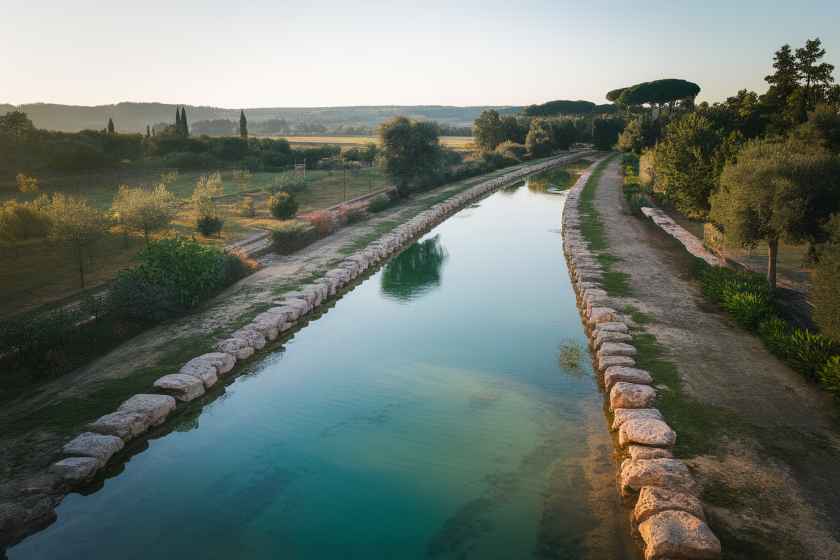
In an exciting development for history enthusiasts and travelers alike, a rare Roman-era water canal has been unearthed in Trabzon, Turkey, during urban renewal works in the city’s Çömlekçi neighborhood. Measuring approximately 300 to 400 meters in length, the canal is described as an incredibly rare archaeological asset—one that has no equivalent in Turkey. This fascinating discovery provides a fresh glimpse into the region’s rich historical layers, making Trabzon an even more enticing destination for those interested in ancient civilizations and their engineering feats.
The canal was identified during a redevelopment project in the area, and its location just 1.5 to 2 meters below the surface suggests it has been well preserved. Experts from various organizations, including the Trabzon Museum Directorate and Karadeniz Technical University, have conducted thorough investigations of the site, revealing a structure that dates back to the Roman period. With its combination of ancient architecture and practical engineering, the water canal promises to add a unique chapter to Trabzon’s tourism narrative.
A Rare Discovery for Trabzon’s Archaeological Landscape
Trabzon, a city that sits along Turkey’s stunning Black Sea coast, is already a well-known destination for its rich cultural heritage, vibrant local life, and scenic beauty. The discovery of the Roman water canal adds a new layer to its allure, offering both tourists and historians a rare opportunity to explore a well-preserved piece of Roman engineering. Experts are calling the canal a one-of-a-kind find in Turkey, and it is likely to draw significant attention from archaeologists, tourists, and photography enthusiasts keen on capturing glimpses of the ancient structure.
The water canal, approximately 2 meters wide and 2 meters deep, features a central channel about 1.2 meters wide. On either side of the water channel are walking platforms, measuring between 50 and 60 centimeters in width, which would have been used by those tending to the canal or working in the area. This discovery offers fascinating insights into the ways ancient civilisations managed water supply and infrastructure. For tourists, it provides a chance to step back in time and imagine the bustling trade routes and daily activities that once took place along the canal’s length.
Connecting Past and Present in Trabzon
For travelers visiting Trabzon, this newly discovered archaeological site adds to the already rich array of attractions the city has to offer. As one of the key cities along the ancient Silk Road, Trabzon is home to a wide range of historical monuments, such as the Hagia Sophia of Trabzon, the Sumela Monastery, and the Trabzon Castle. With this discovery, tourists can now deepen their understanding of the city’s historical significance by exploring an ancient Roman-era water system that has survived through the centuries.
This Roman canal is also a reminder of the city’s longstanding importance as a hub for both trade and culture. Situated on the Black Sea coast, Trabzon has always been a melting pot of civilizations, with influences from the Roman, Byzantine, and Ottoman empires. The unearthed water canal is a testament to the ancient engineering and planning skills that helped these cultures thrive in the region.
A New Tourism Attraction in Trabzon
The excavation of the Roman water canal presents a golden opportunity for Trabzon’s tourism sector. As travelers seek unique and off-the-beaten-path experiences, the discovery of this well-preserved structure adds a new dimension to the city’s already rich cultural offerings. History buffs and archaeology enthusiasts will find the site particularly appealing, and the canal’s location near the former Trabzon Port—an area historically significant for maritime trade—makes it an even more exciting addition to the city’s list of must-see landmarks.
With detailed examinations ongoing, the canal could potentially be opened to the public in the near future, allowing visitors to explore its fascinating architecture up close. Tourism operators are likely to integrate the canal into their city tours, which could spark further interest in Trabzon as an archaeological destination. Moreover, the canal’s link to the city’s historical sewage system, which was later adapted during the Ottoman and early Republican periods, adds a layer of complexity that makes it an even more compelling attraction for tourists interested in the evolution of urban infrastructure over time.
Conservation Efforts and the Role of Local Authorities
Since the discovery, various local authorities, including the Disaster and Emergency Management Authority (AFAD), have taken measures to ensure the safety of those working on the site. After initial reports indicated potential hazardous fumes in the underground tunnel, careful precautions were taken before further examination was conducted. The Trabzon Museum Directorate, along with academics from Karadeniz Technical University, continues to play a vital role in studying and preserving the canal.
Such efforts are essential to preserving the canal’s integrity and ensuring that future generations of tourists can enjoy the site safely. As the excavation work continues, there is hope that more hidden treasures may be unearthed in the surrounding area, adding further depth to Trabzon’s already rich historical narrative.
Trabzon’s Growing Appeal for Archaeology and History Enthusiasts
For those planning a visit to Trabzon, the discovery of this Roman water canal is just one more reason to explore the city. With its mix of Byzantine churches, Ottoman-era architecture, and now, Roman engineering feats, Trabzon is rapidly becoming a must-see destination for travelers interested in the history and culture of the Black Sea region.
The city offers a wealth of attractions, including scenic views, ancient ruins, and vibrant local markets. Its stunning coastline and proximity to natural wonders like Uzungöl Lake and the Zigana Mountains further enhance its appeal as a year-round destination for tourists.
Conclusion: Discover the History of Trabzon
The unearthing of the Roman-era water canal is a major milestone for Trabzon’s growing tourism scene. As experts continue to study the site, it promises to offer valuable insights into the city’s rich history and its role in ancient trade and urban life. For travelers keen on exploring history firsthand, this discovery offers a unique chance to experience the ancient world of Trabzon, from its Roman roots to its Ottoman legacy. As tourism in the city grows, the canal will likely become a key attraction, helping Trabzon solidify its position as one of Turkey’s most fascinating cultural destinations.
The post Unearthed Roman Water Canal in Trabzon Offers Tourists a Unique Glimpse into Ancient Engineering and History appeared first on Travel And Tour World.
