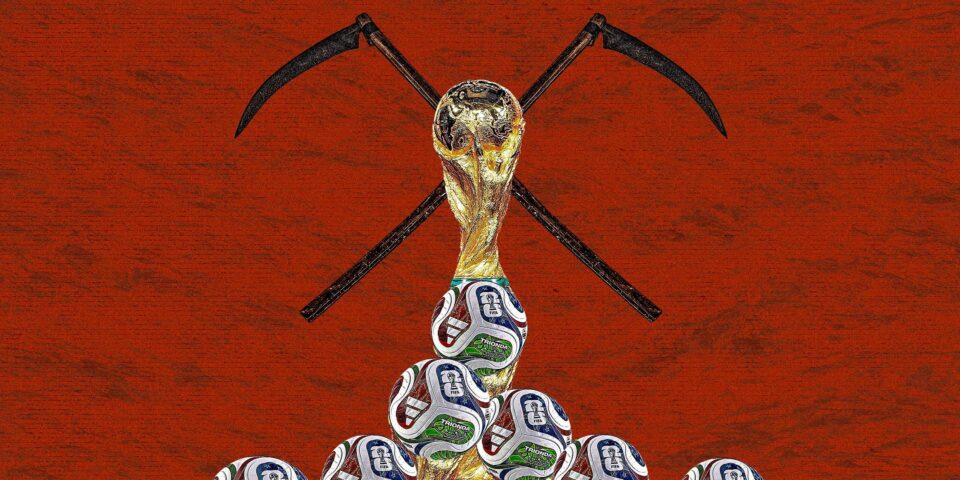
Every year, as the World Cup group stage comes into focus, there’s one question that dominates the conversation: Which is the Group of Death?
The Group of Death becomes a subjective descriptor of whatever group looks the most daunting heading into the tournament. It’s a term that spawns debate and captures the dread of not making it past the group stage. It is, at its core, a term that crowns the hardest group at the World Cup.
The 2026 World Cup will be the first year with an expanded 48-team field, growing the tournament for the first time since 1998. And with 16 teams getting added, the road to the knockout stage looks a whole lot easier for the most dominant countries.
So forget which group can hold the label of the Group of Death. The new, more important question is:
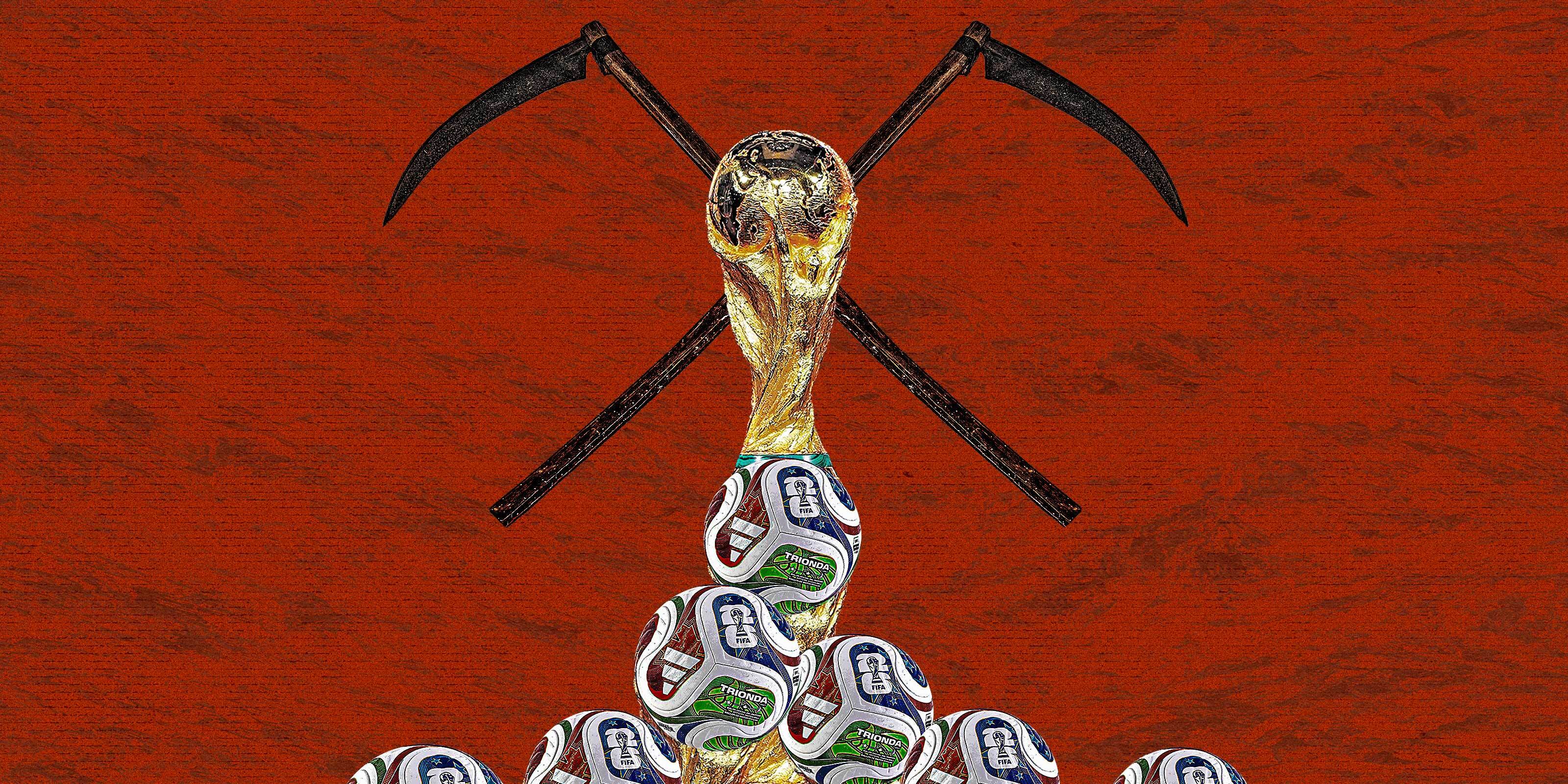
Is the Group of Death dead?
The problem with growing the World Cup by 16 teams in one go is that some groups don’t even have that dark horse anymore. When looking at the groups for the opening round, the road to the knockout looks particularly smooth for some top teams like Spain (Uruguay, Cape Verde, Saudi Arabia), England (Croatia, Panama, Ghana) and Brazil (Morocco, Scotland, Haiti).
And it’s not just a gut check: The data backs it up too. In those three examples, those country’s World Elo ratings are hundreds of points higher than the likely third- and fourth-place opponents, and sometimes even than the most likely second-place finishers.
World Cup hub | Viewer’s guide | Power rankings | Predictions | Players to watch
Spain’s luck is particularly egregious when you compare the country’s 2165 Elo rating (the top ranked in Elo) to its competition: Uruguay is 16th in the world at 1892, while Cape Verde has a rating of 1576 and Saudi Arabia is rated at 1566. Stats-wise, it’s the biggest mismatch of the tournament.
But there are some groups with the potential to get interesting. 2022 runner-up France enters the tournament as a far and away favorite to win Group I, with the top ranking in the FIFA standings and the third-highest Elo rating. But Senegal and Norway have a chance to grapple for that second spot, statistically speaking: Senegal, one of the best teams in the CAF, has an Elo rating of 1866, and sits as the 14th-ranked team in the FIFA standings. Norway, meanwhile, has an Elo of 1912 and a FIFA ranking at No. 31. Only Iraq (1608 Elo rating, ranked 57th in FIFA standings) sticks out as a clear underdog after qualifying via the intercontinental playoff.
Another potential candidate is Group D, where the United States is competing. Group D is the most evenly matched group in the tournament. The average Elo rating between the four teams is 1811, smack in the middle of the four team’s ratings; the average deviation between the four countries is just 56 points. USA fans might not be thrilled to find out that the USMNT has their work cut out for them in this group stage, but the U.S. entered the tournament with the lowest Elo rating compared to group mates Türkiye, Australia and Paraguay.
-
Türkiye: 1902 (Elo rating); 14th (Elo global ranking); 22th (FIFA standings)
-
Paraguay: 1833; 22nd; 40th
-
Australia: 1775; 27th; 27th
-
USA: 1733; 37th; 16
A debate with a long history
As an idea, the Group of Death has been around for decades. Mexican journalists reportedly coined the term — “el grupo de la muerte” — ahead of the 1970 World Cup in reference to Group 3, of four total group stage groups. In a year when the tournament featured only 16 teams, Group 3 had England (the reigning champion), Brazil (the eventual champion), Czechoslovakia and Romania.
In 1994, a different Group E — containing Italy, Ireland, Mexico and Norway — became one of the most famous Groups of Death ever. All four teams ended with four points each, illustrating the term’s original meaning: a group in which virtually anyone could advance and anyone could go home.
But as the tournament expanded, the gulf between the top teams and the rest of the field grew. At some point in the 2000s, the “Group of Death” moniker was applied to groups with a very specific makeup: One surefire winner, one high-ranked team, one potential dark horse and one true underdog.
More than once, that potential dark horse has ended up making a huge difference. In the 2014 World Cup, Group B saw Chile knock off defending champion Spain; meanwhile, in Group D, Costa Rica and Uruguay kept European heavyweights Italy and England out of the knockout round completely. Both groups were labeled as potential Groups of Death ahead of the tournament, and lived up to the title.
A nail in the coffin
Neither Group I or Group D this year, though, are particularly strong cases as a hard-and-fast Group of Death. It would be over-exaggeration to describe these groups with minimal different outcomes as “death.”
To make it clear: Expanding the tournament is not explicitly a bad thing. The expansion allows teams that typically get overlooked a chance to break into the global stage; there will be four more teams making their debuts this summer that almost certainly wouldn’t have if it wasn’t for the larger field. Growing the tournament makes it even more global, and that’s a good thing. But you can’t pretend that it makes it more competitive.
It’s not clear yet whether the expanded tournament will truly be as much of a breeze for the top teams as it seemingly could be. Plenty of things can happen: Home field advantage might catapult the U.S., Canada and Mexico far beyond expectations, or the best teams in the world could suddenly fall apart, or the underdogs could suddenly start putting up the performance of a lifetime.
But if there was ever a year to see the concept of the Group of Death crumble, it would be this year. The tournament field didn’t suddenly become oversaturated with good, but still growing teams overnight. That gulf has been growing for years, and FIFA just accelerated the timeline.
All of this is to say that maybe the Group of Death isn’t dead just because of the 2026 World Cup. It might’ve been dead for quite some time now; we’re just finally burying the body.
