
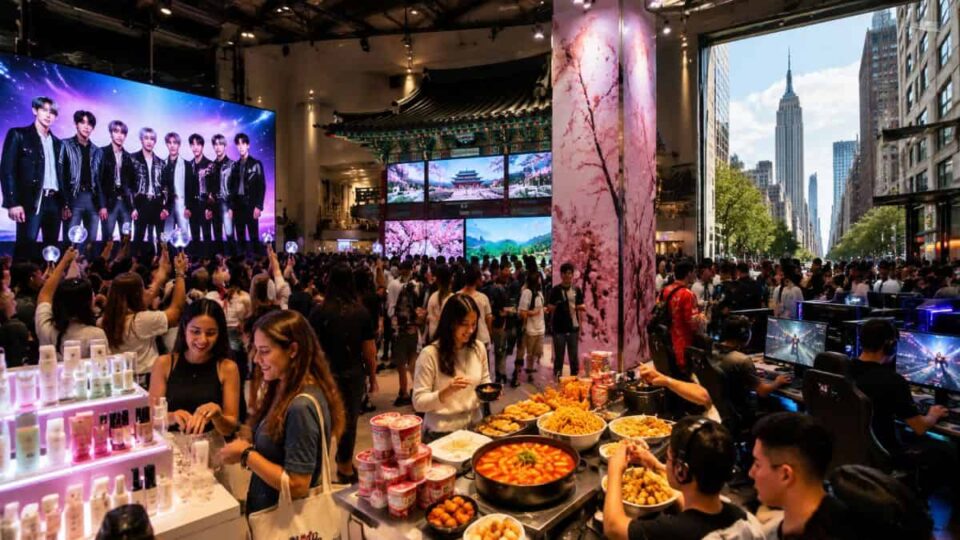

Jeonju Teams Up With Gwangju and more iconic food destinations as Korea invites global travellers on an unforgettable culinary journey. From Jeonju’s celebrated flavours to Gwangju’s rich food traditions, these iconic destinations take centre stage for travellers seeking authentic Korean cuisine. Moreover, every food destination adds a distinctive taste, story and cultural experience to the journey. Jeonju and Gwangju connect traditional recipes with vibrant markets, while more Korean destinations offer equally memorable culinary discoveries. For food-loving travellers, this ultimate culinary journey opens new ways to experience Korea beyond its famous landmarks. Travel And Tour World urges readers to explore the entire story and discover these remarkable food destinations.
6 Food Destinations in South Korea Every Traveller Should Explore for Authentic Korean Flavours
South Korea‘s food culture gives travellers a reason to move beyond the country’s most famous landmarks. From Seoul’s bustling markets to Jeju’s island produce, different regions offer distinctly local dishes, ingredients and eating traditions.
The wider tourism picture also shows why food-led travel matters. South Korea recorded 16.37 million inbound tourists in 2024, compared with 11.03 million in 2023, 3.20 million in 2022 and 967,000 in 2021. The Ministry of Culture, Sports and Tourism reported that 2024 arrivals reached 93.5% of the 2019 level.
For destination-level comparisons, however, travellers should be careful. Korean tourism statistics use different measures, including inbound visitors, regional visitors and attendance at major tourist attractions. The Korea Tourism Organization explains that its national tourism statistics are compiled from approved government statistics and administrative data.
The following guide therefore uses officially published destination or attraction visitor figures where available, rather than creating unsupported citywide estimates.
South Korea Food Tourism at a Glance
| Indicator | 2021 | 2022 | 2023 | 2024 | 2025 |
|---|---|---|---|---|---|
| South Korea inbound tourists | 967,000 | 3,198,000 | 11,032,000 | 16,370,000 | Official annual figure should be checked against final MCST release |
| Recovery compared with 2019 | Pandemic period | Partial recovery | Strong recovery | 93.5% | Continued recovery |
| Seoul foreign visitors | — | 2.19m | 8.03m* | 13.14m | 18.94m** |
| Jeju total visitors | 12.01m | 13.89m | 13.37m | — | — |
| Gwangju major-attraction visitors | 3.68m | 6.30m | 6.68m | 7.47m | — |
| Gangneung total visitors | 30.44m | 35.74m | 34.21m | 33.23m | 34.37m |
| Busan foreign visitors | — | — | — | — | 3.64m |
* Seoul’s 2023 figure is reported in one Seoul government tourism publication as 8.86 million for the full year, while another presentation uses a different statistical series. The distinction reflects differing measurement periods and sources.
** Seoul’s 2025 figure is listed by Seoul’s official open-data statistics as 18,936,562 foreign tourists.
Jeju’s published series in a Jeju government report runs through 2023. Gangneung’s 2025 figure is reported as 34,369,053. Gwangju’s figures represent visitors to designated major attractions and are therefore not directly equivalent to citywide visitor counts.
1. Seoul: The Best Starting Point for a Multi-Regional Korean Food Journey
Seoul works particularly well as the first stop because travellers can sample food from across Korea without leaving the capital.
Start around Gwangjang Market, one of the city’s best-known traditional markets. Korea Tourism Organization information highlights bindaetteok, yukhoe, mayak gimbap, handmade noodles and bibimbap among its food experiences. The market’s food area operates late into the evening, making it suitable for travellers arriving after sightseeing.
Three foods should sit high on a first-time traveller’s list. Bindaetteok is a mung-bean pancake cooked with ingredients such as sprouts and pork. Mayak gimbap consists of small seaweed rice rolls traditionally paired with mustard sauce. Yukhoe is Korean-style seasoned raw beef and should be purchased only from reputable establishments with appropriate food-handling standards.
For a second market experience, explore Gyeongdong Market. The Korea Tourism Organization’s government-supported traditional-market guide identifies cold noodles and other Korean specialities there.
A practical one-day food route begins with breakfast near Jongno, followed by Gwangjang Market for lunch. Spend the afternoon around Gyeongbokgung and Bukchon before returning to the market district for an evening meal.
Seoul’s tourism recovery provides substantial context. Seoul recorded 13.14 million foreign tourists in 2024, following 8.86 million in 2023 and 2.19 million in 2022 in the cited city-government series. In 2025, Seoul’s official statistics list 18,936,562 foreign tourists.
Seoul Visitor Comparison
| Year | Foreign visitors | Context |
|---|---|---|
| 2021 | Not comparable in available series | Pandemic restrictions |
| 2022 | 2.19m | Tourism reopening |
| 2023 | 8.86m | Strong recovery |
| 2024 | 13.14m | Continued international recovery |
| 2025 | 18.94m | Official Seoul statistics |
2. Busan: Seafood, Fishcake and Coastal Korean Street Food
Busan gives travellers a completely different food experience because its culinary identity is closely connected with the sea.
Begin around Jagalchi Market, where travellers can encounter fresh seafood and raw fish. Visit Busan identifies Jagalchi, Gijang, Gukje and Bupyeong Kkangtong markets as important food stops.
The three essential foods are fresh seafood, Busan eomuk and milmyeon. Busan’s fishcake tradition is especially distinctive. Korea Tourism Organization material notes that Busan fishcakes use ground fish and appear in numerous shapes and flavours.
For milmyeon, Visit Busan lists long-established restaurants including Gaegeum Milmyeon, Daeseong Milnaengmyeon and Naeho Naengmyeon. The same official tourism platform also highlights pork soup as another signature Busan dish.
A traveller can build a two-day food itinerary around Nampo-dong and the old market district. Start at Jagalchi in the morning, explore BIFF Square around midday and visit Bupyeong Kkangtong Market later. The second day can move towards Gijang for seafood before finishing around Haeundae or Gwangalli.
Busan recorded 3.64 million foreign tourists in 2025, according to Visit Busan. The city also promoted a wider tourism target of three million international visitors and 100 million domestic travellers.
A 2024 Busan tourism analysis found that food was becoming particularly important to destination choice. It reported that the share selecting food exploration as a reason for visiting Busan increased from 55.7% to 81.7% following the city’s Michelin-related exposure.
Busan Food Plan
| Stop | Food | Recommended area |
|---|---|---|
| Morning | Seafood | Jagalchi Market |
| Lunch | Fishcake/eomuk | Bupyeong Kkangtong Market |
| Afternoon | Snacks | Gukje Market |
| Dinner | Milmyeon | Established local restaurant |
| Next morning | Seafood | Gijang Market |
3. Jeonju: Korea’s Traditional Food Capital for Slow Travellers
Jeonju is particularly suitable for travellers who want food combined with heritage.
The city is strongly associated with Jeonju bibimbap, kongnamul gukbap and hanjeongsik. Korea Tourism Organization describes these as signature foods and also recommends the city’s makgeolli alleys for a traditional evening experience.
The three essential foods are Jeonju bibimbap, kongnamul gukbap and makgeolli with assorted side dishes.
Jeonju bibimbap is particularly suitable for first-time visitors because it brings together rice, vegetables, egg, meat and Korean seasoning in one dish. VISITKOREA lists specialist restaurants including Han Kook Jib and Gapgi Hoegwan. Han Kook Jib dates back to 1952 and provides English, Japanese and Chinese menu information.
Travellers can spend the morning walking through Jeonju Hanok Village before stopping for bibimbap. The afternoon can include Gyeonggijeon Shrine and the surrounding historic streets. Dinner can focus on kongnamul gukbap, followed by a visit to a makgeolli alley.
Jeonju also provides useful evidence of food tourism’s connection with heritage. The city’s official information records 15 million visitors to Jeonju Hanok Village in 2023, described as a record at that time.
Jeonju Three-Food Checklist
| Food | What to expect | Best travel setting |
|---|---|---|
| Jeonju bibimbap | Rice, vegetables, meat and seasoned toppings | Lunch |
| Kongnamul gukbap | Bean-sprout rice soup | Breakfast or late meal |
| Makgeolli spread | Rice wine with numerous side dishes | Evening |
4. Jeju: Island Produce, Black Pork and Seafood
Jeju changes the food journey from urban markets to island produce.
The three foods travellers should prioritise are Jeju black pork, abalone and cutlassfish. Korea Tourism Organization specifically identifies black pork and cutlassfish among Jeju’s notable foods.
Black pork is best experienced grilled. Official tourism listings feature restaurants serving grilled black pork belly and combinations with abalone and seafood.
For a market experience, visit Dongmun Traditional Market in Jeju City. Korea Tourism Organization describes it as the island’s largest traditional market and highlights black-pork rolls, abalone gimbap and other evening foods. Seogwipo Maeil Olle Market provides another opportunity to sample omegitteok, hallabong juice and seafood.
Jeju’s official government statistics show how dramatically tourism recovered after the pandemic. Total visitors reached 12,008,437 in 2021, 13,889,502 in 2022 and 13,370,529 in 2023. Foreign visitors increased from only 48,278 in 2021 to 86,444 in 2022 and 709,350 in 2023.
A three-day itinerary works well. Spend day one around Jeju City and Dongmun Market. Use day two for the southern coast and Seogwipo Maeil Olle Market. Reserve day three for coastal scenery, Hallasan-related sightseeing or an offshore-island excursion.
Jeju Visitor Statistics
| Year | Total visitors | Domestic | Foreign |
|---|---|---|---|
| 2021 | 12,008,437 | 11,960,159 | 48,278 |
| 2022 | 13,889,502 | 13,803,058 | 86,444 |
| 2023 | 13,370,529 | 12,661,179 | 709,350 |
| 2024 | Not included in cited government series | — | — |
| 2025 | Not included in cited government series | — | — |
The figures demonstrate why a simple year-to-year comparison with Seoul or Busan would be misleading. Jeju’s statistics cover total island visitors, while Seoul’s figures above refer to foreign tourists.
5. Gwangju: A Deep Dive Into Southern Korean Food Culture
Gwangju is an excellent choice for travellers interested in traditional southern Korean cuisine.
The city’s three essential food experiences are tteokgalbi, kimchi and local-style Korean set meals.
The Songjeong-dong Tteokgalbi Street is especially useful for food-focused travellers. Korea Tourism Organization records around 20 restaurants specialising in tteokgalbi in the area. Unlike many versions elsewhere, the local patties traditionally combine beef and pork. Restaurants commonly serve them with a long-simmered bone broth.
Gwangju is also strongly associated with kimchi culture. Its annual Gwangju Kimchi Festival combines food stalls, kimchi demonstrations, chef programmes, markets and hands-on experiences.
Travellers can spend the first morning exploring Songjeong Market and Tteokgalbi Street. The afternoon can focus on museums or the wider cultural district. Evening dining can include a Korean table-style meal featuring multiple side dishes.
Official tourism statistics provide a useful five-year reference, although they count major attraction visits rather than unique city visitors.
| Year | Major attraction visits |
|---|---|
| 2020 | 3,031,716 |
| 2021 | 3,675,106 |
| 2022 | 6,301,154 |
| 2023 | 6,681,034 |
| 2024 | 7,471,349 |
Gwangju’s tourism organisation separately reported 6.6811 million tourism visitors in 2023, including approximately 6.6767 million domestic and 4,300 foreign visitors.
This distinction matters because attraction attendance can include repeat visits.
6. Gangneung: Coffee, Chodang Tofu and East Coast Flavours
Gangneung provides a food journey shaped by the East Sea, traditional tofu-making and café culture.
The three foods to prioritise are Chodang sundubu, seafood-based dishes and Gangneung coffee.
Chodang sundubu is the city’s signature culinary experience. Korea Tourism Organization listings describe restaurants producing soft tofu using traditional methods. Chodang Halmeoni Sundubu, for example, prepares tofu fresh each morning and offers both a plain sundubu set and a seafood-based spicy version.
Travellers can begin around Chodang Sundubu Village in the morning, when tofu restaurants are particularly suited to breakfast. One official listing, Chodanggol Sundubu, operates during morning hours and serves bean-curd hot pot.
The afternoon can move towards the coast and café districts. Gangneung’s coffee identity makes it possible to combine a meal with a relaxed café stop rather than treating food as a single restaurant visit.
The city’s visitor numbers are unusually large because the official regional measurement includes broad visitor flows rather than simply international arrivals.
| Year | Gangneung visitors |
|---|---|
| 2021 | 30,439,048 |
| 2022 | 35,738,924 |
| 2023 | 34,210,099 |
| 2024 | 33,233,340 |
| 2025 | 34,369,053 |
The figures show a 17.4% increase from 2021 to the 2022 peak, followed by declines in 2023 and 2024. The 2025 figure returned above 34 million.
Gangneung’s Ojukheon and Municipal Museum also recorded a strong visitor trajectory. Attendance reached 646,280 in 2022, 577,962 in 2023 and 561,985 in 2024, before reaching 613,492 by December 17, 2025.
Five-Year Tourism Comparison Across the Six Food Destinations
| Destination | 2021 | 2022 | 2023 | 2024 | 2025 |
|---|---|---|---|---|---|
| Seoul | N/A | 2.19m foreign | 8.86m foreign | 13.14m foreign | 18.94m foreign |
| Busan | N/A | N/A | N/A | N/A | 3.64m foreign |
| Jeonju | Not comparable | Not comparable | 15m Hanok Village visits | Not available in same series | Not available |
| Jeju | 12.01m | 13.89m | 13.37m | Not in cited series | Not in cited series |
| Gwangju | 3.68m attraction visits | 6.30m | 6.68m | 7.47m | Not available |
| Gangneung | 30.44m | 35.74m | 34.21m | 33.23m | 34.37m |
Important statistical note: These numbers should not be added together or interpreted as a ranking. They represent different statistical populations and collection methods. The Korea Tourism Organization specifically explains that Korean tourism statistics are compiled from several official sources and that definitions vary according to the indicator.
Food-Focused South Korea Travel Plan
Travellers with 10 days can connect all six destinations without treating food as an isolated activity.
| Day | Destination | Main food focus | Suggested experience |
|---|---|---|---|
| 1 | Seoul | Gwangjang Market foods | Market and palace sightseeing |
| 2 | Seoul | Korean market dishes | Jongno and traditional markets |
| 3 | Jeonju | Bibimbap, kongnamul gukbap | Hanok Village |
| 4 | Jeonju | Makgeolli spread | Historic streets and evening dining |
| 5 | Gwangju | Tteokgalbi | Songjeong-dong |
| 6 | Busan | Seafood and eomuk | Jagalchi and markets |
| 7 | Busan | Milmyeon | Nampo-dong and coastal areas |
| 8 | Gangneung | Sundubu | Chodang and East Coast |
| 9 | Jeju | Black pork and seafood | Jeju City and Dongmun |
| 10 | Jeju | Abalone, cutlassfish and local produce | Seogwipo |
The Numbers Behind South Korea’s Food-Travel Opportunity
South Korea’s national visitor recovery provides the wider context for these regional food journeys.
| Year | Inbound tourists | Change from previous year |
|---|---|---|
| 2020 | 2.519m | Pandemic impact |
| 2021 | 0.967m | -61.6% |
| 2022 | 3.198m | +230.7% |
| 2023 | 11.032m | +245.0% |
| 2024 | 16.370m | +48.4% |
The calculation shows how rapidly international tourism returned after the sharp pandemic contraction. MCST’s official figures put 2024 arrivals at 16.37 million.
The Ministry also reported that Korea’s 2025 inbound market was expected to exceed the previous record, with a December 2025 government release forecasting 18.7 million foreign visitors for the year.
For travellers, the significance is practical. More international visitors create greater opportunities to build regional trips around food rather than concentrating every journey in Seoul.
What Travellers Should Know Before Planning a Korean Food Trip
Food travellers should reserve enough time for markets rather than visiting only restaurants.
Traditional markets are often most rewarding when visitors arrive hungry and sample several small portions.
Travellers should also carry a translation application because smaller restaurants may have limited foreign-language menus.
For seafood and raw dishes, choose established businesses and follow local food-safety guidance.
Vegetarian and vegan travellers should confirm ingredients carefully. Fish sauce, shrimp, anchovy stock and meat-based broths can appear in dishes that otherwise look vegetable-based.
Finally, opening hours can change. Korea Tourism Organization listings should be checked before travelling, particularly for independent restaurants and market stalls.
South Korea’s culinary appeal is ultimately regional. Seoul delivers market variety. Busan connects food with the coast. Jeonju combines cuisine with heritage. Jeju brings island ingredients to the table. Gwangju showcases southern flavours. Gangneung blends tofu, seafood and coffee culture.
Together, these destinations give global travellers a way to experience Korea through what local communities cook, serve, preserve and eat, rather than simply moving between famous attractions.
Conclusion
Jeonju Teams Up With Gwangju and more iconic food destinations to reveal a delicious side of Korea that deserves a place on every traveller’s itinerary. From traditional recipes and bustling markets to regional specialities and distinctive local flavours, each destination offers a different culinary story. Moreover, this ultimate culinary journey allows visitors to experience Korea through food, culture and everyday traditions. Jeonju and Gwangju take centre stage alongside Seoul, Busan, Jeju and Gangneung, creating diverse experiences for international travellers. For anyone planning a Korea trip, these iconic food destinations provide plenty of reasons to explore beyond the usual attractions and taste the country one destination at a time.
The post Jeonju Teams Up With Gwangju and More as Iconic Food Destinations of Korea Take Centre Stage for an Ultimate Culinary Journey appeared first on Travel And Tour World.
