
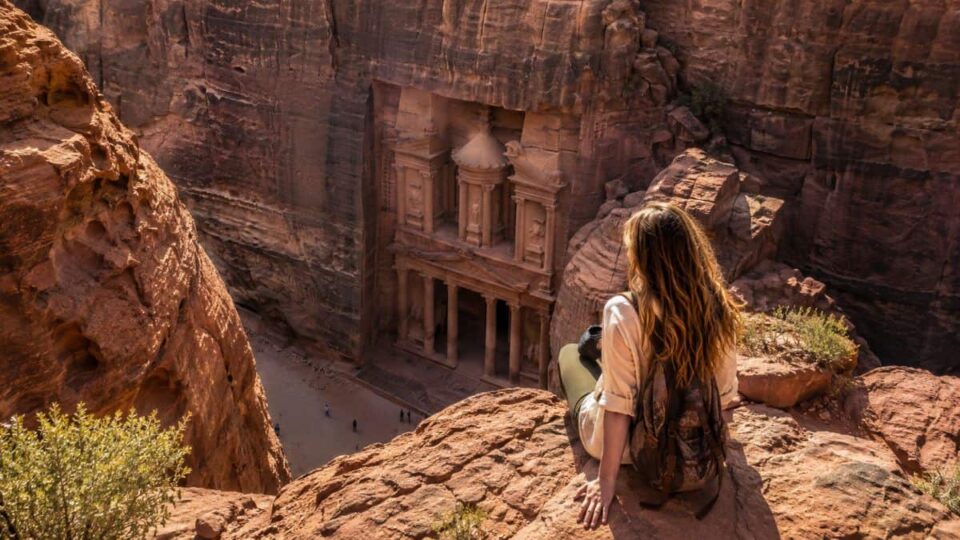

The Jordan tourism sector is currently navigating one of its most challenging periods in recent history. Although the Hashemite Kingdom of Jordan remains politically stable and remarkably secure, ongoing regional conflicts have severely deterred international visitors, sending devastating ripple effects across the national economy. With iconic cultural and religious landmarks like Petra, Mount Nebo, and Madaba witnessing unprecedented declines in footfall, local communities and businesses are facing severe financial strain. However, a bold new $120 million government investment aiming to revitalise global pilgrimage destinations provides an essential beacon of hope. This strategic recovery plan could ultimately save the nation’s economy.
Background: Understanding the Geopolitical Impact on the Jordan Tourism Sector
The Hashemite Kingdom of Jordan has long been regarded as an oasis of absolute stability within a historically volatile region. Situated at the crossroads of the Middle East, the nation has spent decades cultivating a reputation as a safe, welcoming, and culturally rich destination for international travellers. However, the Jordan tourism sector is inherently sensitive to the geopolitical climate surrounding its borders. Despite maintaining strict neutrality in ongoing regional hostilities and upholding the landmark 1994 Wadi Araba peace treaty, Jordan frequently suffers from guilt by geographical association. When conflict erupts in neighbouring territories, the immediate reaction from the international travel community is often one of profound caution, leading to mass cancellations and suspended flight routes.
This unwarranted phenomenon has repeatedly stifled the growth of the Jordanian economy, a system that relies heavily on foreign exchange brought in by international holidaymakers. Historically, whenever tensions flare in the broader Levant region, Western governments are quick to issue sweeping travel advisories that inadvertently encompass safe, non-combatant nations like Jordan. For prospective tourists situated thousands of miles away in North America or Western Europe, the nuances of Middle Eastern geography are often misunderstood. The perception of an overarching regional threat is enough to deter families, religious pilgrim groups, and solo adventurers from boarding a flight to Amman, thereby severely suffocating a vital economic artery that millions of Jordanian citizens depend upon for their daily livelihoods.
Regional Conflict and the Devastating Spillover Effect
The current crisis facing the Jordan tourism sector is a textbook example of the geopolitical “spillover effect.” As of late 2026, the ongoing conflicts in Gaza and southern Lebanon have created a profound psychological barrier for international travellers contemplating a visit to the Middle East. While Jordan’s borders remain completely secure and domestic daily life continues undisturbed by warfare, the shadow of the broader regional crisis looms large over its hospitality industry. This spillover effect does not manifest through physical incursions, but rather through the rapid evaporation of consumer confidence in long-haul travel to the region.
Travel agencies specialising in Middle Eastern itineraries have reported that the fear of conflict expansion is the primary driver behind the sudden and catastrophic drop in new bookings. Travellers often operate under the assumption that regional instability could unexpectedly trap them or disrupt their journeys, prompting them to redirect their disposable income towards alternative destinations in Southern Europe or Southeast Asia. This shift has resulted in a devastating Middle East travel crisis that disproportionately penalises peaceful nations. Consequently, Jordan’s world-renowned archaeological sites, which are entirely insulated from the violence occurring beyond the country’s borders, have been left eerily quiet, entirely devoid of the bustling crowds that typically define the peak tourist seasons.
Latest Official Developments: A Travel Sector in Deep Distress
According to verified reports and statements issued by the Ministry of Tourism and Antiquities as of September 2026, the ongoing downturn has entrenched itself deeply within the domestic economy. Early indicators from 2024 and 2025 demonstrated a clear downward trajectory, and recent data confirms that international arrivals have continued to stagnate. Although the Kingdom has seen a slight uptick in regional Arab tourism and domestic travel, these demographics simply do not replace the substantial foreign currency injections previously provided by long-haul Western tourists.
The distress across the industry is palpable. Major international cruise lines, which traditionally dock at the southern port city of Aqaba, have largely suspended their Red Sea itineraries due to maritime security concerns in the broader region. This suspension cuts off a highly lucrative pipeline of day-trippers who would typically disembark to visit the Wadi Rum desert and Petra. Furthermore, major European low-cost aviation carriers have drastically reduced their flight frequencies to Queen Alia International Airport in Amman, citing a lack of sustained passenger demand. For a country that has heavily invested in modernising its aviation infrastructure to accommodate mass tourism, these latest official developments represent a severe logistical and financial setback.
Statistical Reality: Analysing the 61% Drop in Petra Visitors
Nowhere is the current crisis more visually and statistically evident than in the ancient Nabataean city of Petra. As the undisputed crown jewel of the Jordan tourism sector, Petra serves as the primary magnet for international visitors. However, official Petra visitor statistics released by the Petra Development and Tourism Region Authority paint a highly distressing picture. In 2023, the UNESCO World Heritage site celebrated a record-breaking year, welcoming an unprecedented 1,174,137 visitors. Yet, following the outbreak of regional hostilities, this number plummeted to a mere 457,215 the following year, representing a catastrophic drop of approximately 61 percent.
This statistical reality is highly alarming for both local authorities and the national government. To put this into perspective, a 61 percent drop equates to over 700,000 missing tourists, each of whom would have paid an entrance fee of 50 Jordanian Dinars (roughly $70 USD), whilst simultaneously spending heavily on accommodation, dining, transportation, and local handicrafts. The financial void left by this sudden absence is crippling the municipal budget required to maintain and preserve the fragile archaeological structures of the ancient city. The famed Siq, a narrow gorge leading to the iconic Treasury, which is usually echoing with the footsteps and chatter of global tourists, now stands as a quiet testament to the severe collateral damage inflicted by regional instability.
The Staggering Economic Implications for the Jordanian National Budget
The structural importance of tourism to the Jordanian economy cannot be overstated. Historically, the hospitality and travel industry accounts for roughly 14 percent of the nation’s Gross Domestic Product (GDP). It is a vital pillar that supports hundreds of thousands of direct and indirect jobs, generates essential tax revenue for the state treasury, and acts as a primary source of foreign exchange reserves. The Central Bank of Jordan closely monitors these tourism receipts, as a healthy influx of US Dollars and Euros is absolutely crucial for maintaining the kingdom’s balance of payments and sustaining the fixed peg of the Jordanian Dinar to the US Dollar.
When a sector responsible for nearly a seventh of the entire national economic output experiences a sudden, prolonged contraction, the macroeconomic implications are severe. The government is forced to grapple with diminished tax revenues at a time when public spending on social safety nets is increasingly necessary to support unemployed citizens. Furthermore, the loss of foreign currency inflows places additional pressure on the Central Bank’s reserves, complicating the nation’s ability to service its external debt obligations. The current downturn is not merely a temporary inconvenience for hotel operators; it is a fundamental threat to the fiscal stability of the entire country, necessitating urgent, large-scale financial intervention from the highest levels of government.
Hotel Closures, Job Losses, and the Human Cost in Wadi Musa
Behind the daunting macroeconomic figures lies a deeply profound human crisis, particularly in the town of Wadi Musa, which serves as the immediate gateway to Petra. The collapse in visitor numbers has rendered the operational costs of many local hospitality businesses entirely unsustainable. Official figures from the Petra tourism authority confirm that at least 32 hotels have been forced to shut down their operations indefinitely. Consequently, nearly 700 individuals working directly within these establishments have lost their primary source of income, pushing countless families into sudden financial precarity.
In southern Jordan, a single hospitality salary often supports a large extended family, meaning that 700 direct job losses actually impact several thousand vulnerable dependents. The ripple effect extends far beyond the hotel reception desks. It severely impacts the local Bedouin communities who operate animal transport services within the archaeological park, the independent tour guides who rely exclusively on daily tips, and the small-scale artisans who craft souvenirs. Women’s cooperatives, which have successfully empowered local females through the sale of traditional textiles and ceramics, have seen their revenue streams vanish almost overnight. The human cost of this crisis is a sobering reminder of the fragile, interconnected nature of communities reliant upon the Jordan tourism sector.
Government Announcements: Inside the Groundbreaking $120 Million Master Plan
Recognising the existential threat facing the national economy, the Jordanian government has decisively shifted from passive observation to aggressive, strategic intervention. In a landmark announcement, the government confirmed the launch of a monumental $120 million development project designed to completely revitalise the nation’s religious tourism infrastructure. Directed by King Abdullah II and meticulously supervised by Prime Minister Jaafar Hassan, this ambitious master plan is targeted at transforming the sacred site of Al-Maghtas into a premier global pilgrimage destination.
This official government announcement represents one of the largest and most strategic financial commitments to the Jordan tourism sector in modern history. Rather than merely offering short-term subsidies to struggling hoteliers, the government has opted for a long-term structural investment aimed at radically enhancing the country’s tourism product. By focusing heavily on religious tourism, Jordan is tapping into a highly resilient demographic. Religious pilgrims are historically much less deterred by geopolitical friction than standard leisure tourists, making this demographic an ideal target for stabilising the industry against future regional shocks. The master plan is officially set to commence preliminary works in the first quarter of 2027.
Transforming Al-Maghtas: The Future of Bethany Beyond the Jordan
At the very heart of this $120 million investment lies Al-Maghtas, globally recognised as Bethany Beyond the Jordan. Situated on the rugged eastern bank of the Jordan River, this site holds profound theological and historical significance as the verified location where John the Baptist baptised Jesus Christ. Officially designated as a UNESCO World Heritage site in 2015, the area currently attracts around 200,000 visitors annually. However, the government’s new Al-Maghtas development initiative aims to exponentially increase this figure to a staggering one million annual visitors over the coming years.
The strategic goal of this transformation is to shift the narrative surrounding the site from a brief, two-hour stopover into a comprehensive, multi-day spiritual retreat. Currently, many tourists visit the site fleetingly as part of a broader, fast-paced itinerary. By creating an immersive, spiritually enriching environment, the government hopes to encourage religious tourists to extend their stays, thereby increasing their daily expenditure within the local economy. Furthermore, the timing of this development is critical, as it is being specifically accelerated to ensure all facilities are fully operational in time to host the massive global celebrations anticipated for the 2,000th anniversary of the baptism of Jesus Christ in 2030.
Strategic Breakdown: How the $120 Million Investment Will Be Spent
The allocation of the $120 million budget has been meticulously planned to ensure maximum infrastructural impact and long-term sustainability. According to official project blueprints, the largest single portion of the funding—$50 million—is dedicated to the construction of a state-of-the-art Baptism of Jesus Museum. Spanning an impressive 5,500 square metres, this facility will utilise advanced technology to chronicle the profound biblical, archaeological, and cultural history of the sacred site, providing visitors with a deeply educational experience before they approach the riverbank.
A further $40 million has been officially earmarked for the creation of an expansive pilgrim village. This dedicated zone will feature culturally appropriate hotels, environmentally sustainable restaurants, interfaith centres, and comprehensive visitor reception facilities, allowing pilgrims to reside directly adjacent to the sacred site. Additionally, $27 million is being channelled into critical baseline infrastructure, including the installation of independent solar energy networks, advanced water management systems, and upgraded road access to handle the anticipated surge in coach traffic. Finally, $3 million will be spent on establishing a 1,400-dunam green corridor, demonstrating Jordan’s ongoing commitment to ecological preservation and sustainable tourism development.
Preserving Sacred Heritage: The Tourism Importance of Mount Nebo and Madaba
While the Al-Maghtas master plan dominates recent headlines, the broader recovery of the Jordan tourism sector relies heavily on the preservation and promotion of its other sacred heritage sites, notably Mount Nebo and the ancient city of Madaba. Mount Nebo holds immense scriptural importance as the elevated ridge where the Prophet Moses was granted a sweeping view of the Promised Land before his passing. The site, which features a meticulously restored Byzantine church and breathtaking ancient mosaics, has historically been a mandatory inclusion for any religious tour operating in the Levant.
Just a short drive away lies Madaba, universally celebrated as the “City of Mosaics.” Madaba is home to the famous 6th-century mosaic map of the Holy Land, an archaeological treasure that provides invaluable geographical insights into the ancient world. The current Mount Nebo tourism slump has severely impacted the local economy of Madaba, where hundreds of highly skilled artisans dedicate their lives to crafting intricate mosaic replicas for international visitors. The sudden disappearance of these tourists has placed family-run workshops, boutique guesthouses, and independent cafes at severe risk. Ensuring that these secondary sites remain highly visible in international marketing campaigns is vital to maintaining the cultural authenticity of the Jordanian tourism experience.
Policy Implications: Strategic Diversification Away from Western Markets
In direct response to the severe vulnerability exposed by the current crisis, national tourism policymakers are actively rewriting their strategic playbooks. Historically, the Jordan tourism sector has relied disproportionately on high-spending tourists originating from North America and Western Europe. However, these demographics are notoriously sensitive to Middle Eastern instability, and their swift exodus has highlighted the danger of market over-reliance. Consequently, the Ministry of Tourism and Antiquities, alongside independent local travel agencies, is actively pursuing a policy of aggressive demographic diversification to build a more resilient visitor base.
This strategic pivot involves redirecting substantial marketing budgets towards rapidly emerging and traditionally less risk-averse markets. There is now a concerted official effort to attract travellers from Eastern Europe, the Indian subcontinent, and the broader Asia-Pacific region. These markets frequently demonstrate a higher tolerance for regional geopolitical complexities and are showing an increasing appetite for cultural and historical exploration. By actively fostering new aviation partnerships and tailoring promotional campaigns to suit the specific cultural preferences of Asian and Eastern European travellers, Jordan is laying the groundwork for a much more balanced and structurally sound tourism economy that cannot be easily derailed by Western travel advisories.
Expert and Official Statements on the Crisis
The severity of the situation has prompted remarkably candid responses from senior officials tasked with managing the crisis. Providing a sobering assessment of the landscape, Abdul Razzaq Arabiyat, the director of the national tourism board, recently addressed the immense difficulties faced by local operators. In statements carried by official state media, he noted, “We feel the repercussions of the aggression on Gaza every day, especially for providers of tourism services.” Such direct acknowledgement from a high-ranking official underscores the unavoidable reality that, despite Jordan’s absolute internal safety, the external geopolitical environment continues to dictate the fortunes of its domestic businesses.
Official statements further confirm that incoming tourism from traditional strongholds in Europe and North America has plummeted to unprecedented record lows. This candid communication strategy from the government serves two vital purposes: it validates the extreme financial pain currently being experienced by local business owners, and it publicly justifies the necessity of deploying massive state funds—such as the $120 million Al-Maghtas initiative—to artificially stimulate a sector that is temporarily unable to sustain itself organically. These verified statements clearly frame the current era not merely as a temporary dip, but as a structural crisis requiring profound, state-led reinvention.
Future Outlook: Rebuilding the Jordan Tourism Sector Ahead of 2030
As 2026 draws to a close, the future outlook for the Jordan tourism sector is defined by a complex mixture of immediate hardship and determined, long-term optimism. Navigating the next two to three years will undoubtedly require exceptional financial endurance from local businesses, alongside continuous, targeted support from the national government. The immediate priority remains sustaining the livelihoods of those directly affected in Wadi Musa, Madaba, and Amman, while aggressively marketing the indisputable safety of the Jordanian territory to new, diversified international markets.
However, the massive infrastructural investments currently being initiated provide a definitive and exciting roadmap for a national renaissance. By strategically focusing on the monumental 2030 jubilee marking the 2,000th anniversary of the baptism of Jesus, Jordan is perfectly positioning itself to capture a historic wave of religious and cultural tourism once regional hostilities eventually subside. The $120 million master plan ensures that when the international crowds inevitably return, they will be met with world-class facilities, sustainable infrastructure, and a deeply enriched cultural offering. Through remarkable resilience, strategic diversification, and visionary government investment, Jordan is actively ensuring that its vital tourism industry will emerge from this unprecedented crisis significantly stronger and more sustainable than ever before.
The post Jordan Tourism Sector Crisis as $120M Recovery Plan Amid Historic 61% Visitor Drop appeared first on Travel And Tour World.
