
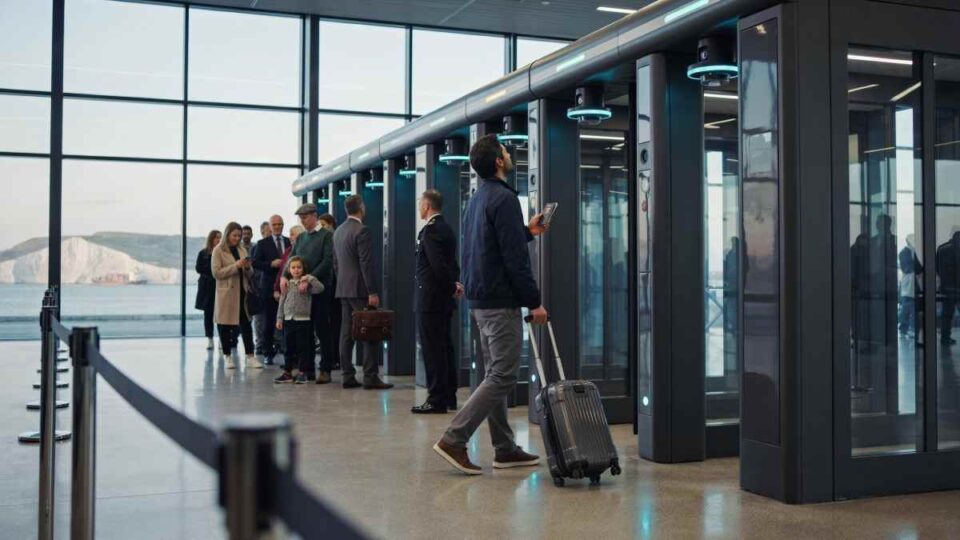
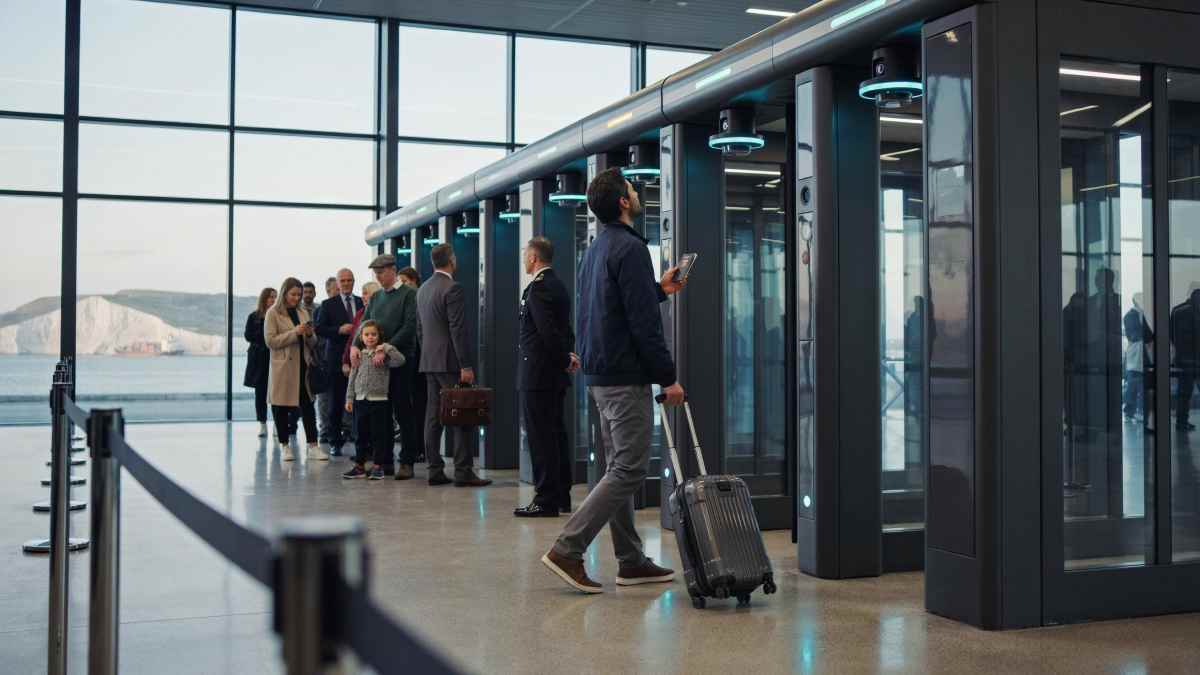
Cross-Channel travel faces yet another difficult period as Britain and France adapt to the introduction of the EU’s new biometric border system. While the difficulty for Dover and St Pancras International does not only involve the implementation of the new technology but also adding another security check to some of Europe’s busiest passenger routes, the European Union Entry/Exit System, EES, mandates that all non-EU travellers coming to the Schengen area on short stays create a digital profile using their passport data, face recognition and fingerprints. This will be performed prior to travelling, as French border control performs these procedures in British territory.
Dover Becomes A Critical Testing Ground
Dover has been preparing for EES with a purpose-built processing facility at the Western Docks.
The Port of Dover’s current procedures show that coach passengers can be directed to biometric kiosks before proceeding through the French border process. Third-country nationals submit personal and travel information and complete biometric scanning before their coach moves towards the ferry terminal.
That process illustrates why border technology needs to work alongside physical transport operations.
A coach cannot simply remain indefinitely in a processing lane. Once passengers have completed the required checks, the vehicle has to continue through UK border procedures, security screening and ferry check-in before boarding.
The Port has therefore designed a system where passengers leave their coach for registration before the vehicle continues through the terminal.
Cars Present A Bigger Challenge
Private vehicles are more complicated.
The Port of Dover says EES has not yet been fully implemented for car passengers. Its current guidance states that biometric registration is not taking place for car passengers at the port at present, while the planned Western Docks facility is awaiting operational French EES technology.
This is important because the September 2026 development described as an emergency deployment of mobile kiosks for vehicle occupants could otherwise suggest that full biometric processing has already become routine for cars.
Current official information does not support that conclusion.
Instead, the situation remains a work in progress, with authorities and port operators attempting to introduce the technology without creating severe congestion around ferry departures.
St Pancras Faces A Different Pressure
At St Pancras International, the physical environment is very different.
Eurostar passengers are already accustomed to passing through multiple security and border-control stages before boarding. Adding EES registration introduces another layer to the pre-departure journey.
The UK Government has funded additional kiosks and infrastructure at Dover, Eurotunnel at Folkestone and St Pancras to support EES registration and help minimise waiting times. In July 2026, the Government said it was continuing to work with France, the European Commission, ports and the travel industry on practical solutions.
The objective is particularly important at St Pancras because train passengers have fixed departure times. A delay at the border can quickly become a missed train rather than simply a longer wait.
Why The Technology Matters
EES replaces the traditional manual stamping of passports for eligible short-stay visitors to the Schengen area.
The first time a traveller is registered, the system creates a digital record containing biometric information. Subsequent crossings can involve verification of the existing record rather than repeating the complete registration process, subject to the applicable rules.
That could eventually make repeated journeys considerably more predictable.
The immediate challenge, however, is the transition period.
New equipment, French and UK border systems, passenger flows and carrier procedures all have to operate together. If one part of that chain experiences a technical problem, queues can build quickly.
Mobile Pre-Registration Could Ease Pressure
The idea behind pre-enrolment is straightforward.
Instead of asking every passenger to complete every step directly at a final immigration desk, some information and biometric processing can be moved into dedicated kiosks or pre-processing areas.
Dover’s coach procedure already demonstrates this principle. Passengers complete EES pre-lodgement at biometric kiosks before proceeding to French border verification.
For the wider Channel network, that approach could help separate passenger registration from the final border decision.
But the current system remains dependent on operational readiness at each location.
Travellers Should Allow More Time
For visitors crossing the Channel in 2026, the most practical response is preparation.
Travellers should arrive with a biometric passport, follow instructions from their ferry or rail operator and allow additional time for border processing.
The UK Government warns that EES checks may take longer than previous passport controls, particularly during the initial registration process. It also confirms that travellers using Dover, Folkestone or St Pancras will complete relevant EES procedures before leaving the UK.
Coach passengers should also expect to follow specific instructions about leaving their vehicles and completing registration.
A New Border Reality For Channel Travel
Dover and St Pancras reveal that the European digital border revolution does not merely involve immigration. It also poses a transport planning problem. In terms of tourism, the success of the EES system in the future will rely on whether it is possible to integrate the security through biometric identification without compromising the efficiency that tourists seek in ferry travel and international trains. The technology itself is developing fast, yet the process is not quite finished. For those travelling from Britain to France, caution and additional time would be the best choice.
The post Dover Adapts As Biometric Border Checks Expand appeared first on Travel And Tour World.
