
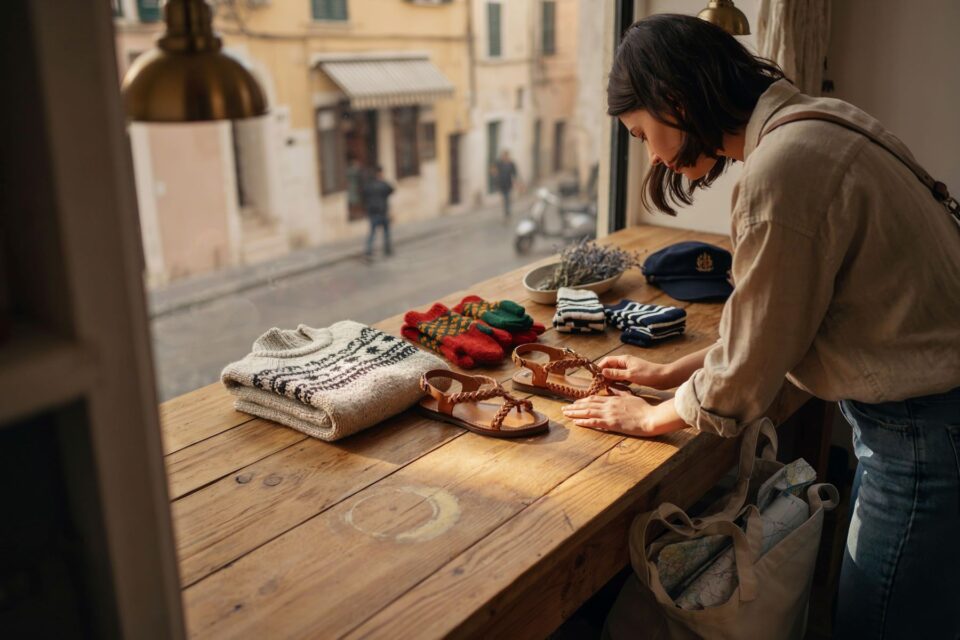


Greece has joined Iceland, Japan, France, Latvia, and the United States at the forefront of “pilgra-merch” tourism—an evolving consumer dynamic where destination-exclusive merchandise actively shapes the travel itinerary. From bespoke leather sandals handcrafted in historic Athenian workshops to Icelandic woollens, Japanese prefecture-exclusive retail runs, and French haute-hospitality apparel, international travellers are increasingly prioritizing retail acquisitions that embody place-based authenticity. This structural shift within shopping tourism provides tangible commercial opportunities for regional artisans, luxury heritage operators, and independent merchants. While aggregate tourism figures reflect sustained economic momentum across these core markets, the rise of pilgra-merch underscores a deeper qualitative change: souvenirs are transitioning from incidental vacation afterthoughts to intentional cultural catalysts.
Pilgra-Merch Tourism 2026 Changes How Travellers Discover Exclusive Souvenirs
Pilgra-merch tourism defines travel itineraries directed by the acquisition of regionally anchored, exclusive retail goods. Unlike legacy souvenir acquisition—typically an ad-hoc transaction relegated to airport duty-free corridors or transit hubs at the conclusion of a trip—pilgra-merch embeds retail discovery directly into the pre-trip planning phase. Modern itineraries are increasingly architected around visiting specific flagship ateliers, boutique hotels, heritage craft cooperatives, or regional retail outposts.
The product spectrum ranges from utilitarian everyday items elevated to cult status to bespoke apparel, artisanal footwear, and limited-edition luxury drops. The cultural and emotional value of these items is tied strictly to their geographic exclusivity: they cannot be ordered through domestic e-commerce channels without forfeiting their core narrative value. While pilgra-merch represents an undeniable commercial current among high-engagement travellers, national statistical agencies track it within aggregate tourism accounts rather than as a standalone metric.
- Itinerary Anchor: Destination-exclusive goods increasingly serve as primary drivers of travel routing and destination choice.
- Retail-Led Exploration: Product scarcity encourages travellers to build targeted itineraries around specific workshops, neighborhoods, and retail hubs.
- Heritage Integration: Regional craft traditions offer travellers a tactile, durable connection to local cultural heritage.
- Branded Place Identity: Hospitality operators and retail brands leverage geographic exclusivity to reinforce destination equity.
- Statistical Aggregation: National tourism frameworks capture retail spending within overall travel receipts without disaggregating pilgra-merch transactions.
Greece Tourism 2026 Highlights Athens Handmade Sandals and Growing Visitor Spending
Greece illustrates how ancestral craftsmanship can serve as a primary commercial anchor in contemporary cultural tourism. In Athens, centuries-old leatherworking traditions—exemplified by historic artisanal establishments such as Melissinos Sandals—draw international visitors seeking custom-fitted footwear tailored on-site. These interactions merge practical design with historical immersion, enabling travellers to participate directly in a living craft tradition situated in the shadow of the Acropolis.
This retail activity unfolds against a backdrop of sustained macroeconomic strength across the Hellenic tourism sector. According to official data from the Bank of Greece, international travel receipts totaled approximately €13.52 billion between January and July 2026, representing a 12% expansion compared to the equivalent period in 2025. This fiscal performance was driven by an 8.6% rise in inbound visitor arrivals and a 2.9% increase in average expenditure per trip. While these official measures do not isolate artisan footwear sales, they reflect an expansive visitor economy with elevated capacity for discretionary retail spending.
- Receipts Expansion: Greece generated €13.52 billion in international travel receipts between January and July 2026, marking a 12% year-on-year increase.
- Inbound Traffic: Total inbound international arrivals rose by 8.6% across the same seven-month reporting window.
- Trip Monetization: Average visitor spend per trip rose by 2.9%, indicating stronger capital deployment per traveler.
- Artisanal Distinction: Historic Athenian workshops provide personalized leathercraft that functions as both functional apparel and living history.
- Urban Synergy: Independent workshop visits complement archaeological exploration, dispersing tourist dwell time across urban retail neighborhoods.
Iceland Tourism Connects Traditional Woollen Clothing With Authentic Cultural Shopping
Iceland’s retail appeal centers on geographic utility, ecological integrity, and textile preservation. The iconic Icelandic lopapeysa—a seamless woollen sweater knitted from unspun lopi fleece sourced from native sheep—presents an antidote to industrialized, commodified tourist souvenirs. Organizations such as the Handknitting Association of Iceland (Handprjónasamband Íslands) anchor this trade, connecting travellers directly with domestic knitting networks that preserve traditional geometric yoke patterns.
The economic importance of inbound travel remains central to the North Atlantic island nation. Official figures released by Statistics Iceland in May 2026 confirm that the direct contribution of tourism to national gross domestic product reached 8.8% in 2025, climbing from 8.2% recorded in 2024. Combined domestic and international tourism consumption totaled nearly ISK 914 billion for the year. Although published in 2026, these consolidated macroeconomic metrics capture structural economic reliance rather than immediate micro-retail transactions.
- Macroeconomic Share: Direct tourism activities generated 8.8% of Iceland’s national GDP in 2025, up from 8.2% in 2024.
- Consumption Scale: National tourism consumption reached approximately ISK 914 billion across domestic and foreign visitor segments.
- Textile Authenticity: Traditional lopapeysa knitwear preserves domestic wool processing and communal craft traditions.
- Functional Value: Native woollens provide cold-climate utility, serving both immediate travel needs and long-term domestic wear.
- Itinerary Integration: Cultural craft shopping provides a high-value commercial complement to Iceland’s nature-driven tourism assets.
Japan Shopping Tourism 2026 Gains Attention Through Prefecture-Exclusive Merchandise
Japan’s retail sector demonstrates how mass consumer merchandise and regional administrative identity can combine to generate localized demand. An example of this phenomenon is convenience operator FamilyMart’s release of 47 prefecture-themed socks, where distinct color palettes and textile motifs represent individual prefectural identities. By transforming ubiquitous consumer staples into localized collector items, Japanese retail turns everyday convenience visits into curated regional scavenger hunts.
These regional retail behaviors align with record-setting fiscal activity across Japan’s inbound travel ecosystem. According to the Japan Tourism Agency (JTA), international visitor expenditure reached approximately ¥2.51 trillion during the second quarter (April–June) of 2026, representing a 0.3% year-on-year increase. More significantly, average spending per international visitor climbed 3.4% to roughly ¥245,000. While the JTA’s data tracks general hospitality, transport, and overall retail flows rather than unit-level novelty goods, the figures highlight high visitor purchasing power.
- Quarterly Inflows: International visitor spending reached ¥2.51 trillion during the second quarter of 2026.
- Individual Spend Growth: Average outlay per international traveler rose 3.4% year-on-year to approximately ¥245,000.
- Prefectural Exclusivity: Region-specific retail lines use domestic geography to create intentional scarcity and collector appeal.
- Accessible Retail Discovery: Convenience stores and neighborhood outlets serve as accessible touchpoints for regional souvenir hunting.
- Geographic Dispersion: Region-locked merchandise provides commercial incentives for international tourists to travel beyond the golden route of Tokyo, Kyoto, and Osaka.
France Luxury Tourism 2026 Creates Opportunities for Hotel Merchandise and Destination Shopping
France showcases the intersection of ultra-luxury hospitality, legacy branding, and destination merchandising. In Paris, globally recognized palace hotels—led by institutions like the Ritz Paris—have transformed their heritage branding into lifestyle merchandise collections. From embroidered baseball caps and branded loungewear to bespoke homewares, these items allow guests and aspirational visitors to acquire a physical emblem of elite Parisian hospitality.
This commercial ecosystem is reinforced by accommodation metrics reported by France’s National Institute of Statistics and Economic Studies (INSEE). French hotel establishments registered approximately 61.1 million overnight stays in the second quarter of 2026, an increase of 1.4% compared to Q2 2025. Growth was heavily weighted toward the upper tiers: overnight stays in four- and five-star properties expanded by 4.2% year-on-year, underscoring strong demand in the luxury hospitality segment where destination merchandising thrives.
- Hospitality Volume: French hotels logged 61.1 million overnight stays in Q2 2026, marking a 1.4% year-on-year gain.
- Luxury Sector Outperformance: Four- and five-star hotel stays expanded by 4.2%, outpacing the broader lodging market.
- Aspirational Equity: Heritage hotel retail enables hospitality brands to monetize brand prestige beyond room occupancy.
- High-End Souvenirs: Upscale hotel merchandise functions as a recognizable cultural status symbol for international travelers.
- Urban Synergy: Parisian luxury retail integrates seamlessly with high-density architectural, culinary, and museum visits.
Latvia Cultural Tourism Brings Traditional Riga Mittens Into the Exclusive Souvenir Market
Latvia represents a distinct model of shopping tourism centered on ethnographic preservation and cultural heritage. In Riga, specialized textile outposts such as SENĀ KLĒTS serve as cultural archives and retail centers, producing and distributing hand-knitted mittens that incorporate regional Baltic ethnographic patterns, historic colorways, and protective symbols. These products offer travelers an authentic, tangible link to Latvian folklore and regional identity.
Official tourism metrics outline both opportunities and structural adjustments within the Baltic visitor economy. Data from the Central Statistical Bureau of Latvia indicates that commercial accommodation establishments hosted 447,100 guests in the first quarter of 2026. International travelers accounted for 246,600 of these arrivals (55.2%), with the capital city of Riga accommodating 80.4% of the country’s foreign visitor base. However, total international arrivals declined by 7.2% year-on-year during the quarter, showing that niche craft engagement operates within a tighter overall market.
- Quarterly Arrivals: Latvian lodging properties registered 447,100 total guests during the first quarter of 2026.
- Foreign Share: International arrivals totaled 246,600, accounting for 55.2% of the aggregate national accommodation market.
- Capital Concentration: Riga captured 80.4% of all international guest nights, establishing the city as Latvia’s primary cultural retail market.
- Ethnographic Heritage: Traditional patterned mittens preserve regional textile identity, offering historical authenticity.
- Market Adjustments: A 7.2% year-on-year contraction in Q1 foreign arrivals underscores that cultural merchandise must compete in a stabilizing post-pandemic market.
United States Shopping Tourism 2026 Highlights Exclusive Retail Products and Everyday Merchandise
The United States presents an alternative retail phenomenon: the elevation of everyday, low-cost consumer grocery items into globally coveted travel collectibles. Canvas and mini-insulated tote bags produced by grocery chain Trader Joe’s have become viral sensations across Asian and European travel demographics. Originally intended as functional, reusable grocery carriers, these bags have acquired significant secondary-market value and souvenir cachet abroad due to their store-exclusive availability and Americana aesthetic.
This everyday retail dynamic exists alongside extensive international spending across the wider US travel sector. Figures released by the US National Travel and Tourism Office (NTTO) show that international visitors spent an estimated $145.4 billion on travel and tourism-related goods and services between January and July 2026. In July 2026 alone, international visitor spend reached nearly $20.4 billion, reflecting a modest 1% dip compared to July 2025. These figures demonstrate broad economic scale, though aggregate export accounts do not track viral grocery retail items.
- Aggregated US Spend: Inbound visitors spent $145.4 billion on travel and tourism goods and services between January and July 2026.
- Mid-Year Momentum: July 2026 international spending approached $20.4 billion, contracting approximately 1% against July 2025 levels.
- Democratic Merchandising: Cult consumer items like Trader Joe’s totes prove that pilgra-merch appeal does not require high luxury pricing.
- Everyday Retail as Sightseeing: Standard urban shopping centers and neighborhood grocery chains increasingly become scheduled tour stops.
- Export Invisibility: Macroeconomic travel accounts record comprehensive spending but omit tracking for mass-market souvenir fads.
Global Tourism Impact of Pilgra-Merch Shopping and Destination-Specific Souvenirs
The international rise of pilgra-merch introduces operational and strategic considerations across the travel supply chain. For regional destinations, retail-focused itineraries direct foreign capital directly into the hands of local artisans, independent merchants, and domestic fabricators. For hospitality brands, physical merchandise transforms short-term stays into lasting brand visibility once travelers return to their home markets.
These developments also bring logistical considerations for travellers and transport providers. Retail-centric journeys require visitors to account for carry-on limits, checked baggage allowances, delicate textile handling, and bilateral customs duties. From an analytical perspective, however, caution is warranted: official government records show no direct causal link between merchandise fads and aggregate increases in flight routes, seat capacity, or gross arrivals. The economic impact of pilgra-merch remains a focused behavioral trend within discretionary spending, rather than a standalone driver of global tourism GDP.
- Artisan Economies: Dedicated shopping stops deliver direct economic support to small-scale workshops and independent creators.
- Regional Dispersion: Demand for location-locked products encourages tourists to explore outside primary city centers.
- Hospitality Branding: Branded physical merchandise helps hotels build lasting customer loyalty after checkout.
- Aviation Logistical Checks: Baggage allowances, fragile transit protections, and customs duty limits remain practical considerations for travelers.
- Data Limitations: Establishing pilgra-merch’s exact economic contribution will require official tourism bodies to launch targeted retail-intent surveys.
Pilgra-Merch Tourism 2026: Official Government Statistics and Country Comparison
The comparative table below outlines the latest verified economic indicators alongside the distinct merchandise profiles of the six destinations analyzed.
| Destination | Latest Official Government Indicator | Data Reporting Period | Core Pilgra-Merch Exemplar | Primary Analytical Source |
| Greece | €13.52B in international travel receipts (+12% YoY) | Jan–Jul 2026 | Custom handmade leather sandals (Athens) | Bank of Greece |
| Iceland | Tourism directly contributed 8.8% to national GDP | Full-Year 2025 (Issued May 2026) | Traditional woollen lopapeysa knitwear | Statistics Iceland |
| Japan | ¥2.51T in international visitor spending (+0.3% YoY) | Q2 2026 (Apr–Jun) | 47-prefecture-themed sock collection | Japan Tourism Agency (JTA) |
| France | 61.1M hotel overnight stays (+1.4% YoY; +4.2% in 4/5-star) | Q2 2026 (Apr–Jun) | Branded palace hotel caps & lifestyle apparel | INSEE France |
| Latvia | 447,100 total guest arrivals (246,600 international) | Q1 2026 (Jan–Mar) | Ethnographic hand-knitted mittens (Riga) | Central Statistical Bureau of Latvia |
| United States | $145.4B in international visitor travel spending | Jan–Jul 2026 | Branded grocery canvas tote bags | US National Travel & Tourism Office |
What Pilgra-Merch Means for Travellers, Airlines and Tourism Businesses
For international travelers, pilgra-merch elevates retail planning from an impulsive stop to a purposeful cultural pursuit. Seeking out a regional textile co-op or legacy leather atelier requires travelers to research workshop hours, product availability, seasonal runs, and luggage capacity ahead of time.
For commercial tourism enterprises, success depends on safeguarding origin integrity and craft authenticity. Hotel groups must balance commercial merchandise with genuine hospitality, while heritage artisans must navigate heightened demand without compromising their handmade techniques. For commercial airlines and airport logistics, growing retail volume places added emphasis on baggage dimensions, handling of fragile purchases, and clear communication regarding international duty allowances.
The long-term value of pilgra-merch lies in authentic destination differentiation. In an increasingly homogenized global retail landscape, destinations that offer items tied directly to local identity provide travelers with something mass e-commerce cannot replicate: a tangible connection to place and culture.
Conclusion
From the leather craft workshops of Athens to the woollen knitting networks of Reykjavik, convenience store aisles across Japan, Parisian luxury hotels, craft guilds in Riga, and supermarket checkout lines in the United States, destination-exclusive retail has become an integral part of the modern travel experience. By linking products directly to geographic origins, pilgra-merch provides regional artisans and hospitality providers with distinct channels for cultural storytelling and revenue generation.
While macro-level economic data from institutions like the Bank of Greece, Statistics Iceland, and the Japan Tourism Agency highlight the broader health of global tourism, the rise of pilgra-merch reflects a shift in consumer mindset. As travelers continue seeking meaningful, place-based connections, destination-exclusive merchandise will remain an enduring bridge between travel exploration, local craftsmanship, and everyday life.
The post Greece Joins Iceland and More in Pilgra-Merch Tourism Boom as Exclusive Souvenirs Inspire New Travel Trends appeared first on Travel And Tour World.
