
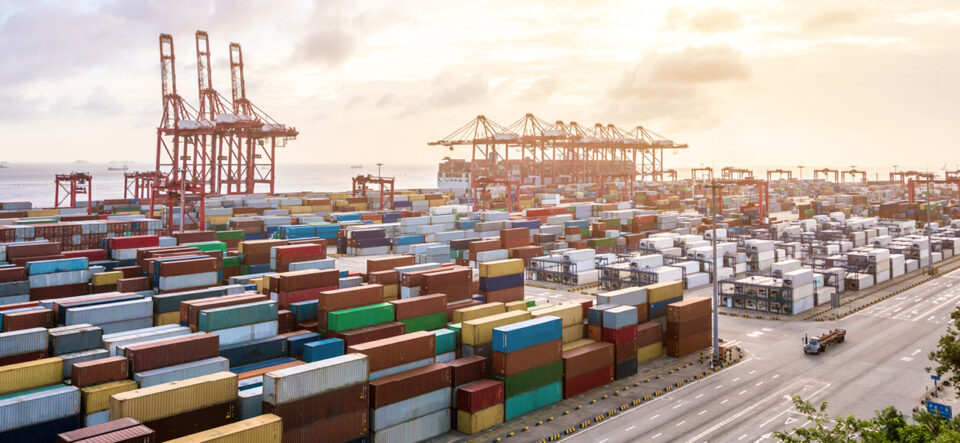
For years, the global logistics map of the Middle East has been dominated by familiar giants—Dubai, Abu Dhabi, and Doha. But quietly and strategically, Oman is rewriting this narrative. With a bold logistics vision, major port expansions, and policy reforms aligned with Vision 2040, the Sultanate is emerging as one of the most important trade gateways in the Gulf.
Oman’s new logistics strategy is not about competing with its neighbors—it’s about positioning itself differently. And that difference is exactly what’s turning the Sultanate into a rising powerhouse in global supply chains.
A Strategic Geography the World Can’t Ignore
Oman’s location has always been its strength. Positioned outside the congested Strait of Hormuz, with direct access to the Indian Ocean, it offers shipping routes that bypass regional chokepoints entirely.
This advantage alone makes Oman uniquely appealing for international trade partners seeking:
- faster east–west movement
- risk-free maritime routes
- alternatives to politically sensitive waterways
Today, Oman is capitalizing on this natural geo-economic asset with a modern logistics blueprint built for global relevance.
Ports with Global Ambitions
Oman’s three major deep-water ports—Duqm, Sohar, and Salalah—are the backbone of the country’s logistics transformation. Each one plays a different strategic role.
Port of Salalah: The Indian Ocean Powerhouse
Located close to major east–west shipping lines, Salalah is already one of the world’s top transshipment hubs. Its expansion aims to increase capacity, modernize operations, and deepen its integration with global maritime networks.
Sohar Port: The Industrial Gateway
Sohar is rapidly evolving into a major industrial and logistics cluster, home to refineries, petrochemical plants, and metallurgical industries. With rail connectivity on the horizon, Sohar is set to become a major Gulf-Europe-Asia link.
Port of Duqm: The Future Giant
Perhaps Oman’s most ambitious project, Duqm is designed as a multi-purpose industrial port city, offering:
- a world-class shipyard
- heavy manufacturing zones
- vast logistics clusters
- direct international shipping lanes
Duqm is not just a port—it’s a new economic frontier.
The Oman Logistics Vision 2040: A Plan Built for the Long Game
Oman’s logistics strategy is rooted in long-term resilience, diversification, and global integration. The vision focuses on:
- enhancing port efficiency
- creating seamless customs pathways
- integrating smart digital systems
- building multimodal transport networks
- attracting global logistics companies
The aim is clear: transform Oman into a logistics-driven economy, cutting reliance on oil and opening new channels of growth.
Smart Logistics: Technology as the Accelerator
Logistics in the 21st century is not just about ports and trucks—it’s about automation, real-time tracking, and digital platforms. Oman is embracing this shift through:
- AI-powered port operations
- blockchain-enabled customs clearance
- smart container tracking technologies
- digital logistics corridors
- new e-commerce fulfillment ecosystems
This digital-first approach makes Oman competitive in a world where speed and transparency drive supply chain decisions.
The Rise of the Oman Rail Revolution
One of the most transformative elements of Oman’s logistics plan is the upcoming national rail network—and its integration with the GCC Railway.
Once operational, this system will:
- connect ports to industrial zones
- link Oman with Saudi Arabia and the broader Gulf
- reduce freight costs significantly
- open land trade routes to new global partners
Rail connectivity is a game-changer—it turns Oman from a maritime entry point into a multimodal logistics powerhouse.
Free Zones: Where Global Business Finds a Home
Oman’s free zones at Duqm, Sohar, Salalah, and Al Mazunah are rapidly attracting international investments. They offer:
- 100% foreign ownership
- corporate tax exemptions
- duty-free imports
- simplified licensing processes
These zones make Oman a competitive business destination for manufacturing, logistics, and export-driven industries.
E-Commerce, Warehousing & Distribution: A New Frontier
As global e-commerce giants expand into the Middle East, Oman is positioning itself as a distribution hub for Africa, Asia, and Europe.
Key advantages include:
- strategic air and sea access
- growing cargo capabilities through Oman Air and Salam Air
- modern cold-chain and warehousing infrastructure
- rising demand from regional retailers
Oman’s logistics network is becoming the backbone of the Gulf’s e-commerce expansion.
Energy & Sustainability: Turning Green Logistics into a Competitive Edge
With the global push toward sustainability, Oman is aligning logistics growth with environmental responsibility. Projects include:
- renewable-powered industrial zones
- green hydrogen initiatives in Duqm
- eco-friendly port operations
- reduced-emission land transport systems
This gives Oman a forward-looking advantage as global supply chains prioritize green routes.
A Quiet Transformation with Global Impact
Oman’s logistics rise is not happening overnight. It is a carefully planned, steadily executed transformation anchored in vision, strategy, and long-term national priorities.
The country is not trying to replicate the model of high-rise, high-density port cities. Instead, it is building an alternative—one based on:
- maritime strength
- industrial diversity
- geographic advantage
- smart infrastructure
- sustainable development
The world is beginning to notice.
From a Gulf nation to a global connector, Oman is creating a logistics identity unlike any other in the region.
And if current momentum continues, the Sultanate may well become the Middle East’s most indispensable trade gateway in the years ahead.
