
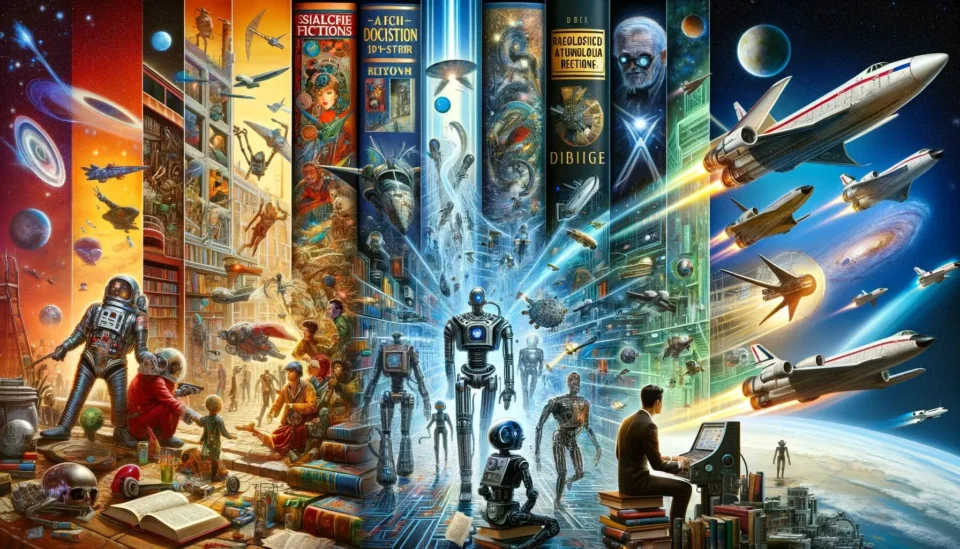
For decades, science fiction has teased us with visions of flying cars, talking machines, intelligent homes, and devices that blur the line between imagination and reality. But here’s the twist: the future is no longer distant. It’s arriving quietly—sometimes boldly—and weaving itself into our daily lives faster than most people realize. What once belonged to futuristic novels and sci-fi movies is now moving from the screen into our homes, offices, cities, and pockets. And if the current pace of innovation continues, the next five years will feel like stepping through a doorway into a new era of human possibility.
We are not waiting for the future anymore. We’re in the middle of it. Here’s how.
AI Assistants That Think, Adapt, and Anticipate Your Needs
Artificial intelligence was once portrayed as a distant dream—an intelligent companion with human-like reasoning. Today, AI systems are becoming smarter, more conversational, and increasingly integrated into everyday routines. What’s coming next is far more impressive.
Soon, your AI assistant won’t just answer questions—it will predict needs, manage schedules, and help you make decisions with an almost human understanding of your preferences. Think of an assistant that:
- Books your appointments before you remember them
- Adjusts your home environment based on mood and habits
- Alerts you to health concerns before symptoms appear
- Handles administrative tasks automatically
This isn’t fantasy. It’s the next chapter of the AI evolution, where everyday interaction becomes a blend of intelligence and intuition.
Smart Homes That Learn Your Life
The next generation of connected homes won’t simply follow commands—they’ll learn and behave like living systems. Imagine walking into your house and having it instantly adjust lighting to match your energy level, prepare your favorite playlist for relaxation, or even brew coffee exactly the way you like it.
Sensors will analyze temperature, energy use, and movement, allowing your home to understand everything from your sleeping patterns to your work routine. Refrigerators will track food expiration dates. Kitchens will guide you through recipes. Even bathrooms will monitor health indicators from your daily habits.
The smart home of the future isn’t just digital automation—it’s a personalized ecosystem designed around your lifestyle.
AR Glasses That Make Screens Obsolete
Remember futuristic characters who saw digital information floating in mid-air? That’s the direction augmented reality (AR) is taking us.
AR glasses will allow users to navigate daily life without staring at phones. Instead, digital content will appear in your field of vision—maps, messages, health stats, or work dashboards all overlaid seamlessly onto the world. Meetings may shift to shared AR rooms. Shopping could be transformed by trying virtual products in real time. Even learning will change as textbooks and diagrams turn into interactive 3D experiences.
Within a few years, AR devices could become as common as smartphones, redefining how we interact with information and each other.
Robots That Become Household Helpers
Robots are no longer reserved for manufacturing plants. Rapid advances in robotics, combined with AI, are paving the way for personal and domestic robots capable of performing everyday tasks:
- Cleaning
- Cooking assistance
- Elderly care
- Security monitoring
- Delivering items around the house
These robots will evolve from task-based tools into companion-like devices designed to simplify daily life. Social robots will assist with emotional engagement, helping children learn or providing companionship to seniors.
Household robotics is one of the biggest technological leaps we’ll experience—and it will fundamentally change how people live and work.
Next-Gen Healthcare Devices That Monitor Your Entire Body
Wearable devices are transforming from simple fitness trackers into health guardians. In the near future, health technology will operate like a continuous monitoring system, gathering real-time data on your:
- Heart health
- Blood oxygen
- Stress levels
- Nutrition needs
- Sleep quality
- Early disease markers
AI-powered sensors will pick up signs of illness before they appear. Smart patches may replace routine medical tests. Portable devices could scan your body for abnormalities instantly.
Healthcare is shifting from reactive to predictive—meaning we’ll treat problems before they become critical.
Quantum Computing: The Invisible Force Powering Daily Life
Quantum computing sounds like the pinnacle of futuristic tech—but its presence will be felt in everyday applications. While most people won’t interact with quantum machines directly, the effects will be enormous.
Quantum advancements will accelerate breakthroughs in:
- Drug discovery
- Climate modeling
- Financial forecasting
- Cybersecurity
- Material science
Your daily life will benefit through safer systems, better medicines, faster logistics, improved navigation, and smarter infrastructure. Quantum tech will be the invisible engine behind many of the advancements that shape our world.
Transportation That Feels Like Tomorrow
Sci-fi has always shown futuristic transportation—and now we’re getting closer.
Self-driving vehicles are already being tested everywhere. Soon they will become mainstream, reducing accidents, easing commutes, and transforming urban mobility. Electric vertical takeoff and landing vehicles (eVTOLs)—the modern blueprint for flying cars—are entering early adoption phases.
Within the decade, city travel may include:
- Autonomous taxis
- AI-managed public transport
- Drone-based deliveries
- Smart traffic systems
Transportation is being redesigned to be cleaner, smarter, and far more efficient.
Holograms and Immersive Communication
The future of communication is leaving flat screens behind. Holographic calls, immersive conferences, and 3D avatars are becoming the next stage of digital interaction.
Imagine:
- Meeting colleagues as holograms in your living room
- Talking to family members who appear in life-size projections
- Attending classes or events through realistic 3D environments
These technologies will bring human connection back into the digital world—making remote interactions feel genuinely in-person.
Energy Tech That Makes Homes and Cities Smarter
With sustainability becoming a global priority, energy innovation is accelerating. The next wave includes:
- Ultra-efficient solar panels integrated into everyday surfaces
- Home energy storage systems
- AI-driven power grids
- Electric systems that reduce wastage
- Smart meters that balance consumption automatically
Cities are being engineered to run on cleaner, greener, more intelligent energy frameworks.
Digital Humans and Virtual Companions
Digital humans—hyperrealistic AI avatars—are emerging as assistants, customer service agents, and even personal companions. They can express emotion, engage in conversation, and act as digital mirrors of human behavior.
This is the era where digital presence becomes just as meaningful as physical presence.
The Future Is Not Coming—It’s Here
The technologies that once lived in the pages of sci-fi are stepping into our daily routines. They’re reshaping how we work, travel, communicate, learn, shop, and live. While we may not yet realize it, we are in the middle of a technological renaissance where yesterday’s fiction becomes today’s reality.
In the coming years, innovation will accelerate even further—pushing boundaries that once seemed impossible and ushering in a new age where technology blends seamlessly with human life.
The question is no longer “Will these technologies arrive?”
They already have.
The real question now is: how quickly will we adapt to the future unfolding around us?
