
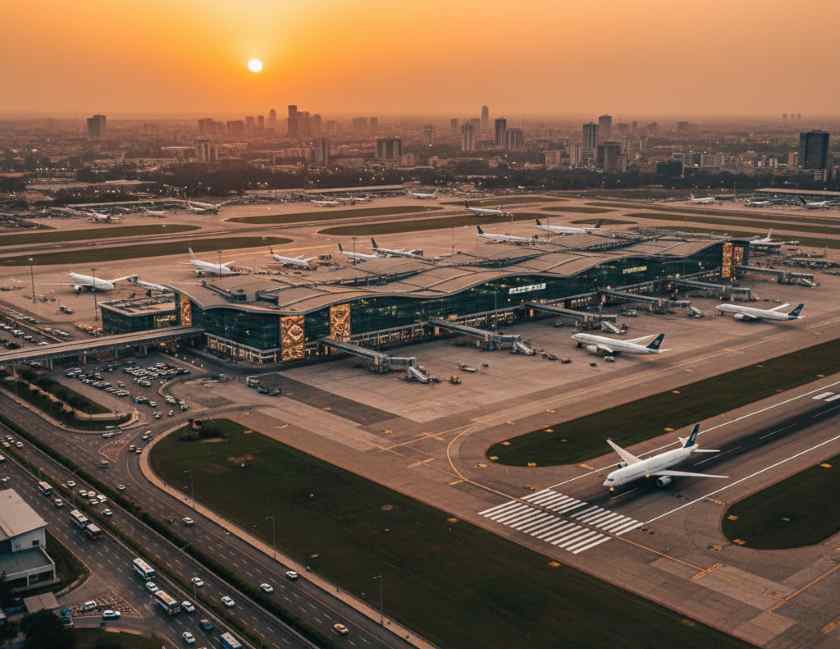

In a significant move for Nigeria’s aviation industry, the Nigerian Airspace Management Agency (NAMA) has signed a groundbreaking contract to build a state-of-the-art airspace headquarters and a National Air Traffic Management Centre in Abuja. This project, which will be completed by NHD Interbiz Projects Limited, is expected to place Nigeria at the forefront of airspace management in West Africa and elevate the country’s aviation infrastructure to global standards.
The new facility, which consolidates Nigeria’s airspace control operations into a single, high-tech hub, represents a major step in improving air traffic management, operational efficiency, and safety within Nigeria’s airspace. With this modernisation, Nigeria aims to streamline its air traffic control functions, enhancing both domestic and international flights operating in the region.
Strengthening Nigeria’s Role as a Regional Aviation Leader
The approval of the new airspace headquarters in Abuja is a pivotal development for the aviation sector, expected to boost Nigeria’s profile as a regional aviation leader. By centralising the Lagos and Kano Area Control Centres into a unified National Air Traffic Management Centre in Abuja, Nigeria will be better positioned to meet the growing demands of air traffic and tourism in the region. This centralisation aims to improve flight efficiency, reduce delays, and optimise the airspace for better service quality.
According to NAMA’s Managing Director, Engr. Ahmed Umar Farouk, the project is crucial for achieving global best practices in airspace management. It will also enhance safety standards and foster seamless communication between domestic and international airlines. Abuja’s new air traffic hub will be a cornerstone for improving tourism and business travel within West Africa by providing reliable air traffic services and reducing operational bottlenecks.
The project is set to make Abuja a central point for aviation innovation in the region. As Nigeria continues to expand its infrastructure, the airport and airspace improvements will offer increased connectivity, ultimately benefiting travelers to and from Nigeria. Airlines flying into and out of Abuja will have better airspace management, creating smoother operations for international flights and regional air traffic.
A Catalyst for Growth in Tourism and Business Travel
The creation of this National Air Traffic Management Centre will not only enhance the country’s aviation efficiency but also have a significant impact on Nigeria’s tourism industry. The improved air traffic management system will make Nigeria a more attractive destination for international flights, boosting tourism by providing tourists with a more seamless and efficient travel experience.
As Nigeria’s primary international gateway, Abuja will benefit from the increased flow of international and domestic tourists, thanks to better coordination between airlines, air traffic controllers, and ground services. The project’s progress signals a commitment to improving tourism infrastructure, which will in turn help drive growth in Nigeria’s hospitality industry, local economies, and regional tourism.
Increased air traffic management capabilities are also expected to enhance business travel, encouraging more international companies to operate in Nigeria. This improvement will open up more business opportunities for entrepreneurs and industries in sectors such as trade, education, technology, and conferences.
Collaboration and Future Opportunities for the Aviation Sector
The ambitious project is not only a milestone for Nigeria’s aviation sector, but it is also seen as an opportunity for greater collaboration within West Africa and beyond. The Milano-Cortina 2026 Winter Olympics has shown how improved airspace management can have positive ripple effects on tourism, and this project in Abuja sets a similar precedent for African aviation. Nigeria is expected to lead by example, encouraging neighboring nations to invest in aviation infrastructure and promoting cross-border cooperation.
Additionally, the development of this new air traffic management centre opens up opportunities for training and knowledge exchange for aviation professionals across the continent. Nigeria’s national airspace management model will likely serve as a benchmark for other African countries aiming to modernise their airspace infrastructure.
The Role of Government and Industry Leaders in Securing Approval
The road to securing approval for this ambitious project involved meticulous planning and coordination. Special recognition was given to Festus Keyamo, Nigeria’s Minister of Aviation and Aerospace Development, whose efforts were instrumental in securing federal approvals and support for the project.
Mrs. Rita Egbadon, the Legal Director of NAMA, was also pivotal in ensuring the project’s compliance with national regulations and the transparency required for such a significant investment in Nigeria’s infrastructure. Their leadership played a crucial role in navigating the complexities of the approval process, ensuring that the project aligned with national development goals and aviation standards.
The Road Ahead: Enhancing Air Travel in Africa
As construction moves forward, all eyes will be on Abuja as the symbol of Nigeria’s aviation ambitions. With a focus on advanced technology, robust oversight, and efficiency gains, the new NAMA headquarters promises to redefine airspace management standards in Africa and set the stage for similar modernisation initiatives across the continent. The enhanced air traffic control facilities will encourage international airlines, tourism professionals, and business travelers to see Nigeria as a modern, efficient, and well-connected destination.
Conclusion
The establishment of a high-tech airspace headquarters and National Air Traffic Management Centre in Abuja represents a major milestone in the modernisation of Nigeria’s aviation sector. The project’s completion in the coming years is expected to improve the nation’s operational efficiency in air traffic control, enhance safety standards, and make Nigeria a more attractive travel hub for both tourism and business. This transformation will have a ripple effect, benefiting tourists, airlines, and local businesses, ultimately contributing to the growth of Nigeria’s tourism sector and its regional influence in African aviation.
The post Abuja’s New Air Traffic Control Centre Set to Boost Nigeria’s Tourism Industry appeared first on Travel And Tour World.
