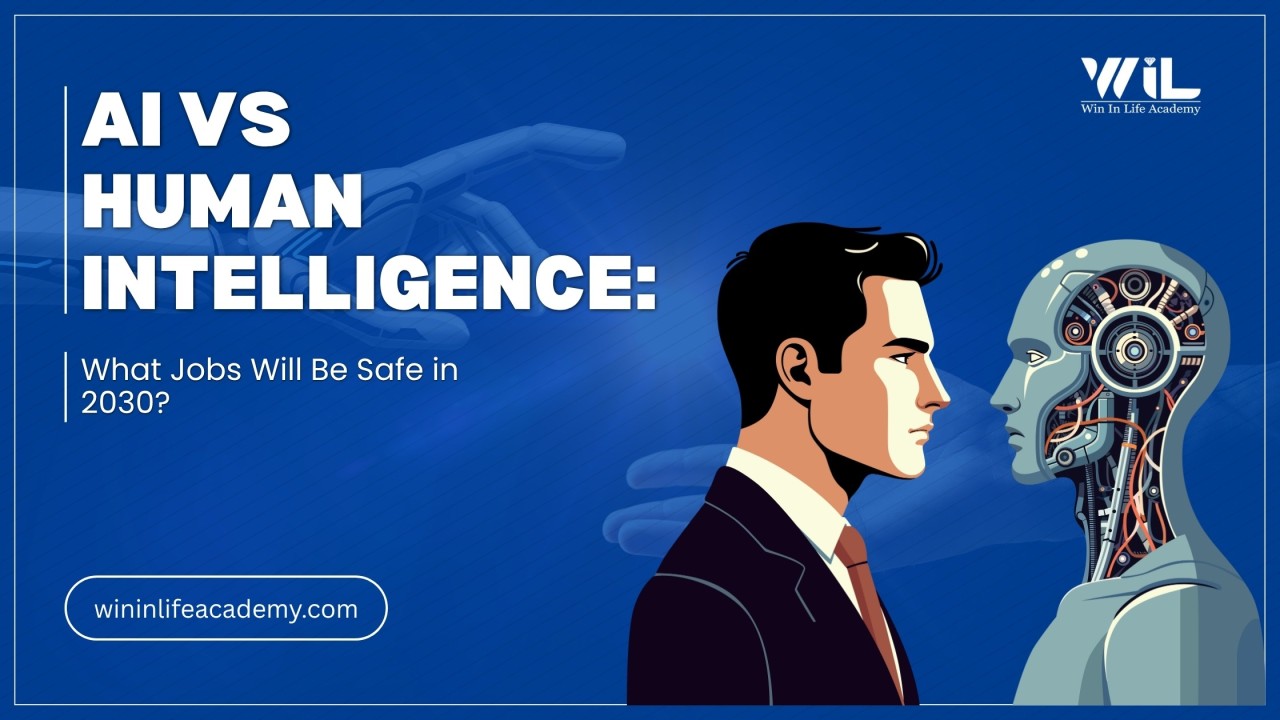
The debate is no longer about whether artificial intelligence will change the job market—it already has. The real question now is how far this transformation will go and which human skills will still matter in a world dominated by automation, algorithms and autonomous systems. Analysts call it “the defining workforce shift of the 21st century,” a slow-burning revolution reshaping careers across every sector.
As AI systems become smarter, faster and increasingly able to think and act independently, industries are forced to confront an unavoidable truth: the nature of work is fundamentally changing. But despite the anxiety, there’s another side to the story—one that shows where human capability still thrives and what jobs will stand strong in the next decade.
The Rise of AI-First Workflows
Companies are already moving toward what experts describe as “AI-first workflows,” where machines are not assistants but the default operators. From customer service chatbots to autonomous manufacturing lines, AI-driven processes are becoming the backbone of business efficiency. Roles that rely on repetition—data processing, scheduling, reporting, basic analysis—are the first to be automated.
This doesn’t mean these jobs vanish tomorrow. Instead, they evolve. Human oversight, exception-handling and the ability to interpret nuance remain key. But the time-intensive routine work? AI now handles that at scale.
The result: millions of hours saved, but a pressing need for workers to adapt.
The Jobs Most at Risk
Industries driven by predictable, rule-based tasks face the biggest shakeup. Administrative assistants, entry-level analysts, retail workers, logistics coordinators and traditional call center agents are already feeling the squeeze. The World Economic Forum predicts that nearly 40% of routine tasks in these sectors could be automated by 2035.
In finance, machines can now detect fraud, process claims and even draft investment recommendations with staggering precision. In logistics, AI optimizes fleets and predicts supply chain disruptions before they happen. And in media, newsrooms use AI to draft reports, analyze trends and even generate headlines.
The threat is not that AI replaces humans entirely—it’s that humans who rely solely on routine skills will struggle to stay relevant.
Where Humans Still Shine
Despite rapid automation, there are areas where human ability remains irreplaceable. These are the skills AI can mimic but never truly replicate—skills deeply tied to judgment, emotion, ethics and creativity.
1. Emotional Intelligence
AI can recognize emotion, but it cannot truly feel or meaningfully respond to it. Therapists, teachers, social workers, coaches and negotiators all rely on empathy-driven interaction—something uniquely human.
2. Complex Problem-Solving
AI is good at finding patterns. Humans excel at asking the right questions when patterns break. Leaders, strategists and researchers will remain essential in steering ambiguous situations where no database can provide an answer.
3. Creative Professions
Innovation thrives on imagination. Designers, writers, filmmakers, architects and artists bring originality that AI can only imitate, not originate. Human creativity continues to be the spark that drives new industries.
4. Skilled Trades
Electricians, plumbers, technicians and craftsmen require hands-on, adaptive skills in unpredictable environments. These professions survive every wave of automation because machines struggle with real-world variability.
5. Relationship-Based Roles
People buy trust as much as service. Doctors, lawyers, consultants, financial advisors and real estate agents maintain their value because decision-making is intertwined with trust, understanding and human reassurance.
The Hybrid Era: AI + Human Collaboration
The jobs that will thrive are not necessarily those untouched by AI but those enhanced by it. The future belongs to hybrid roles—positions where AI handles the heavy lifting and humans elevate the quality.
Marketing professionals who use AI for deep analytics but bring human storytelling. Engineers who use AI models but apply judgment to solve constraints. Journalists who use AI research tools but add critical analysis.
The winners will be those who learn to “direct the machine” rather than compete with it.
The Skills You’ll Need to Survive the Next Decade
Experts say the next decade’s top skill is adaptability. With industries evolving faster than education systems, the ability to learn continuously will be a worker’s greatest asset. Alongside adaptability come three essential abilities:
• Digital Competence – not coding, but understanding AI tools, data literacy and automation workflows.
• Critical Thinking – the ability to question, analyze and validate machine output.
• Human-Centric Skills – communication, leadership, empathy, innovation and ethical reasoning.
These are the skills that cannot be automated because they come from human experience—not algorithms.
The Future Workforce: A Balance of Logic and Humanity
AI is not the end of human work. It is the evolution of it. The workforce of the future will not be divided into humans versus machines, but instead humans working with machines. AI will handle the repetitive and the predictable. Humans will handle the emotional, the creative and the strategic.
As industries shift, some jobs will fade, but new ones will emerge—AI ethicists, robot maintenance specialists, virtual environment designers, data linguists, and countless roles we haven’t yet imagined.
The coming decade belongs to those willing to move with the change, not fear it. Jobs will survive, but only those aligned with uniquely human strengths. And in this new world, the most powerful worker will be the one who knows when to trust the machine—and when to trust themselves.
