
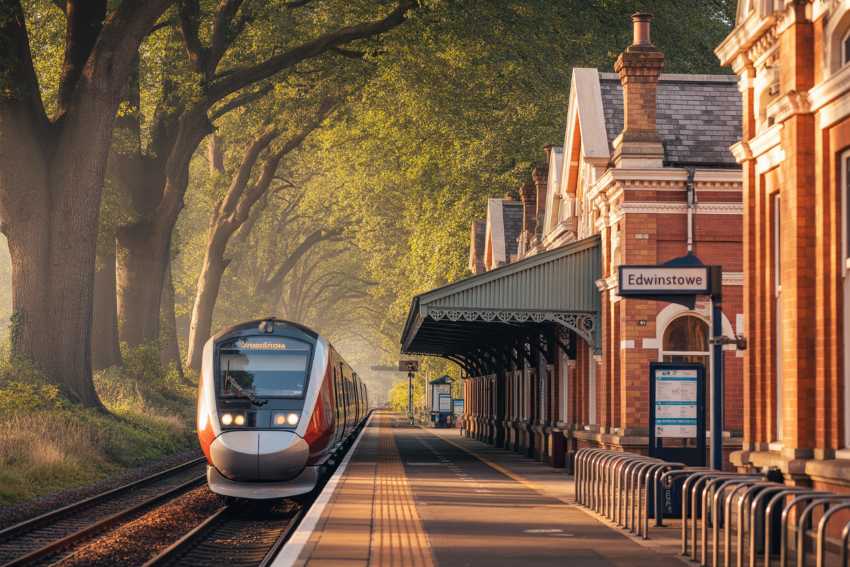
Long hailed as the home of the folk hero Robin Hood, the fabled Sherwood Forest landscapes have recently found themselves at the forefront of a major parliamentary debate about regional infrastructure. Despite being one of the most famous places in the world, logistical issues are currently preventing the forest from reaching its full tourism potential. Reviving transport links is essential to supporting the East Midlands’ tourism industry, which is expected to grow by £1 billion, according to a recent debate at Westminster Hall. It is maintained that in order to handle the surge of domestic and foreign tourists anticipated in the upcoming ten years, the county’s historic center needs a stronger link to the larger rail system.
A Legacy Interrupted: The History of the Robin Hood Line
The transport artery known as the Robin Hood Line boasts a history that stretches back to the mid-19th century. Like many rural routes across the United Kingdom, it was subjected to the sweeping government rail cuts of the 1960s, leading to the closure of several vital stations. Although the line was partially resurrected in the 1990s—currently facilitating travel between Nottingham and Worksop via hubs such as Mansfield and Hucknall—a significant portion of the historic forest remains disconnected. The absence of rail access to the core areas of the heritage site is viewed as a missed opportunity for the local economy and a barrier to those wishing to explore the ancient woodland without relying on private vehicles.
The Case for Reopening Forgotten Stations
The proposed extension focuses on the reopening of stations in Warsop, Ollerton, and Edwinstowe, all of which have been dormant for decades. By integrating these locations back into the active rail network, the most historic sections of Sherwood Forest would be made directly accessible to the public. It has been noted that while the “Robin Hood” branding is utilized by the current rail service, the majority of the land traditionally associated with the legend is not actually served by the trains. The transition of these areas from isolated rural pockets to connected transit hubs is seen as essential for fostering a thriving, sustainable tourism economy that benefits both local residents and travelers.
Addressing the Challenges of Rural Connectivity
The current state of public transport in rural Nottinghamshire has been described as inadequate for a modern tourism destination. Criticisms have been leveled at the inconsistency of bus services, which often cease operations in the evening or fail to provide comprehensive coverage on weekends. This lack of reliability is thought to deter potential visitors who might otherwise choose to explore the region’s heritage. The argument has been put forward that the success of a tourism-driven economy is heavily dependent on the availability of frequent and dependable transport. Without these links, the ability of the East Midlands to compete with better-connected heritage sites across the UK remains compromised.
Strategic Governance and Future Planning
Responsibility for the extension project has recently undergone a shift in jurisdiction. While initial commitments were made by the central Conservative government, the decision-making power was subsequently transferred to the East Midlands Combined County Authority (EMCCA) upon its establishment in 2024. Collaborative efforts are currently being undertaken by the Department for Transport and local partners to ensure that sites of cultural importance are prioritized in upcoming infrastructure plans. The first major transport strategy covering the entirety of Nottinghamshire and Derbyshire is expected to be released in the near future, which will likely dictate the fate of the Robin Hood Line extension.
Environmental Stewardship and Sustainable Travel
The management of Sherwood Forest, overseen by the Royal Society for the Protection of Birds (RSPB), has expressed a keen interest in the development of low-carbon travel options. While a direct bus link from Nottingham—known as the Sherwood Arrow—currently services the visitor center, the broader need for enhanced connectivity is widely recognized. The introduction of rail services is viewed not just as a matter of convenience but as a vital component of environmental conservation. By providing a rail alternative, the carbon footprint associated with forest tourism could be significantly reduced, allowing more individuals to connect with nature without further impacting the delicate ecosystem of the ancient woodland.
Economic Implications for the East Midlands
The revitalization of the Robin Hood Line is not merely a project of nostalgia; it is a strategic economic move. An increase in visitor numbers is expected to provide a substantial boost to local businesses, from hospitality to community-led heritage projects. It is believed that by making the “home of the legend” easier to reach, the East Midlands can claim a larger share of the UK’s multi-billion-pound tourism market. The project is framed as an investment in the future of the community, ensuring that the legacy of Robin Hood remains a living, breathing part of the county’s identity rather than a relic of the past.
Looking Ahead: The Path to Modernization
The push to reopen the stations is gaining momentum as the area awaits the release of the EMCCA’s transportation plan. For Nottinghamshire, combining modern infrastructure with heritage preservation is thought to be the best course of action. The local landscape’s transformation, if the extension is approved, would probably serve as a model for other rural heritage sites around the nation. For the time being, the emphasis is still on connecting the forest’s mythical past with the pragmatic requirements of modern tourists.
The post Beyond the Legend: Reopening the Robin Hood Line to Transform Tourism in Sherwood Forest, United Kingdom appeared first on Travel And Tour World.
