
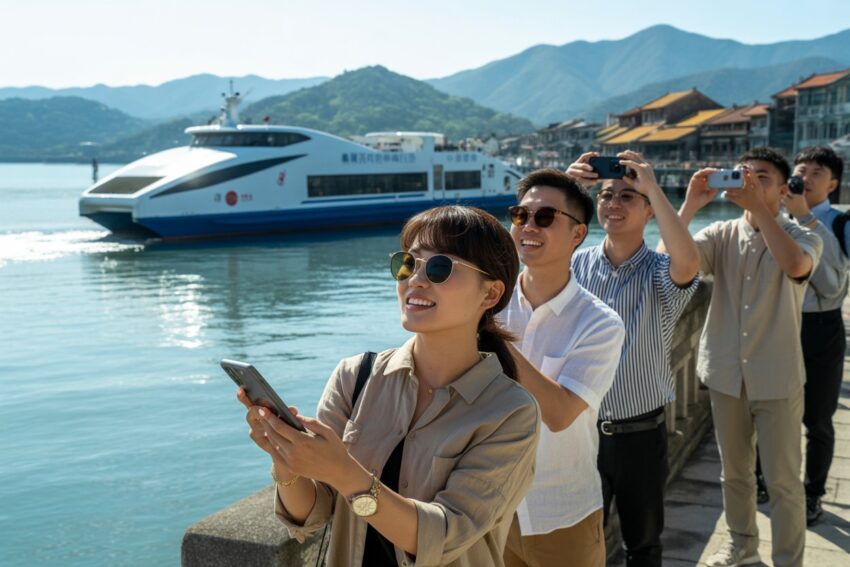
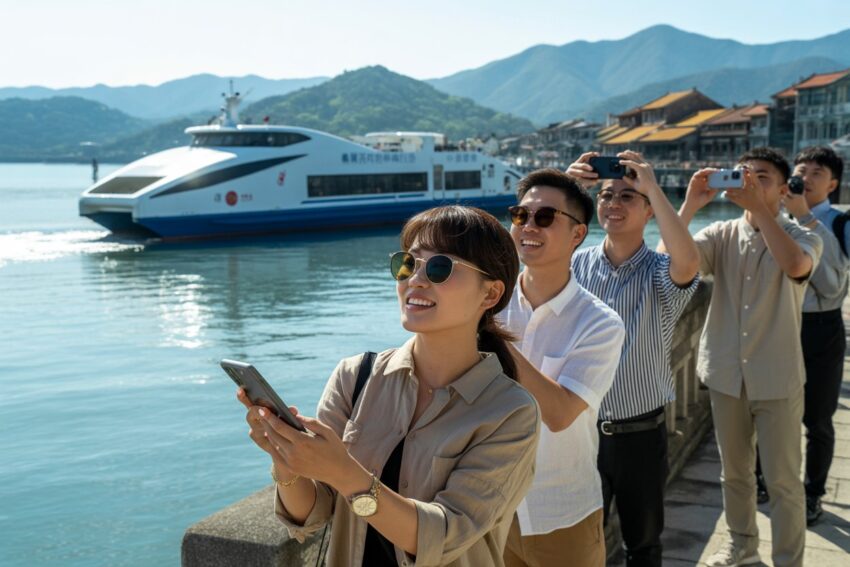
In a move that signals a significant warming of cross-Straits relations and a renewed focus on people-to-people connectivity, the Chinese mainland has officially announced the resumption of travel for Shanghai residents to the islands of Kinmen and Matsu.
Announced on Wednesday, February 4, 2026, by the Ministry of Culture and Tourism, this decision marks a concrete step toward normalizing personnel exchanges that have seen significant disruptions in recent years. For the residents of Shanghai—one of the mainland’s most prolific travel hubs—this isn’t just a policy update; it’s an invitation to rediscover a shared heritage and foster a more peaceful future.
The Power of Proximity: Why Kinmen and Matsu Matter
Kinmen and Matsu, while under the administration of the Taiwan region, are geographically closer to the mainland province of Fujian than they are to Taipei. For decades, they have served as the “frontline” of cross-Straits interactions.
The resumption of travel from Shanghai is strategic. By allowing residents from a Tier-1 metropolitan city to visit these islands, the mainland is addressing the “strong expectations” of both the tourism industry and the general public. As the Ministry noted, preparatory work is already underway to ensure that the infrastructure—from ferries to high-quality tour products—is ready to handle the influx of travelers.
“One Family”: The Diplomatic Undercurrent
Behind the logistics of ferry schedules and hotel bookings lies a deeper diplomatic message. A spokesperson for the State Council Taiwan Affairs Office reiterated the core principle of the mainland’s approach: “Both sides of the Straits are one family.”
The resumption of travel is framed as a measure to enhance the “well-being of compatriots.” By facilitating these visits, Beijing is responding to the mainstream public opinion in the Taiwan region, which increasingly calls for peace, development, and cooperation rather than isolation.
“We hope that the Democratic Progressive Party (DPP) will face up to mainstream public opinion on the island,” the spokesperson added, urging the lifting of remaining restrictions on mainland residents traveling to the broader Taiwan region.
Humanizing the Journey: More Than Just Tourism
To understand the impact of this announcement, one must look at the human stories it enables.
- The Shanghai Retiree: For many older residents in Shanghai, Kinmen represents a piece of living history. The opportunity to visit the traditional southern Fujianese architecture and the historic sites of the islands is a bucket-list experience.
- The Tourism Operator: In Kinmen and Matsu, local businesses—from boutique homestays to producers of the famous sorghum liquor—have long relied on mainland visitors. This policy shift represents a lifeline for local economies that have struggled during the lull in cross-Straits traffic.
- The Cultural Exchange: Travel is the most effective way to break down misconceptions. When a resident from Shanghai shares a meal with a local in Matsu, the dialogue moves away from political headlines and toward shared culture, food, and aspirations.
The Strategic “Shanghai Factor”
Choosing Shanghai as the starting point for this resumption is no accident. Shanghai serves as a barometer for the mainland’s middle-class travel trends. If the “Shanghai to Kinmen/Matsu” route proves successful and orderly, it provides a blueprint for expanding the policy to other major cities like Beijing, Guangzhou, and Shenzhen.
The Ministry has called on tourism industries on both sides to “strengthen communication and collaboration.” This suggests a desire for a “high-quality” tourism model—one that avoids the pitfalls of mass-market, low-cost tours and instead focuses on cultural immersion and premium service.
What Travelers Can Expect in 2026
As preparatory work concludes, Shanghai residents can look forward to a seamless travel experience. Historically, travel to Kinmen and Matsu involves a short ferry ride from Xiamen or Fuzhou. With the normalization of these routes:
- Simplified Documentation: Expectations are for streamlined permits for Shanghai residents.
- Enhanced Connectivity: Potential for direct flight-to-ferry packages.
- Niche Experiences: A focus on the “Slow Life” of the islands, including bird watching in Matsu and exploring the unique “Wind Lion God” statues of Kinmen.
A Glimmer of Hope for the Region
The announcement on February 4th is a reminder that even in complex geopolitical landscapes, the “people’s ardent expectations” for exchange remain a powerful force. By opening the gates for Shanghai’s millions of residents, the mainland is offering a gesture of goodwill and a practical path toward a more integrated regional future.
As the first groups of Shanghai travelers prepare their bags, the world watches to see if this “Kinmen-Matsu Bridge” will lead to even broader openings in the months to come.
The post Bridging the Straits: China Resumes Travel for Shanghai Residents to Kinmen and Matsu appeared first on Travel And Tour World.
