
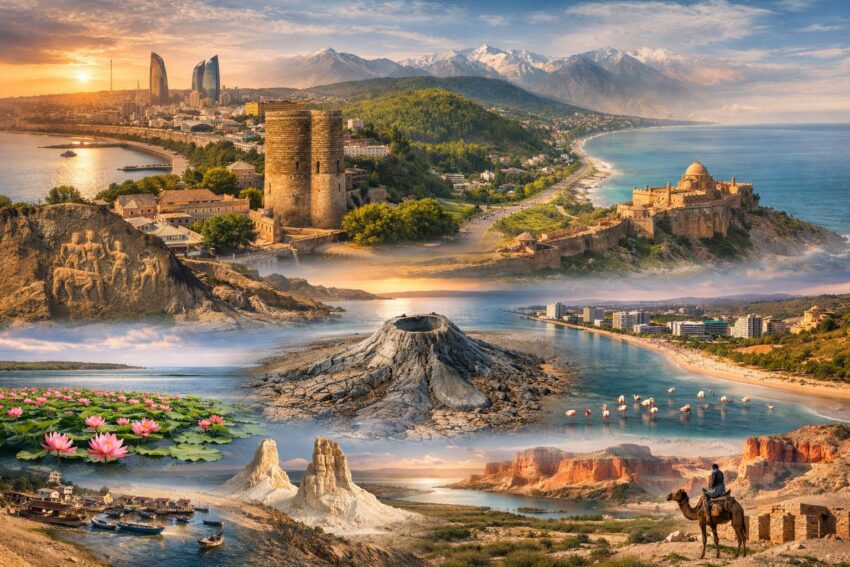

Caspian Sea Tourism: A Crossroads of Nature, Culture, and Coastal Travel
Caspian Sea Region: Where Five Nations Meet One Vast Inland Sea
The Caspian Sea is the largest enclosed body of water on Earth, bordered by five countries that together create one of the most diverse tourism regions in Eurasia. Stretching from the Caucasus to Central Asia, Caspian Sea tourism combines ancient cities, protected natural reserves, desert coastlines, modern waterfronts, and deeply rooted cultural landscapes.
Unlike conventional seaside destinations, the Caspian coast offers travelers layered experiences shaped by geography, history, and climate. Each country contributes a distinct identity, yet all are connected by maritime heritage, migratory wildlife, and long coastal routes that invite exploration.
Azerbaijan: Heritage Cities and Modern Caspian Leisure
Baku and the Absheron Peninsula
Azerbaijan’s Caspian tourism centers on Baku, where history and modernity coexist along the waterfront. The Old City of Icherisheher preserves medieval urban fabric, while landmarks such as Maiden Tower and Shirvanshah’s Palace anchor the city’s cultural depth.
Beyond the historic core, Baku Boulevard, Crescent Bay, and the Baku Crystal Hall area represent contemporary Caspian leisure, blending promenades, cultural venues, and sea views. Beaches like Bilgah, Shikhov, Zira, Turkan, and Novkhani support seasonal recreation, while coastal areas such as Hovsan, Sangachal, and Siyazan showcase quieter shorelines.
Nature and Spiritual Heritage
Gobustan National Park and its mud volcanoes highlight Azerbaijan’s geological uniqueness, while Absheron National Park preserves coastal ecosystems. Sites like Yanardag and Ateshgah Fire Temple reflect ancient fire worship traditions tied to the region’s natural gas phenomena.
Together, Azerbaijan’s Caspian destinations offer urban tourism, cultural heritage, and accessible nature in a compact coastal zone.
Iran: Lush Landscapes and Cultural Depth Along the Southern Caspian
Ports, Lagoons, and Coastal Cities
Iran’s Caspian coast is defined by greenery and water abundance. Anzali Lagoon and Bandar-e Anzali form one of the region’s most important wetland systems, supporting eco-tourism and migratory birds. Coastal cities such as Babolsar, Mahmoudabad, Nowshahr, Noor, and Salmanshahr provide family-oriented beach travel.
Mountains, Forests, and Villages
What sets Iran apart is the immediate rise of mountains from the sea. Chalus Road and the Caspian Coastal Highway offer some of the most scenic drives in the region. Destinations like Ramsar, Ramsar Palace, Javaherdeh Village, Kelardasht, and Masuleh Village link coastal tourism with highland culture.
The Hyrcanian Forests, Golestan National Park, Miankaleh Wildlife Refuge, Sisangan Forest Park, and Fuman Forests highlight Iran’s ecological richness, making nature tourism a defining feature of its Caspian identity.
Russia: Ancient Cities and Untamed Caspian Landscapes
Volga Delta and Astrakhan Region
Russia’s Caspian tourism begins in Astrakhan, where the Volga River meets the sea. The Astrakhan Kremlin, Volga Delta Nature Reserve, lotus fields, and biosphere reserves create a landscape shaped by waterways and wetlands.
Fishing villages, river mouths, and delta islands emphasize traditional livelihoods and slow travel experiences.
Dagestan and the Western Caspian
Further south, Dagestan introduces dramatic contrasts. Ancient Derbent, its citadel, and old city represent one of the oldest urban centers in the region. Natural wonders such as Sulak Canyon, Sarykum Sand Dune, and the Samur Forest showcase unexpected diversity.
Caspian beaches near Makhachkala, Izberbash, and Manas add recreational appeal, while peninsulas and islands such as Agrakhan and Tyuleniy reinforce the wild character of Russia’s Caspian coast.
Kazakhstan: Desert, Cliffs, and Geological Wonders
Mangystau and the Caspian Frontier
Kazakhstan’s Caspian tourism is defined by scale and silence. Aktau and its seafront serve as gateways to the Mangystau Region, where deserts meet the sea. Chalk cliffs, plateaus, and canyons such as Boszhira Valley, Ustyurt Plateau, and Airakty Valley create surreal travel environments.
Sacred Sites and Coastal Nature
Underground mosques like Beket-Ata and Shakpak-Ata connect spirituality with landscape. Flamingo habitats, salt flats, and coastal cliffs offer rare wildlife experiences.
Unlike traditional beach tourism, Kazakhstan’s Caspian appeal lies in geological exploration, photography, and adventure travel.
Turkmenistan: Resorts, Deserts, and Remote Coastlines
Avaza and Modern Coastal Tourism
Turkmenistan’s Caspian tourism is anchored by the Avaza Tourist Zone near Türkmenbaşy. Modern resorts, marinas, and promenades define a carefully planned leisure environment along Awaza Beach.
Desert Coast and Natural Extremes
Beyond resorts, the Caspian Desert coast reveals stark beauty. Garabogazköl Lagoon and salt flats create one of the region’s most striking natural landscapes. Yangykala Canyon, Cheleken Peninsula, and Ogurja Ada Island showcase isolation and scale.
Cultural sites like ancient Dehistan and coastal fishing villages connect present-day tourism with historical trade routes.
Why Caspian Sea Tourism Matters Today
The Caspian Sea region offers a rare combination of:
- Multiple cultures within one geographic system
- Coastal, desert, forest, and mountain tourism
- Historic trade routes and modern infrastructure
- Wildlife migration corridors and protected ecosystems
For travelers seeking alternatives to overcrowded global beaches, the Caspian provides authenticity, diversity, and discovery.
A Sea That Connects Continents and Cultures
The Caspian Sea is not a single destination but a mosaic of journeys. From Azerbaijan’s ancient cities to Iran’s green highlands, from Russia’s river deltas to Kazakhstan’s desert cliffs, and from Turkmenistan’s resorts to its remote lagoons, Caspian Sea tourism rewards curiosity and slow exploration.
As regional connectivity grows and sustainable travel gains importance, the Caspian coast stands poised to become one of Eurasia’s most compelling multi-country travel corridors—where nature, history, and culture converge along one vast, timeless sea.
The post Caspian Sea Tourism Guide: Exploring Coastal Destinations Across Azerbaijan, Iran, Russia, Kazakhstan, and Turkmenistan appeared first on Travel And Tour World.
