
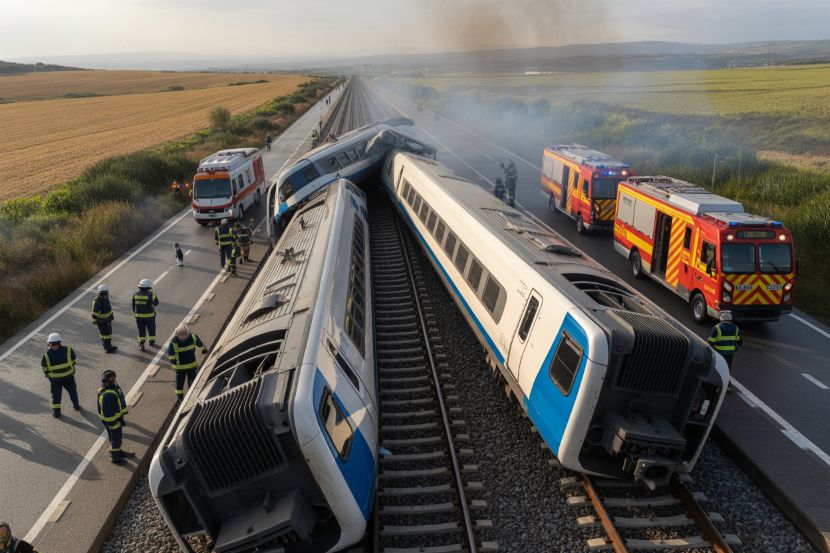

A devastating train crash near Cordoba, Spain, on Sunday evening has left at least 40 people dead and dozens more injured. Authorities investigating the incident have identified a faulty rail joint, known as a fishplate, as a possible cause of the crash. The incident occurred when a Malaga-to-Madrid high-speed train derailed, striking a train traveling in the opposite direction at speeds of 110km/h and 200km/h. The crash has shocked Spain and is now considered one of the deadliest railway accidents in Europe in the past 80 years.
A Fatal Collision Caused by Rail Joint Fault
Investigators examining the crash site near Adamuz, located about 360km south of Madrid, have uncovered significant wear on the rail connection, the fishplate, which is a joint between rail sections. Officials believe the worn joint opened a gap between the tracks that gradually widened as trains continued to pass over it. The Malaga-bound train, operated by Iryo, initially crossed the damaged section without incident. However, the rear of the train, specifically the eighth carriage, derailed after reaching the gap, causing a domino effect that affected the seventh and sixth carriages.
Emergency services reported that 12 passengers are in intensive care, and at least 43 people are currently listed as missing. The crash has devastated local communities and shocked travelers across Europe. The fact that the train was operating at speeds well below the 250km/h limit further confirms that excessive speed was not a factor in the disaster.
Early Warnings and Concerns About Rail Safety
Reports have emerged that SEMAF, the Spanish train drivers’ union, had warned the rail operator ADIF in August 2025 about severe wear and tear on high-speed rail tracks. The union’s letter expressed concern about issues like potholes, imbalanced power lines, and damage to trains, all of which could contribute to breakdowns and safety hazards. These warnings appear to have gone unaddressed, with the faulty rail joint now identified as a key factor in the crash.
While human error and excessive speed have been ruled out by authorities, the investigation will continue to focus on the faulty rail joint as the central cause of the disaster.
The Impact of the Spain Train Crash on Business and Tourism
This tragic incident has had a significant impact on both business and tourism sectors in Spain. The high-speed rail network is vital for business travelers and tourists, especially those traveling between major cities like Madrid, Malaga, and Cordoba. With the crash happening on a busy travel day, disruptions have been reported in train services across the country. Business professionals relying on timely travel for meetings and events have faced considerable delays, while tourists who were headed to Cordoba and nearby destinations will experience disrupted travel plans.
Given Spain’s popularity as a tourist destination, especially for cultural and historical tourism, the crash serves as a reminder of the importance of safety standards on its vast rail network. Cordoba, home to iconic sites like the Alcázar of the Christian Monarchs and Mezquita, remains a top attraction for tourists, and the local economy could be affected by temporary disruptions in train services. However, authorities are focusing on restoring services as soon as possible to minimize the long-term impact on tourism.
Authorities and Safety Measures: Ensuring Traveler Security
In response to this tragedy, Spain’s transport ministry has pledged to conduct a thorough review of the country’s rail network. The Spanish Ministry of Transport has assured the public that it will work closely with ADIF to ensure that safety concerns are addressed promptly. Travelers are urged to stay updated on any service changes, particularly if they are planning to travel via high-speed trains in Spain.
The Spanish government has also confirmed that investigations into the structural integrity of high-speed rail tracks and the maintenance practices of ADIF will be prioritized. For now, passenger safety is the foremost concern, with the authorities focusing on identifying and rectifying any further risks to the network.
Quick Tips for Travelers:
- Check Train Schedules: Due to the accident, there may be delays and cancellations on the high-speed rail network, especially near Cordoba. Check updates regularly before traveling.
- Consider Alternative Routes: Business travelers should look into alternative transport options such as flights or buses to avoid any disruptions in train services.
- Use Safe Travel Apps: Download official Spanish transport apps or use third-party apps to monitor real-time updates on train operations and delays.
- Stay Informed About Investigations: Follow government announcements regarding the results of the railway safety investigations and any changes in rail safety standards in Spain.
- Travel Insurance: For travelers heading to Spain, ensure you have comprehensive travel insurance to cover potential delays or disruptions.
Key Points in Bullet Format:
- 40 people were killed and 12 remain in intensive care after a train crash near Cordoba on Sunday evening.
- Investigations point to a faulty rail joint (fishplate) causing the gap that led to the derailment and collision with an oncoming train.
- SEMAF union had warned ADIF about track wear and tear months before the incident.
- The crash occurred on a straight stretch of track at speeds below the speed limit of 250km/h.
- The incident highlights significant concerns for rail safety in Spain, affecting both business and tourism sectors.
- Authorities have committed to improving rail safety measures following the investigation.
This tragic accident serves as a somber reminder of the critical need for rail safety across Europe, particularly in high-speed networks. Travelers heading to Spain should stay informed about the ongoing investigations and make arrangements for alternative transportation as needed.
Disclaimer: The Attached Image in This Article is AI Generated
The post Cordoba, Spain: What Caused the Train Tragedy? Faulty Rail Joint to Blame for 40 Deaths appeared first on Travel And Tour World.
