
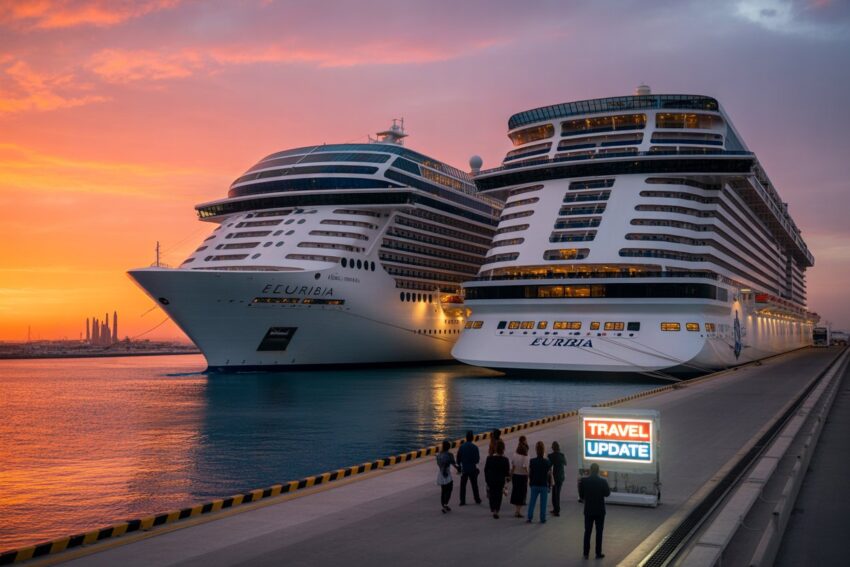
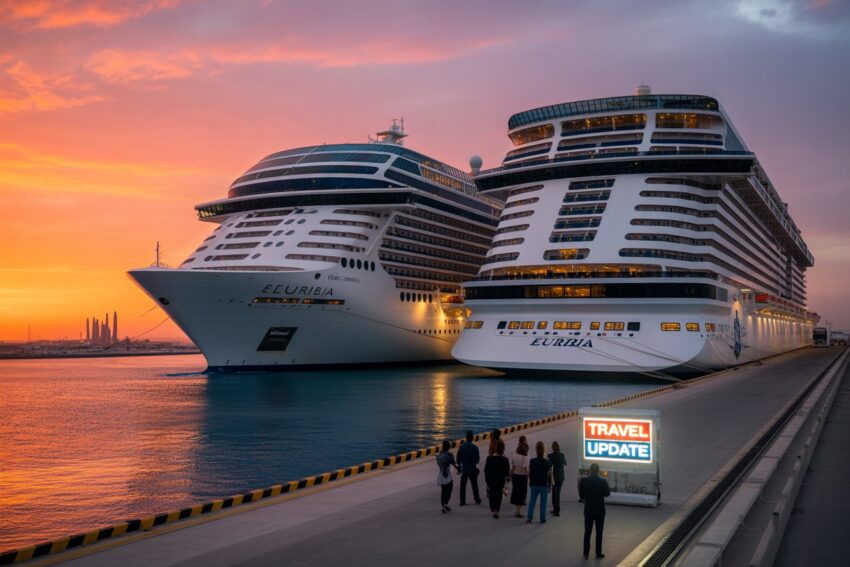
For the passengers aboard the MSC Euribia, the morning of March 1, 2026, was supposed to be about exploring the futuristic skyline of Doha, Qatar. Instead, they woke up to the news that their seven-day voyage had been abruptly cancelled. The ship remained docked in Dubai, transformed from a luxury liner into a floating waiting room.
The escalation of the Iran-Israel war has done more than just reroute flights; it has paralyzed the maritime corridors of the Arabian Gulf. With the Strait of Hormuz becoming a high-risk zone and air defence systems in the UAE intercepting hundreds of projectiles, the cruise industry has hit “pause” to protect the lives of thousands.
The Six Ships in Limbo
As of March 4, 2026, maritime tracking and industry reports confirm that six major vessels are currently affected by the regional shutdown:
- MSC Euribia (Docked in Dubai)
- Celestyal Journey (Stationed in Doha)
- Celestyal Discovery (Docked in Abu Dhabi)
- TUI Cruises (Mein Schiff 4)
- Aroya Cruises
- Resorts World One
For these ships, the challenge is twofold: they cannot safely transit the high-risk waters near the Strait of Hormuz, and their passengers cannot fly home because nearly 90% of flights from Dubai and Abu Dhabi were cancelled during the peak of the strikes.
The Human Toll: From Vacationers to Refugees
“The mood on the ship is a strange mix of calm and anxiety,” says Mark, a passenger currently aboard a vessel in Abu Dhabi. “The cruise line is providing free Wi-Fi and open bars to keep us comfortable, but every time someone looks at the news and sees more airspace closures, the tension rises. We aren’t just on a cruise anymore; we’re waiting for an evacuation.”
Cruise lines like Celestyal have taken the unprecedented step of keeping passengers onboard until at least March 7, providing full board and accommodation while they coordinate with embassies for “rescue flights.”
The Logistics of a “No-Fly Zone”
The primary reason these ships are “stranded” isn’t just the water; it’s the sky. Since the UAE and neighboring countries closed their airspaces on February 28, thousands of passengers who finished their cruises have no way to reach the airport.
- Hotel Shortages: Hotels in Dubai and Abu Dhabi reached 100% capacity within 48 hours of the conflict’s start.
- Floating Hotels: Cruise lines have found it safer and more efficient to keep passengers on the ships, using the vessels as “floating hotels” until the “Air Bridge” to Europe and Asia can be re-established.
Industry Shift: The Great Rerouting
The 2026 crisis has triggered a permanent shift for the 2026-2027 season. Legacy brands including AIDA, Costa, and Carnival, have already begun the process of “pulling out” of the Middle East entirely.
- The Cape of Good Hope: Ships that were scheduled to transit the Suez Canal are now being rerouted around the southern tip of Africa, a move that adds 10 to 14 days to the journey and thousands of dollars in fuel costs.
- The Mediterranean Pivot: Many “winter sun” itineraries are being shifted back to the Canary Islands and the Western Mediterranean, areas seen as “geopolitical safe havens” in 2026.
Passenger Rights and Refunds
If you are impacted by these cancellations, the cruise lines are offering three primary “Recovery Packages”:
- Full Refunds: Including any pre-paid shore excursions and beverage packages.
- Repatriation Assistance: Free transfers to the airport once “Rescue Flights” (organized by carriers like IndiGo and Emirates) are available.
- Future Cruise Credits (FCC): Often at 125% of the original value to encourage travelers to return once the region stabilizes.
The Environmental and Economic Impact
Beyond the passengers, the “Stranded Ship” crisis is hurting the regional economy. Ports like Mina Rashid and the Dubai Harbour have invested billions into becoming cruise hubs. The 2026 conflict threatens to turn these state-of-the-art terminals into “ghost ports” if the security situation does not resolve by the end of March.
Conclusion: A Waiting Game on the Water
As of March 4, the industry is in a “watch and wait” mode. While limited flights have resumed from Fujairah and Dubai, the backlog of stranded travelers is immense. For the six ships in the Gulf, the luxury of the “High Seas” has been replaced by the safety of the “High Dock.”
For the modern traveler, 2026 has become a year of hard lessons: always check your travel insurance for “War and Conflict” clauses, and remember that in the age of global volatility, the “Pride of the Ocean” is still subject to the realities of the land.
The post Cruise Ships Stranded in the Middle East: 2026 Conflict Traps Thousands at Sea Amid Airspace Closures appeared first on Travel And Tour World.
