

German cuisine reflects a wide range of regional cooking styles and long-established culinary practices. Across the country, traditional meat dishes continue to form a central part of the dining experience, while newer adaptations exist alongside historical preparations. For culinary tourism, these dishes provide a structured way to understand regional preferences, preparation methods, and serving customs. Visitors encounter a consistent emphasis on meat-based meals, commonly paired with potatoes, dumplings, noodles, or cabbage, forming a recognizable pattern in German food culture.
Traditional Meat Dishes in German Cuisine
Several meat dishes are consistently associated with German culinary traditions. Roast goose prepared for St. Martin’s Day remains a seasonal specialty. Game dishes such as roasted venison served with potato dumplings are also part of traditional menus. Pork, veal, beef, and poultry are widely used, with preparation methods including roasting, frying, braising, and breading. These dishes are commonly accompanied by established side items rather than varied garnishes, reinforcing a standardized culinary structure across regions.
Schnitzel as a Nationally Recognized Dish
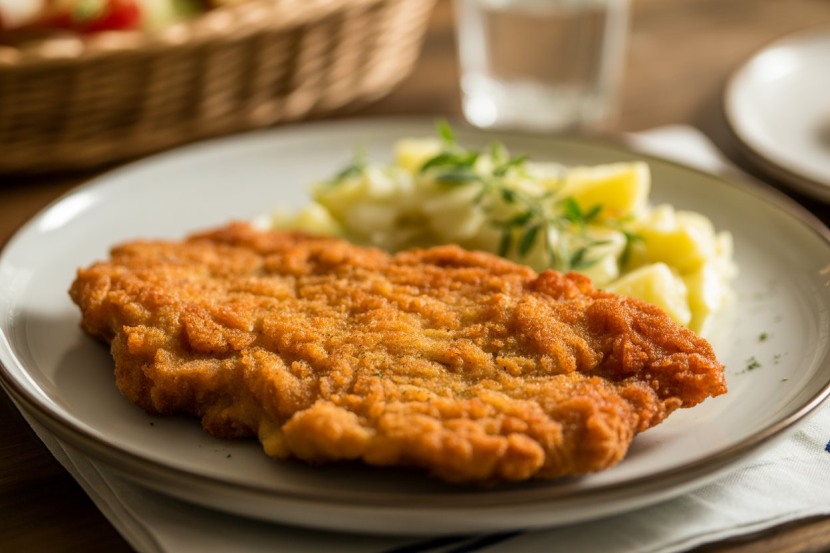
Schnitzel is one of the most widely available dishes in Germany and is commonly made from pork, served with French fries or potato salad. Due to its widespread presence, it is often used as a reference dish when comparing restaurant price levels, with prices ranging from low to higher ranges depending on location. Veal schnitzel, known as Wiener Schnitzel, appears less frequently and is generally priced higher. More commonly, Schnitzel Wiener Art made from pork is offered.
Numerous variations exist, including versions served with mushroom-based sauces, cheese fillings, eggs, cured meats, or vegetable accompaniments. Some schnitzels are breaded, while others are prepared without breading and referred to as natural schnitzels. Regional adaptations include schnitzels topped with horseradish, pickled cucumber, pineapple, cheese, mustard, or cream-based mixtures. Alternative versions are prepared using turkey or sausage-based slices, particularly in former East German regions. Side dishes typically include potatoes in various forms, noodles, croquettes, or salads.
Culinary Tourism and Familiar Dining Experiences
For travelers, the repetition of recognizable dishes across regions creates a consistent dining experience. Menus often present familiar items prepared with slight regional variation rather than entirely different offerings. This allows visitors to explore culinary traditions without encountering unfamiliar formats at every meal. The presence of established dishes such as schnitzel, roulades, and braised meats contributes to predictable meal structures that support culinary tourism focused on tradition rather than experimentation.
Food Traditions as Part of the Travel Experience
German dining culture emphasizes established eating practices that remain visible to visitors. Meals are generally consumed using standard cutlery, and table etiquette follows clear conventions for indicating the end of a meal. Payment practices allow individual billing at shared tables, which is common and accepted. Leftover food may be packed for later consumption, reflecting practical dining habits rather than formal presentation. These practices form part of the broader travel experience associated with dining in Germany.
Pork Leg Dishes Across Regions
Pork leg preparations are popular throughout Germany and appear under multiple regional names. These cuts are served cooked, fried, grilled, or breaded, with side dishes varying by location. Names such as Eisbein, Haxe, Schweinshaxn, Knöchla, Hämmche, and Stelze reflect regional terminology rather than different preparation methods. Despite naming differences, the dishes share similar cooking techniques and serving styles.
Königsberger Klopse and Related Dishes
Königsberger Klopse consists of meatballs made from minced beef or veal combined with pork, anchovies or herring, soaked bread, eggs, onions, and spices. The meatballs are cooked in seasoned liquid, and the resulting broth is transformed into a light sauce using cream, egg yolk, lemon juice, and capers. These meatballs are served with potatoes in boiled or mashed form. Variants using herring instead of anchovies are also recognized.
Roulades and Stuffed Preparations
Roulades represent another widely recognized German dish. Thin slices of meat are rolled around bacon, pickles, onions, and seasonings, briefly fried, and then slowly cooked. They are commonly served with red cabbage and paired with potatoes, dumplings, noodles, or spaetzle depending on the region. Variations exist using beef, veal, pork, or turkey. Cabbage-based versions, known as cabbage rolls, use blanched cabbage leaves filled with minced meat mixtures and follow similar cooking methods.
Sauerbraten and Regional Variations
Sauerbraten is a braised meat dish prepared through extended marination in vinegar-based liquid. The marination process tenderizes the meat before cooking. After braising, the sauce is adjusted to create a sweet-and-sour profile and thickened using gingerbread-based ingredients. Sauerbraten is typically served sliced, accompanied by potato dumplings, boiled potatoes, or noodles, and red cabbage.
Regional distinctions exist, with some areas emphasizing stronger sour flavors and others leaning toward sweeter preparations. The Rhenish version historically used horse meat and often includes raisins in the sauce, reflecting older preservation practices.
Restaurant Customs Encountered by Travelers
Dining in Germany commonly allows guests to choose their own tables unless reservations are indicated. Table sharing remains customary in traditional establishments, particularly in rural settings. Reserved tables are clearly marked, sometimes with time limits displayed. These customs contribute to a dining environment that supports both locals and visiting travelers.
Image Source: AI
The post Exploring German Culinary Traditions Through Regional Meat Dishes appeared first on Travel And Tour World.
