
This February marked a significant milestone in China’s economic landscape, with the Hainan Free Trade Port (FTP) celebrating its first Spring Festival since the implementation of island-wide special customs operations. The southern tropical province, long a hotspot for sunbathers, has evolved into a global consumption powerhouse. During the nine-day holiday period, the longest on record, there was a significant increase in both domestic and international travel. This surge is widely attributed to the “Hainan Model”, which combines freer trade management and optimised entry policies to create a seamless environment for both leisure and high-end retailing.
The momentum created by these institutional changes was palpable throughout the island. According to recent data, the tourism and consumption markets have been revitalised, signalling a shift from traditional travel patterns to more immersive and “slow travel” experiences. While Sanya’s iconic beaches remained a main attraction, Haikou, the island’s cultural hub, emerged as a frontrunner for those looking for a mix of heritage and modern convenience.
Echoes of History: Festive Joy at Qilou Old Street
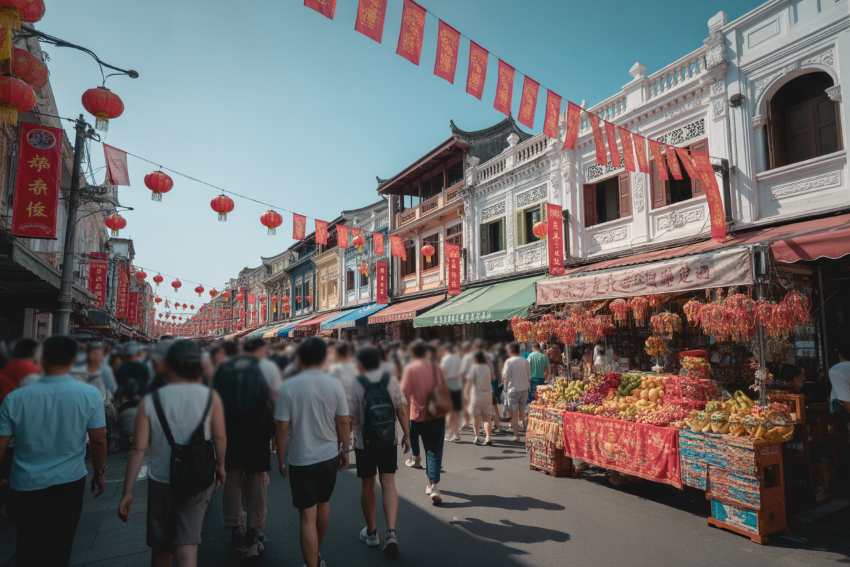
In the provincial capital of Haikou, the historical charm of Qilou Old Street was fully embraced by throngs of holidaymakers. Rows of vibrant red lanterns were hung along the Southeast Asian-style buildings, creating a festive ambiance that resonated with both local residents and global tourists. Strolls through the ancient blocks of Zhongshan Road and Bo’ai Road became a central highlight of the holiday itinerary. The intricate blend of Chinese and European architectural styles—a testament to the influence of overseas Chinese returning from Nanyang—offered a picturesque backdrop for photography and cultural exploration.
Traditional festival snacks and creative cultural handicrafts were featured at a bustling street market, drawing large crowds throughout the nine-day break. For many international visitors, such as those arriving via the newly expanded visa-free policies for 86 countries, the accessibility of such historic sites was cited as a major incentive. The air was filled not only with the aroma of “Old Dad tea” but also with the sounds of local opera, providing families with a rich, multisensory experience of Hainan’s living heritage.
The Duty-Free Revolution: Consumption Redefined
A cornerstone of the Hainan FTP’s success during this Spring Festival was the unprecedented boom in offshore duty-free shopping. Under the new special customs operations, the range of zero-tariff products was expanded significantly, covering approximately 74% of imported items. This policy shift was reflected in the staggering sales figures reported by Haikou Customs. In the first four days of the holiday alone, duty-free sales reached 1.03 billion yuan ($149 million), with the number of shoppers increasing by over 25% year-on-year.
The shopping experience was further enhanced by a combination of government-issued consumption vouchers and seasonal store discounts. Cosmetics, skincare products, and luxury electronics were sought after by travellers who had reserved entire days specifically for retail therapy. This synergy between policy dividends and consumer demand has solidified Hainan’s status as a premier destination for “Shopping in China”, rivalling traditional global retail hubs.
Navigating the High Seas: The Cruise and Aviation Boom
The expansion of the Hainan tourism market was not limited to the mainland; it was also bolstered by a flourishing cruise industry. On the first day of the Lunar Year, the Star Voyager cruise ship docked at the Sanya Phoenix Island international cruise port, bringing more than 1,800 passengers to the island’s shores. Such arrivals were facilitated by streamlined customs procedures and expanded visa-waiver arrangements for cruise groups, which have made the “Pearl of the South China Sea” more accessible than ever to the international community.
Simultaneously, the aviation sector reported record-breaking numbers. Flight bookings to Haikou and Sanya skyrocketed, with international arrivals from countries such as Malaysia, South Korea, Singapore, and Thailand leading the charge. The launch of China’s first passenger route under the “Seventh Freedom of the Air” was a notable development, allowing for more direct connections between Hainan and global markets. This increased connectivity is a key component of the province’s long-term goal to be built into a globally influential tourism destination by 2035.
A Vision for the Future: Sustainability and Growth
As the holiday came to a close, the impact of the “freer access at the first queue, regulated access at the second queue” supervision model became clear. Aside from the immediate economic benefits, the rise of niche tourism sectors demonstrates a commitment to high-quality development. Hotel occupancy increased significantly in Wanning, a surfing hotspot, as well as the rainforest-rich central highlands of Qiongzhong and Wuzhishan.
These trends indicate that Hainan is successfully diversifying its offerings, evolving from a “sun and sand” destination to a multifaceted hub for sports, wellness, and cultural deep dives. With the central government’s continued support and ongoing optimisation of Free Trade Port policies, the momentum seen during the 2026 Spring Festival is expected to serve as a blueprint for the island’s future growth. Hainan is more than just a vacation destination; it is a thriving hub where people from all over the world come to shop, explore, and connect.
The post Hainan Free Trade Port: A Record-Breaking 2026 Spring Festival Tourism and Consumption Boom appeared first on Travel And Tour World.
