
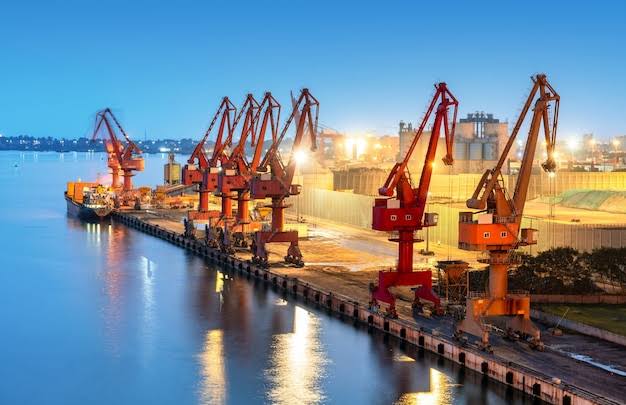

The launch of special customs operations in Hainan Free Trade Port marks a critical step in China’s broader commitment to deepening its international engagement and addressing the challenges of “de-globalization”. These operations represent a pivotal measure in the country’s efforts to open its doors even wider to global markets. Hainan’s unique role in this process highlights its geographical and locational advantages, positioning it as a key player in facilitating China’s expansion of free trade and investment.
Hainan’s special customs operations are not only about opening up trade but also enhancing China’s integration into global free trade networks. This move is seen as a critical component in China’s broader strategy of fostering institutional and structural reforms to inject new momentum into the global trade system, ensuring that the nation remains at the forefront of global economic development.
Hainan’s Competitive Advantage in Regional Trade
Hainan’s geographical location makes it uniquely positioned to spearhead China’s efforts in “unilateral opening-up” to the countries of the Association of Southeast Asian Nations (ASEAN). Unlike mainland China, which has more stringent policies on trade and investment, Hainan can implement policies that offer more liberal access to goods, services, and investment from ASEAN countries. This makes the island a natural bridge between China and Southeast Asia, paving the way for increased cross-border trade, investment opportunities, and enhanced travel access.
Hainan’s potential to become a regional trade hub is already being realized with the possibility of lower tariffs or even zero tariffs on agricultural products and raw materials imported from ASEAN countries. This move will not only benefit businesses but also allow local industries to become more competitive. Additionally, trade in services is expected to be further liberalized, with sectors such as education, healthcare, and tourism receiving greater access for ASEAN enterprises.
Moreover, Hainan is exploring the introduction of more convenient visa policies, aimed at fostering greater mobility for business travelers, tourists, and researchers from ASEAN nations. This liberalization will undoubtedly enhance Hainan’s appeal as a global destination for both business and leisure, contributing to its growing prominence in regional economic integration.
Advancing Institutional Opening-up
A key aspect of Hainan’s development strategy is the focus on institutional opening-up, which aims to establish a robust framework of internationalized, law-based rules and standards for trade, investment, cross-border capital flows, and travel. Hainan’s institutional reforms will also focus on creating a transparent, predictable, and stable system that encourages global businesses to invest in the region.
The ultimate goal of these reforms is to attract high-end global resources, positioning Hainan as a prime destination for international capital and talent. The island’s initiatives are closely aligned with China’s ambitions to integrate more effectively into high-standard global agreements such as the Comprehensive and Progressive Agreement for Trans-Pacific Partnership (CPTPP), a key agreement that will boost Hainan’s role in Asia-Pacific trade networks.
Policy and Regulatory Innovations for Stability
In order to ensure that Hainan can achieve its vision as a global trade hub, several measures need to be prioritized. First, the island must continue refining its local regulations covering trade, investment, finance, taxation, and the ecological system. By doing so, Hainan will create a regulatory environment that supports business operations while adhering to international norms.
Second, Hainan must establish mechanisms for resolving international business disputes to facilitate smoother trade and investment relations. This system will be key in ensuring that businesses operating within the Free Trade Port can resolve issues efficiently and fairly, enhancing confidence among foreign investors.
Third, an interdepartmental regulatory system must be built, involving various authorities, including those overseeing customs, finance, and data flows. This system will enable Hainan to mitigate risks while also adhering to global standards for freer access at the first line and regulated access at the second line. By setting these parameters, Hainan can ensure that its trade environment is both open and secure.
Pioneering Green and Digital Economies
With its zero tariffs and low tax rates, Hainan is well-positioned to attract investment in green and low-carbon industries as well as the digital economy. These emerging sectors are vital to ensuring sustainable growth and reducing the environmental impact of rapid industrialization.
Hainan’s commitment to green industries is reflected in its focus on renewable energy, carbon trading, and sustainable development practices. These areas are likely to see strong growth, as international investors and companies look to align with China’s green transformation goals. Hainan’s geographical advantages also make it an ideal location for green innovation, including technologies in marine research, tropical agriculture, and sustainable tourism.
In the digital economy, Hainan’s plans to develop smart logistics and innovation in data-driven industries will further diversify its economic base. These industries are expected to thrive with the island’s emphasis on advanced technological infrastructure, making it an attractive location for both start-ups and established tech companies.
Regional Cooperation and Strategic Collaborations
While Hainan’s development strategy focuses heavily on institutional opening-up, it also places significant emphasis on regional cooperation, particularly with ASEAN countries and members of the Regional Comprehensive Economic Partnership (RCEP). Trade liberalization and investment facilitation are central to this collaboration, creating opportunities for Hainan to grow as a regional economic powerhouse.
The island’s potential to cooperate with the Guangdong-Hong Kong-Macao Greater Bay Area further reinforces the importance of regional partnerships. The Greater Bay Area’s emphasis on scientific and technological innovation, combined with Hainan’s focus on sustainable development and open policies, will create a powerful synergy. By working together, these regions can leverage their unique strengths to enhance China’s influence in the Asia-Pacific region, positioning Hainan and the Greater Bay Area as major hubs for global trade, technology, and finance.
Conclusion
Hainan is poised to become a significant international economic player, thanks to its ongoing efforts in institutional opening-up, regional collaboration, and investment in sustainable industries. With a focus on creating a stable, transparent regulatory environment, Hainan is well on its way to becoming a key component in China’s broader global trade and development strategy. As the region embraces a future of increased connectivity and innovation, Hainan will continue to build on its geographical, ecological, and strategic advantages to foster growth in both the green and digital economies, solidifying its role as a central player in the Asia-Pacific economic landscape.
The post Hainan’s Bold Move: How China’s New Free Trade Hub is Set to Transform Global Trade by 2026 appeared first on Travel And Tour World.
