
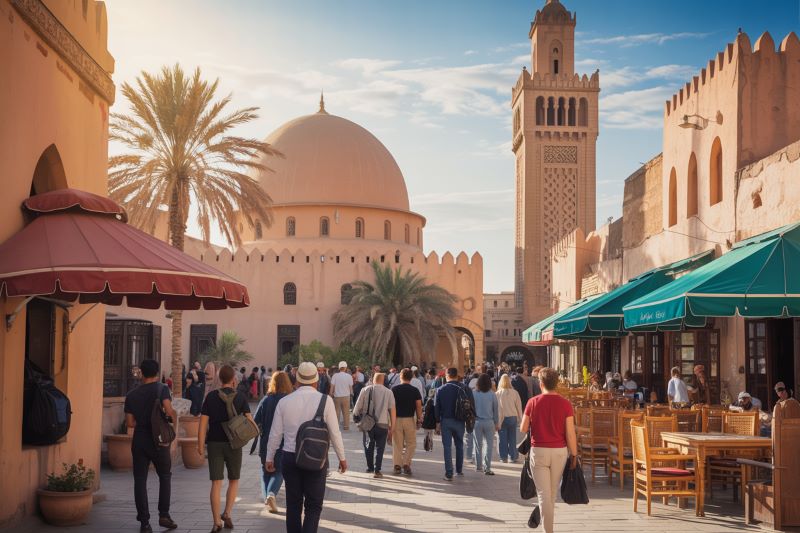
In 2025, North Africa has firmly established itself as a rising tourism powerhouse, with Egypt, Morocco, and Tunisia setting new benchmarks in the global travel landscape. These three countries have not only overcome the lingering effects of the pandemic but have outpaced global averages in tourist arrivals and revenue generation. With record-breaking statistics and a robust growth trajectory, these countries are now the go-to destinations for travelers seeking rich culture, history, and unique experiences. What does this mean for the future of tourism in North Africa? Let’s delve into how these nations have achieved remarkable success.
Egypt’s Stunning Tourism Surge
Egypt continues to lead the way in North African tourism, securing the highest revenue per tourist in the region. With a total of $17.8 billion in tourism revenue in 2025, a remarkable 17% increase from the previous year, Egypt has firmly established itself as a global tourism leader. The country welcomed 19 million visitors, marking a 21% increase in arrivals. This surge in tourism was driven by the country’s world-renowned heritage sites, such as the pyramids of Giza, the Great Sphinx, and the temples of Luxor.
Egypt’s government has been proactive in expanding air connectivity and visa facilitation, making it easier for travelers from all over the world to explore its rich history. The Egyptian Tourism Authority’s new strategy aims to attract 30 million visitors and generate $24 billion in revenue by 2028. With a $937 average spend per tourist, Egypt’s ability to offer high-value experiences positions it as the region’s leading destination for cultural tourism.
For travelers, Egypt offers unparalleled opportunities to explore ancient monuments, cruise along the Nile, and immerse themselves in local culture. With government initiatives driving growth, the country’s tourism sector looks set for even greater expansion in the years to come.
Morocco’s Phenomenal Growth
Morocco’s tourism sector has experienced some of the highest growth rates globally. The country welcomed 19.8 million tourists in 2025, a 13.8% increase from the previous year. Morocco’s tourism revenue reached a record $14.7 billion—a 19% increase in dollar terms, making it the fastest-growing tourism market in the world. The country’s diverse offerings, from the bustling streets of Marrakech to the tranquil beaches of Essaouira, have made it a top choice for travelers seeking adventure, culture, and relaxation.
Tourism receipts in Morocco have now surpassed remittances from Moroccans abroad, cementing the sector’s importance as the second-largest source of foreign exchange for the country. The $742 average spend per tourist highlights Morocco’s appeal to affluent travelers. The country’s tourism strategy has focused on increasing air accessibility, promoting its unique cultural heritage, and expanding luxury travel options.
For visitors, Morocco offers an unforgettable journey. Whether exploring the majestic Atlas Mountains, shopping in ancient souks, or relaxing in luxurious riads, Morocco’s tourism sector promises diverse and high-quality experiences for all types of travelers.
Tunisia’s Record-Breaking Year
Tunisia has also witnessed significant growth, achieving a record 11 million tourist arrivals in 2025. The country generated $2.75 billion in tourism revenue, reflecting a 6.5% increase from the previous year. Despite these impressive numbers, Tunisia’s tourism sector faces challenges, including a relatively low average expenditure per tourist, which hovers around $250. This reflects the country’s heavy reliance on mass tourism and all-inclusive packages, which funnel much of the revenue to foreign operators.
However, Tunisia’s government has recognized these challenges and is working on diversifying the sector to include more upmarket tourism, such as ecological, cultural, and medical tourism. These initiatives are expected to attract higher-spending travelers and reduce the economy’s dependency on mass tourism.
Tunisia’s unique offerings, from the ancient ruins of Carthage to the pristine beaches of Djerba, make it a rising destination for travelers seeking affordable yet enriching experiences. The push for higher-quality tourism promises a more sustainable and profitable future for the country’s tourism sector.
The Road Ahead for North Africa’s Tourism
North Africa is now a key player in the global tourism market, with Egypt, Morocco, and Tunisia driving growth in the region. These countries have capitalized on their unique historical, cultural, and natural assets, which appeal to a diverse range of travelers. However, the future success of the region’s tourism will depend on several factors, including:
- Infrastructure Investment: Continued investment in tourism infrastructure is crucial for accommodating the rising number of visitors and maintaining high service standards.
- Sustainability: Green and sustainable tourism initiatives will play a pivotal role in ensuring the long-term health of the tourism industry in North Africa.
- Value-added Experiences: The shift towards more luxury and upmarket tourism in countries like Tunisia will be key to boosting tourist spending and improving the local economy’s benefits from tourism.
- Diversification: Egypt’s diversification strategy beyond its historical and beach offerings will help reduce its dependency on traditional tourism and create a more resilient sector.
Looking Forward
North Africa’s tourism industry is thriving, with Egypt, Morocco, and Tunisia leading the charge. The region’s robust growth is a testament to the success of targeted government strategies, infrastructure improvements, and the appeal of these countries’ diverse tourism offerings. For travelers, North Africa is becoming an increasingly attractive destination, with new experiences, higher quality services, and rich cultural immersions waiting to be explored.
As the sector continues to grow, it promises not only to enhance the region’s global standing but also to create lasting economic benefits for local communities. For those seeking adventure, history, and unforgettable experiences, North Africa is the place to be.
The post How Egypt, Morocco, and Tunisia’s Tourism Success in 2025 is Changing the Travel Landscape appeared first on Travel And Tour World.
