
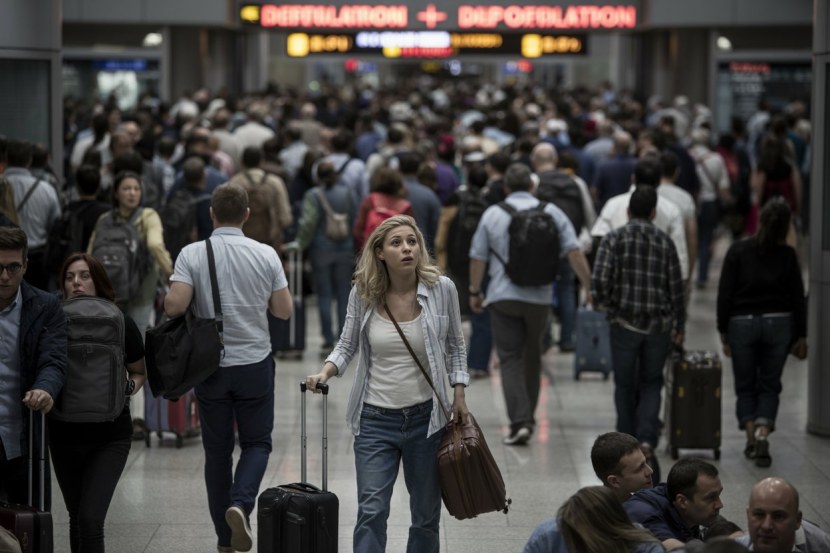

Across Istanbul Airport (IST), King Abdulaziz International Airport (JED), Dubai International Airport (DXB), and King Khalid International Airport (RUH), airlines recorded a combined 1,103 flight delays and 21 cancellations. The most affected carriers by volume include Turkish Airlines (IST: 176 delays, 3 cancellations), Saudia (JED: 74 delays, 6 cancellations; RUH: 83 delays, 3 cancellations), Emirates (DXB: 116 delays, 4 cancellations), FlyDubai (IST: delays reported; DXB: 165 delays, 1 cancellation), and Flynas (JED: 58 delays; RUH: 58 delays). Other widely used airlines that also faced disruptions include Qatar Airways, Egypt Air, Pegasus Airlines, British Airways, KLM, and Lufthansa, each reporting delays or isolated cancellations. On the airport side, the heaviest disruption volumes were observed at Dubai International (DXB: 409 delays, 7 cancellations), King Abdulaziz International, Jeddah (JED: 237 delays, 6 cancellations), King Khalid International, Riyadh (RUH: 228 delays, 5 cancellations), and Istanbul Airport (IST: 229 delays, 3 cancellations), with spillover impacts reaching major international gateways including JFK, DFW, BOS, IAD, SFO, SEA, and IAH through delayed or cancelled long-haul movements. The disruption wave primarily affected Turkey, Saudi Arabia, and the UAE, with repeated delays and cancellations concentrated at their busiest international hubs.
- Update today: A total of 1,103 delays and 21 cancellations were recorded across IST, JED, DXB, and RUH.
- Dubai International (DXB) led all airports by disruption volume with 409 delays.
- King Abdulaziz International (JED) and King Khalid International (RUH) together accounted for 465 delays and 11 cancellations.
- Turkish Airlines, Saudia, Emirates, FlyDubai, and Flynas were the most impacted airlines by reported delay volume.
- Long-haul routes linking the Middle East with Europe, Asia, and North America experienced secondary knock-on delays.
- U.S.-connected disruptions appeared mainly as isolated cancellations and delays at hubs such as JFK, DFW, BOS, and IAD, depending on airport.
Most Affected Airports
Dubai International Airport (DXB)
DXB recorded the highest disruption levels with 409 delays and 7 cancellations, impacting a wide range of long-haul and regional services operated by Emirates, FlyDubai, Qatar Airways, and other international carriers.
King Abdulaziz International Airport (JED)
Jeddah logged 237 delays and 6 cancellations, with Saudia, Flynas, flyadeal, and Egypt Air among the airlines most affected by schedule instability.
King Khalid International Airport (RUH)
Riyadh experienced 228 delays and 5 cancellations, largely concentrated among domestic and regional operations, particularly involving Saudia, Flynas, and flyadeal.
Istanbul Airport (IST)
IST reported 229 delays and 3 cancellations, with Turkish Airlines accounting for the largest share of delayed movements, alongside disruptions affecting multiple European and long-haul routes.
Dallas–Fort Worth International Airport (DFW)
DFW appeared in U.S.-linked movements with isolated cancellations and delays, reflecting the downstream impact of disruptions originating from Middle Eastern hubs.
Airlines Most Affected by Flight Cancellations and Delays
Turkish Airlines
At Istanbul Airport, Turkish Airlines recorded 176 delays and 3 cancellations, making it the single largest contributor to disruption volume.
Saudia
Across Jeddah and Riyadh, Saudia accumulated 157 delays and 9 cancellations, reflecting widespread schedule pressure across Saudi Arabia’s primary hubs.
Emirates
Emirates reported 116 delays and 4 cancellations at Dubai International, affecting numerous intercontinental services.
FlyDubai
FlyDubai experienced 165 delays and 1 cancellation at DXB, with additional delays reported at IST, indicating network-wide operational strain.
Flynas
Flynas logged 58 delays at JED and 58 delays at RUH, making it one of the most delay-impacted low-cost carriers.
What can travellers impacted at airports do?
- Monitor airline apps and airport departure boards frequently for real-time updates.
- Allow extra connection time, especially at DXB, IST, JED, and RUH.
- Contact airlines directly regarding rebooking or accommodation policies.
- Keep travel documents and essentials accessible in case of gate or schedule changes.
- Consider flexible ticket options when rebooking disrupted flights.
Overview of Flight Disruptions
Airlines such as Turkish Airlines, Emirates, Saudia, FlyDubai, Flynas, and Qatar Airways feature prominently due to their scale and route density. Cities including Dubai, Istanbul, Jeddah, and Riyadh appear multiple times as both origins and destinations affected by delays, while long-haul routes extending to Europe, Asia, and North America absorbed secondary impacts. Overall, the data reflects concentrated disruption at a small number of global hubs with cascading effects across international networks.
Image Source: AI
Source: Different airports and FlightAware
The post Hundreds Of Passengers Stranded Around Turkey, UAE And Saudi Arabia as Turkish, Emirates, Saudia, FlyDubai, Flynas, And Others Cancel 21 And Delay 1,103 Flights, Disrupting Dubai, Istanbul, Jeddah, Riyadh and More appeared first on Travel And Tour World.
