
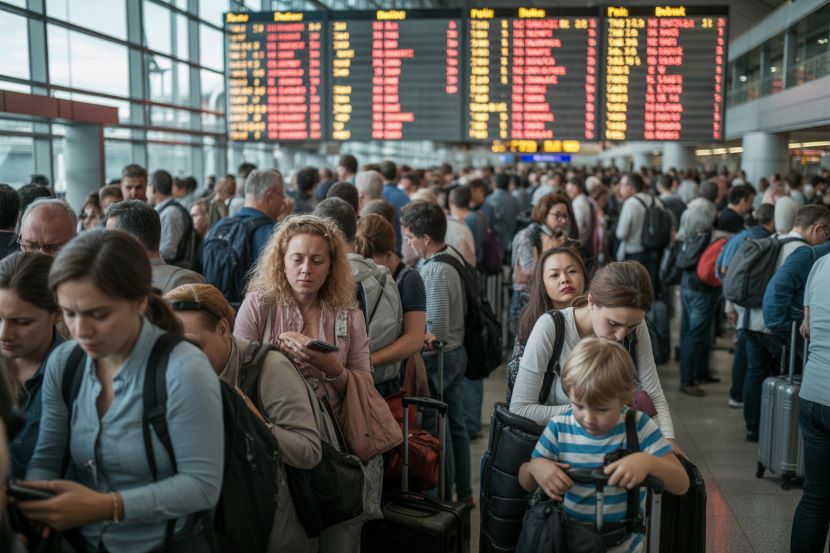

In recent days, hundreds of passengers across Asia have found themselves stranded due to widespread flight cancellations and delays that have disrupted major airports in Indonesia, the Philippines, Singapore, Japan, and China. With a staggering 56 flights cancelled and 338 delayed, travelers have faced long waits and unpredictable schedules, impacting carriers such as Batik Air, Garuda Indonesia, PAL Express, Lufthansa, ANA Wings, Dalian Airlines, and others.
This travel chaos is a consequence of several contributing factors, including adverse weather conditions, air traffic congestion, operational delays, and ongoing political and security issues in key regions. As airlines scramble to manage the disruptions and restore normal service, passengers have been left struggling to navigate through the uncertainty.
Indonesia’s Soekarno-Hatta International Airport Faces Major Disruptions
Indonesia’s Soekarno-Hatta International Airport, the country’s busiest and one of the largest aviation hubs in Asia, has been hit hardest by the recent wave of cancellations and delays. A total of 23 flights were cancelled, and 50 were delayed, with Batik Air and Garuda Indonesia among the most affected carriers. The delays were primarily due to operational issues and air traffic congestion. Passengers traveling through Jakarta found themselves facing long lines at check-in counters, limited communication from airline staff, and a tense atmosphere as they awaited updates on their rescheduled flights.
The disruption at Soekarno-Hatta was exacerbated by a combination of weather-related delays in the region and the airport’s high traffic volume. With many international and domestic flights being affected, passengers experienced significant inconvenience, particularly those with connecting flights.
Sultan Hasanuddin International Airport and Other Indonesian Hubs Struggle
Sultan Hasanuddin International Airport in Makassar also saw a considerable number of cancellations, with seven flights grounded and 25 delayed. While the scale of the disruption was less severe than at Soekarno-Hatta, it still created a bottleneck in passenger flow. As domestic carriers like Garuda and Lion Air adjusted their schedules, passengers were left scrambling to find alternative options or rebook their flights.
In Jakarta’s Halim Perdanakusuma Airport, which serves smaller domestic and international routes, seven flights were cancelled and four were delayed. Although the delays were not as widespread, passengers faced challenges due to the lack of available information regarding their flight status.
Weather Woes and Operational Delays in China, Japan, and the Philippines
The disruption spread to other parts of Asia, with significant impacts on flights in China, the Philippines, Singapore, and Japan. Beijing Capital International Airport, one of the world’s busiest, saw two cancellations and 68 delays. This severe air traffic congestion was mainly caused by weather conditions, including dense fog and low visibility, which made it difficult for planes to land and depart in a timely manner.
In the Philippines, Manila’s Ninoy Aquino International Airport (NAIA) reported two flight cancellations and 45 delays. The delays were due to both weather issues and air traffic control delays, as airport authorities struggled to accommodate the high volume of international travelers. PAL Express, the domestic airline operating out of NAIA, was particularly affected by the disruptions, causing passengers to replan their travel arrangements.
Singapore’s Changi Airport, known for its efficiency, also saw one flight cancellation and 47 delays. These disruptions were mainly attributed to weather-related issues and the backlog of incoming flights from other regions. Although the delays were relatively short in comparison to other airports, passengers still faced significant inconvenience as they awaited updates on their departure times.
In Quanzhou Jinjiang Airport, two flights were cancelled, and 19 were delayed. These delays were linked to operational problems and weather conditions that affected the timeliness of departing flights. While airport authorities worked to resolve the issues, many travelers found themselves stranded in crowded terminals.
Japan’s Naha Airport Experiences Delays and Cancellations
Naha Airport in Okinawa, Japan, also faced disruptions, with one flight cancelled and 37 delayed. ANA Wings, a subsidiary of All Nippon Airways, was the hardest hit by the delays, with several regional routes affected by poor weather conditions and operational difficulties. The airport, which serves as a major gateway for travelers heading to Okinawa’s tourist destinations, was crowded with frustrated passengers seeking alternative flights or updated departure information.
Major Reasons Behind Flight Cancellations
Flight cancellations and delays can be caused by several factors that disrupt the smooth operation of air travel. The most common reasons behind such disruptions include:
- Weather Conditions: Adverse weather conditions such as storms, heavy rain, fog, or snow can severely affect the safety of flights. For example, poor visibility, lightning, or extreme turbulence can cause delays and cancellations, as airlines prioritize passenger safety.
- Operational Issues: Technical failures, maintenance requirements, and crew scheduling problems are significant operational reasons for flight disruptions. Airlines often delay or cancel flights to ensure that aircraft are airworthy and that crew members are available and well-rested.
- Air Traffic Control (ATC) Delays: Air traffic congestion, especially during peak travel times, can lead to delays as ATC needs to manage the flow of incoming and outgoing flights. This can be exacerbated at major international hubs with high volumes of traffic.
- Security Concerns: Heightened security measures, especially in the wake of potential threats or security breaches, can lead to delays and cancellations. This is particularly true in regions facing political instability or heightened terrorism alerts.
- Natural Disasters and Geopolitical Events: Natural disasters such as earthquakes, volcanic eruptions, and floods can damage airport infrastructure or pose safety risks to flights. Similarly, geopolitical events such as strikes, border disputes, or military activities can force airlines to cancel or reroute flights.
- Health and Epidemic Outbreaks: Pandemics, health alerts, and disease outbreaks can cause widespread travel disruptions, as airports and airlines implement quarantine measures or limit flights to prevent the spread of infections.
Impact on Airlines and Passengers
The widespread disruption has caused serious operational difficulties for airlines, including Batik Air, Garuda Indonesia, PAL Express, Lufthansa, ANA Wings, and Dalian Airlines. These carriers have been forced to issue statements apologizing for the inconvenience and offering passengers rebooking options, meal vouchers, and other compensation.
Passengers affected by these cancellations and delays have been struggling with lengthy wait times, minimal communication, and limited rebooking options. As airlines work to clear the backlog, many travelers have been left uncertain about when they will be able to resume their travels. Airlines such as Garuda Indonesia and Lufthansa have been rebooking passengers on alternative flights, while PAL Express and ANA Wings have offered meal and accommodation vouchers for those who were delayed for extended periods.
What Passengers Should Know
If your flight has been affected by cancellations or delays, it is crucial to stay informed. Passengers are advised to stay in close contact with their airlines, monitor the flight status regularly, and be proactive about rebooking options. Many airlines offer compensation for long delays or cancellations, including financial reimbursements, accommodation, and meal allowances. Passengers should also check if they are eligible for compensation under international aviation regulations such as the European Union’s EC 261 regulation or other applicable laws.
For those traveling through major airports like Jakarta, Beijing, Manila, and Naha, it is important to arrive early and be prepared for unexpected changes to flight schedules. With the high number of delays, flight statuses can change quickly, and passengers may need to adjust their plans accordingly.
Conclusion
The recent disruptions across major airports in Indonesia, the Philippines, Singapore, Japan, and China have left hundreds of passengers stranded and frustrated. With 56 flights cancelled and 338 delayed, travelers have faced significant challenges in their attempts to reach their destinations. The causes of these disruptions range from weather-related delays and air traffic control issues to operational problems and security concerns. While airlines and airport authorities are working to resolve the issues and restore normal operations, passengers should remain patient and proactive in seeking out alternatives and compensation options. In the meantime, travelers are urged to stay in touch with their airlines and monitor their flight statuses for any updates.
Source: Different airports and FlightAware
The post Hundreds of Passengers Stranded in Asia as Indonesia, Philippines, Singapore, Japan, China and More Cancel 56 Flights and Delay 338, Impacting Batik Air, Garuda, PAL Express, Lufthansa, ANA Wings, Dalian Airlines and Others in Jakarta, Beijing, Manila, Naha and Beyond appeared first on Travel And Tour World.
