
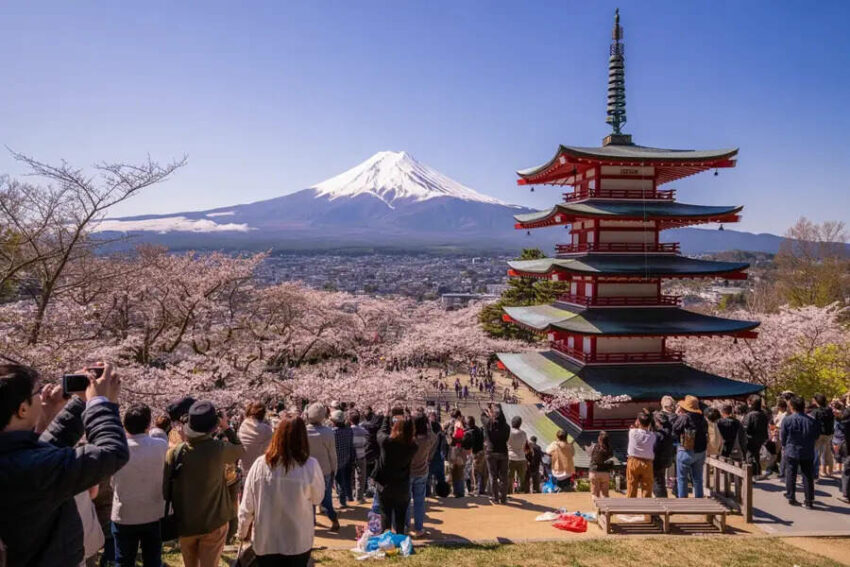

Japan made the audacious decision to cancel the renowned Fujiyoshida Cherry Blossom Festival because of the growing pressures of excessive tourism and disruptive visitor behavior, which are endangering the tranquility and standard of living of the local community. In recent years, the event—which is renowned for its stunning views of Mount Fuji and the cherry blossoms—has drawn enormous crowds, which has resulted in traffic jams, littering, and even cases of tourists trespassing on private property. The city has taken the required action to shield its citizens from the detrimental effects of unchecked visitor numbers, making sure that the tranquil atmosphere that characterizes Fujiyoshida is not jeopardized, as tourism numbers are skyrocketing, especially due to the weak yen.
Fujiyoshida, a scenic city located in Japan’s Yamanashi region, is home to one of the country’s most picturesque cherry blossom festivals, offering visitors a breathtaking view of Mount Fuji. However, this year, the popular event, which has drawn an estimated 200,000 visitors in previous years, has been cancelled. The decision was made after mounting concerns from local residents about overtourism, amplified by the effects of a weak yen, which has made Japan an even more attractive destination for international travellers.
The cancellation of the event follows a surge in tourism, with Japan recording a historic 42.7 million visitors in 2025, surpassing the previous year’s high of 37 million. The weak yen has undoubtedly played a significant role in this influx, as many international travellers find Japan’s cultural offerings, scenic views, and historic landmarks even more accessible. However, the rapid rise in tourism has also sparked complaints, especially in locations like Fujiyoshida, where the impact of the growing number of visitors is becoming increasingly difficult to manage.
Local residents have voiced concerns about the negative effects of this influx on their everyday lives. Overcrowding has become a significant issue, with traffic congestion becoming a regular occurrence. Furthermore, there have been numerous reports of inappropriate behaviour from some tourists, including littering and trespassing on private properties. These behaviours have added to the growing dissatisfaction among the locals, who feel their peaceful environment is under threat.
Despite the cancellation of the festival, the venue where it has been held for the past decade remains a major attraction. The park, which offers panoramic views of Mount Fuji, is renowned for its cherry blossoms and the iconic five-story pagoda, making it an essential stop for many tourists during the spring season. While the festival may not take place this year, the park itself is expected to see a surge in visitors, as the beauty of the cherry blossoms and the stunning backdrop of Mount Fuji continue to draw attention from travellers seeking to capture the perfect photo.
In the face of this surge in tourist numbers, nearby towns have already implemented measures to alleviate the impact. These measures have included the introduction of view-blocking barriers designed to prevent overcrowding at the best vantage points and discourage tourists from blocking pathways or stepping into restricted areas for the perfect shot. In addition, the government has imposed entry fees for hikers and set limits on the number of daily visitors to certain areas to preserve the region’s tranquillity and natural beauty.
The cancellation of the Fujiyoshida Cherry Blossom Festival raises an important question about the sustainability of Japan’s tourism industry. While tourism has undoubtedly brought economic benefits to the country, the rise in visitor numbers has highlighted the need for a more balanced approach to tourism management. The experiences of Fujiyoshida serve as a reminder that the preservation of local communities and cultural heritage should always be a priority when considering the growth of tourism.
Japan is undoubtedly a dream destination for many travellers, and the allure of iconic landmarks such as Mount Fuji and the cherry blossoms will continue to attract visitors from around the world. However, as tourism continues to rise, it is crucial for both local authorities and tourists to work together to ensure that the impact on communities remains manageable and sustainable.
Moving forward, it is likely that Japan will adopt additional strategies to manage tourism in a way that benefits both the local population and the industry. With responsible tourism practices, such as limiting visitor numbers and promoting off-peak travel, it is possible to preserve the beauty and cultural integrity of Japan’s most cherished destinations while still welcoming tourists. For now, the city of Fujiyoshida remains focused on finding ways to protect the dignity and quality of life for its residents, ensuring that future visitors can continue to enjoy its scenic offerings in a more sustainable manner.
As Japan prepares for a future with more tourists than ever before, the lessons learned from the cancellation of the Fujiyoshida Cherry Blossom Festival may lead to a broader shift in how the country manages tourism at large. It is hoped that other regions, especially those with iconic landscapes and cultural significance, will consider these challenges and implement policies that promote a harmonious relationship between tourism and the local community.
Japan has cancelled the renowned Fujiyoshida Cherry Blossom Festival due to the overwhelming rise in overtourism and disruptive behaviour, which has been negatively impacting local residents’ peace and daily life. The surge in visitors, fueled by the weak yen, led to overcrowding, traffic congestion, and disrespectful actions, prompting the city to prioritise its community’s well-being.
With the ongoing popularity of Japan as a travel destination, it is clear that the balance between welcoming tourists and preserving local heritage is a delicate one. As the country navigates this growing demand, ensuring the preservation of both its cultural and natural resources will be critical to its long-term success in the global tourism market.
The post Japan Cancels Renowned Fujiyoshida Cherry Blossom Festival amid Rising Overtourism and Unruly Tourist Behaviour Threatening Local Peace and Quality of Life appeared first on Travel And Tour World.
