
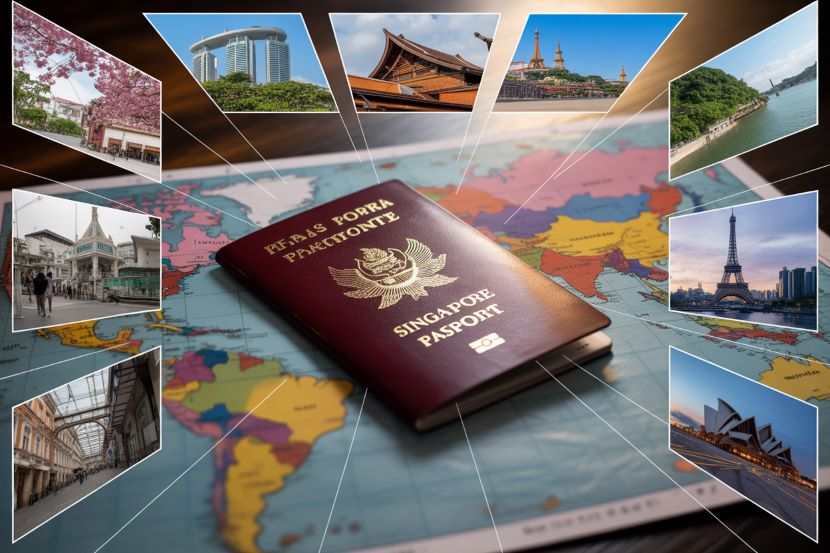
Japan, Malaysia, Thailand, Indonesia, Vietnam, South Korea, Hong Kong, China, Australia and France anchor Singapore’s extraordinary outbound travel story, sitting at the centre of a 192‑destination visa‑free and visa‑facilitated network that makes overseas trips feel almost as easy as domestic holidays in larger countries. With minimal paperwork, dense airline connectivity and rising travel spending, Singapore residents are turning this passport power into frequent getaways, seasonal adventures and long‑haul journeys across nearly every region of the world.
Snapshot table: Where Singaporeans are travelling most
The table below focuses on the ten most influential destinations in Singapore’s outbound landscape, using the latest indicative official statistics and keeping the table restricted to numbers and visa status.
Outbound travel of Singapore residents to key destinations (latest available indication)
| Rank | Destination country | Approx. Singapore resident visitors (latest available) | Reference period (year / part‑year only) | Visa status for Singapore passport (2025) |
|---|---|---|---|---|
| 1 | Malaysia | 10.29 million tourist arrivals from Singapore | Jan–Jun 2025 | Visa‑free short‑stay entry |
| 2 | Japan | 691,000 Singaporean visitors (record) | Full year 2024 | Visa‑free short‑stay entry |
| 3 | Thailand | Several hundred thousand (Singapore counted within ASEAN totals) | 2024–2025 | Visa‑free short‑stay entry |
| 4 | Indonesia | Multi‑million trips annually by Singapore nationals (Batam, Bintan, Bali strongly featured) | 2022–2025 | Visa‑free or visa‑on‑arrival (short stays) |
| 5 | Vietnam | Several hundred thousand visitors from ASEAN (Singapore within regional total) | 2023–2025 | Visa‑free short stays |
| 6 | South Korea | Significant inbound from Southeast Asia including Singapore (regional aggregate) | 2023–2025 | Visa‑free short‑stay entry |
| 7 | Hong Kong (SAR) | Strong regional arrivals from Southeast Asia including Singapore | 2023–2025 | Visa‑free entry |
| 8 | Mainland China | Major two‑way visitor flows (Singapore part of broader Asian total) | 2023–2025 | Short‑stay facilitation on defined routes and durations |
| 9 | Australia | Singapore listed as key Asia‑Pacific source market (hundreds of thousands regionally) | 2025 | Electronic Travel Authorisation (ETA) |
| 10 | France | Identified as most‑visited Western European country for Singapore residents | 2025 | Visa‑free short stays (Schengen) |
A passport that turns the world into a neighbourhood
By 2026, holders of Singapore passports enjoy visa‑free, visa‑on‑arrival or electronic‑authorisation access to 192 destinations worldwide. This coverage spans almost all of Europe, a very large share of Asia, extensive parts of the Americas and Africa, and much of Oceania. For Singapore residents, the result is simple: for the overwhelming majority of short‑stay leisure and business trips, extensive pre‑travel visa procedures are no longer a barrier.
At the same time, Singapore’s own tourism performance underscores how this mobility is embedded in a wider ecosystem. International visitor arrivals to Singapore reached about 16.9 million in 2025, with tourism receipts estimated between 29 and 30.5 billion Singapore dollars for that year. Outbound departures of Singapore residents have been climbing as flight capacity returns and travel confidence fully normalises. The combination of high outbound and inbound volumes is a core feature of Singapore’s role as both global hub and regional tourism centre.
The full list: 192 destinations open to Singapore passport holders
The 192‑destination count is built from three broad categories: visa‑free entry, visa‑on‑arrival and streamlined electronic authorisations (e‑visa or ETA). Grouped by region, the destinations are:
Europe
Albania, Andorra, Austria, Belarus, Belgium, Bosnia and Herzegovina, Bulgaria, Croatia, Cyprus, Czechia, Denmark, Estonia, Finland, France, Germany, Gibraltar, Greece, Hungary, Iceland, Ireland, Italy, Kosovo, Latvia, Liechtenstein, Lithuania, Luxembourg, Malta, Moldova, Monaco, Montenegro, Netherlands, North Macedonia, Norway, Poland, Portugal, Romania, San Marino, Serbia, Slovakia, Slovenia, Spain, Sweden, Switzerland, Ukraine, Vatican City.
Asia
Armenia, Brunei, Cambodia, China, Georgia, Hong Kong (SAR China), Indonesia, Iran, Japan, Kazakhstan, Kyrgyzstan, Laos, Macao (SAR China), Malaysia, Mongolia, Myanmar, Oman, Philippines, South Korea, Sri Lanka, Taiwan, Tajikistan, Thailand, Türkiye, Uzbekistan, Vietnam.
Americas and Caribbean
Antigua and Barbuda, Argentina, Aruba, Bahamas, Barbados, Belize, Bermuda, Bolivia, Bonaire, St. Eustatius and Saba, Brazil, British Virgin Islands, Cayman Islands, Chile, Colombia, Costa Rica, Cuba, Curaçao, Dominica, Dominican Republic, Ecuador, El Salvador, Falkland Islands, French Guiana, French West Indies, Grenada, Guatemala, Guyana, Haiti, Honduras, Jamaica, Mexico, Montserrat, Nicaragua, Panama, Paraguay, Peru, Puerto Rico, Saint Helena, Saint Lucia, Saint Maarten, Saint Vincent and the Grenadines, Suriname, Trinidad and Tobago, Turks and Caicos Islands, Uruguay, United States Virgin Islands, Venezuela.
Africa
Angola, Benin, Botswana, Burkina Faso, Cape Verde Islands, Congo (Republic), Côte d’Ivoire, Djibouti, Eswatini (eSwatini), Gabon, Gambia, Ghana, Guinea, Kenya, Lesotho, Malawi, Mali, Mauritius, Mayotte, Morocco, Namibia, Niger, Réunion, Rwanda, Senegal, Seychelles, South Africa, Tanzania, Tunisia, Uganda, Zambia, Zimbabwe.
Oceania
Cook Islands, Fiji, Kiribati, Micronesia, Nauru, New Caledonia, Niue, Northern Mariana Islands, Palau Islands, Samoa, Solomon Islands, Tonga, Tuvalu, Vanuatu.
Visa‑on‑arrival (VOA) and similar facilities
Azerbaijan, Bahrain, Bangladesh, Burundi, Comoro Islands, Egypt, Ethiopia, Guinea‑Bissau, Jordan, Kuwait, Lebanon, Madagascar, Maldives, Marshall Islands, Nepal, Palau Islands, Papua New Guinea, Qatar, Saudi Arabia, Sierra Leone, Solomon Islands, Tonga, Tuvalu, United Arab Emirates.
Electronic Travel Authorisation / e‑Visa
American Samoa, Australia, Bhutan, Bolivia, Cameroon, Canada, Democratic Republic of the Congo, Equatorial Guinea, Gabon, India, Israel, Liberia, Mauritania, Mozambique, New Zealand, Nigeria, Pakistan, Palestinian Territories, Russian Federation, São Tomé and Príncipe, Seychelles, Somalia, South Sudan, Syria, Togo, Ukraine, United Kingdom, United States.
Some destinations appear under more than one administrative pathway—for example both visa‑on‑arrival and e‑visa depending on traveller profile or entry point—but they are counted only once in the total of 192.
ASEAN core: Everyday escapes made simple
Malaysia – the 10‑million‑plus corridor
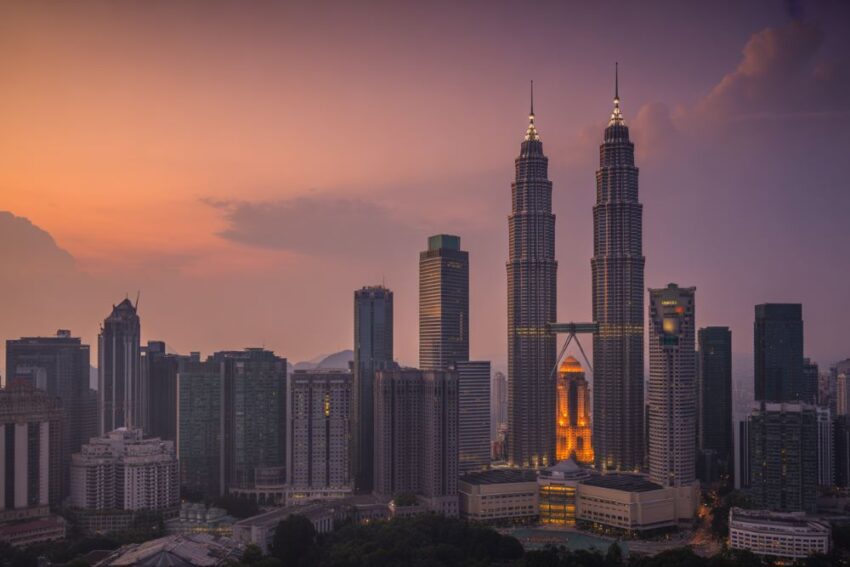
Malaysia is the clearest expression of how visa‑free access transforms mobility into routine behaviour. About 10.29 million tourist arrivals from Singapore were recorded in Malaysia in the first half of 2025 alone, making Singapore by far the largest source market. This six‑month figure already exceeds the full‑year visitor totals of many mid‑sized destinations worldwide and highlights just how intensively residents travel across the Causeway and Second Link.
The pattern is shaped by three structural features:
- Visa‑free short‑stay entry for Singapore citizens.
- Multiple land border crossings with high daily throughput.
- Dense air and bus networks linking Singapore to Kuala Lumpur, Penang, Malacca and other centres.
For Malaysia’s tourism economy, cross‑border visitors from Singapore sustain retail, hospitality, food and beverage, and healthcare demand in border states such as Johor, as well as in major cities. For Singapore residents, Malaysia offers near‑frictionless weekend and short‑break options in a familiar environment.
Thailand and Indonesia – classic short‑haul tourism
Thailand and Indonesia absorb much of Singapore’s demand for classic leisure travel: beaches, food, nightlife and wellness. Official ASEAN and national tourism documents routinely identify Singapore as a key source market for major Thai destinations, although Singapore‑specific figures are often grouped within broader ASEAN totals. Thailand’s continued visa‑free access for Singapore passport holders, combined with extensive air services to Bangkok, Phuket, Krabi and other cities, supports everything from three‑night shopping trips to full‑week wellness retreats.
Indonesia plays a complementary role: Bali caters to longer holiday stays, while Batam and Bintan—a short ferry ride away—capture casino, golf and family resort traffic. Singapore nationals make millions of trips annually to Indonesia when viewed over several years. In both countries, short‑stay visa policies and on‑the‑ground tourism investments work together to convert Singapore’s passport power into steady, repeat visitation.
Vietnam – the rising regional all‑rounder
Vietnam has emerged as one of the fastest‑growing Southeast Asian choices for Singapore travellers. Official tourism bulletins and regional reports show strong growth in arrivals from ASEAN markets as borders reopened, with Singapore included in totals that now run into the hundreds of thousands at regional level. Visa‑free short‑stay access for Singaporeans, combined with new or expanded flight routes to Ho Chi Minh City, Hanoi and Da Nang, has turned Vietnam into a credible alternative to long‑established favourites.
From a tourism‑product perspective, Vietnam offers a blend of city life, beach resorts and heritage attractions, matching a wide range of Singaporean preferences and budgets. Destination planners in Vietnam are using market data to segment visitors, building offers that speak directly to short‑break, family and experiential travellers from Singapore.
North Asia magnet: Records and repeat trips
Japan – 691,000 visitors and counting
The Japanese tourism story illustrates how visa‑free access and air connectivity can combine to deliver record results. In 2024, about 691,000 Singapore residents visited Japan, the highest annual figure ever recorded. This achievement coincides with Japan surpassing 42 million total international visitor arrivals in 2025.
Key drivers include:
- Visa‑free short‑stay entry for Singapore passport holders.
- Additional flights and routes connecting Singapore to multiple Japanese cities.
- A favourable exchange rate for Singapore travellers.
- Strong branding of seasonal products such as cherry blossom, autumn foliage and winter sports.
Japan uses detailed inbound statistics to track where Singapore visitors go and how long they stay, enabling regional authorities to plan for dispersal beyond Tokyo and Osaka. For Singapore travellers, this means an evolving menu of rural and regional options layered on top of classic city itineraries.
South Korea and Hong Kong – compact, high‑intensity experiences
South Korea’s inbound tourism data show notable growth from Southeast Asia, with Singapore located within those regional numbers. Visa‑free access, K‑culture, fashion and winter experiences all contribute to a pattern in which Seoul and surrounding areas draw repeat traffic from Singapore. With flight times typically under seven hours, South Korea offers a mid‑haul option that feels very different from ASEAN destinations while still being easy to reach for a week‑long break.
Hong Kong, granting visa‑free entry to Singapore passport holders, positions itself as a dense city experience combining skyline views, shopping, entertainment and dining. Tourism statistics emphasise the vital role of regional short‑haul markets such as Singapore in sustaining hotel and retail performance. Multiple daily flights make it feasible for Singapore residents to fit a full Hong Kong experience into a long weekend or to combine Hong Kong with neighbouring Mainland Chinese destinations on a single itinerary.
Mainland China – gradual normalisation on a huge scale
China’s tourism relationship with Singapore is both large and complex. After the pandemic, gradual policy changes have reintroduced more facilitative short‑stay arrangements for Singapore citizens on specific routes and lengths of stay. Airline schedules show progressive rebuilding of capacity between Singapore and major Chinese hubs, from Beijing and Shanghai to regional centres.
China remains a leading inbound market for Singapore while also being a major outbound destination for Singapore residents. This two‑way dynamic is central to aviation planning and to hotel and attraction investments in both countries. For Singapore travellers, the scope of China’s offerings—from heritage cities and mountain landscapes to modern megacities—means that even modest visa facilitation can translate into a wide range of possible itineraries.
Long‑haul aspirations: Australia and France as benchmarks
Australia – ETA‑enabled familiarity

Australia retains a special place in Singapore’s outbound travel profile, with visitor numbers from Singapore counted in the hundreds of thousands at a regional level. The Electronic Travel Authorisation system for Singapore citizens streamlines admission while still providing pre‑arrival screening. Combined with strong family, education and business ties, as well as vibrant tourism products in cities and regions, this mechanism supports stable, often higher‑spend travel from Singapore.
Airlines based in both Singapore and Australia operate flights linking Singapore to Sydney, Melbourne, Brisbane, Perth and other gateways, ensuring that seat capacity keeps pace with demand. For Singapore residents, the result is a destination where longer stays, self‑drive itineraries and multi‑city trips are both logistically and administratively feasible.
France and Schengen Europe – multi‑country itineraries
France stands out as the most‑visited Western European destination for Singapore residents in several market profiles, and its tourism authorities see Singapore as part of a high‑value Asian customer base. Under Schengen rules, Singapore passport holders can enter France and most other Schengen countries visa‑free for short stays. This opens the door to multi‑country itineraries that might combine, for example, Paris with Amsterdam, Barcelona and Zurich in a single trip.
From the perspective of European tourism planning, travellers from Singapore are attractive because of their relatively high daily spend and willingness to explore multiple destinations in one journey. For Singapore residents, the combination of visa‑free access and dense intra‑European transport networks (rail and air) makes Europe an appealing playground that can be revisited in different configurations over successive years.
Airlines: The practical enablers of visa‑free freedom
Visa‑free and visa‑facilitated rules describe what is theoretically possible; airlines and airports determine how much of that potential is realised. In Singapore’s case:
- The national carrier group links Singapore to North Asia, Europe, North America, the Middle East, Africa and the Pacific, and its low‑cost arm covers significant parts of Asia–Pacific.
- ASEAN full‑service and low‑cost airlines weave dense short‑haul connections to Malaysia, Thailand, Indonesia and Vietnam, enabling day trips and weekend breaks that depend on both connectivity and visa‑free regimes.
- Japanese, Korean, Chinese and Hong Kong carriers expand capacity on North Asia routes, supporting record numbers such as the 691,000 Singaporean visitors to Japan recorded in 2024.
- Australian and European carriers support long‑haul resilience, keeping fares more competitive and schedules more flexible on trunk routes like Singapore–Sydney and Singapore–Paris.
Every decision to add a new route or increase frequencies to a visa‑free destination effectively upgrades the real‑world value of the Singapore passport. Visitor surges reported by Japan and Malaysia, for example, are closely linked to changes in air capacity and exchange rates, illustrating how policy, aviation and consumer behaviour intersect.
How 192 visa‑free destinations reshape Singapore’s tourism landscape

High outbound frequency and diversification
With 192 destinations accessible without traditional visas, Singapore residents can take more trips and vary their destinations year by year. Short‑haul ASEAN journeys often span just two to four days, mid‑haul trips to Japan and South Korea tend to last longer, and long‑haul journeys to Australia and Europe can stretch to two weeks or more. Official outbound‑departure data confirm that residents are travelling frequently and that this trend has strengthened as flight networks recovered after 2022.
Deep regional tourism integration
Cross‑border flows between Singapore and its neighbours illustrate deep regional integration. The 10.29 million Malaysian tourist arrivals from Singapore in the first half of 2025 alone highlight how border regions, infrastructure and services are tightly linked across the Causeway. Ferry‑based tourism to Indonesian islands such as Batam and Bintan, and short‑haul flights to Thai and Vietnamese resort areas, play similar roles in other corridors. Visa‑free regimes make these patterns sustainable and scalable.
Positive feedback into Singapore’s own tourism
Singapore’s role as an outbound powerhouse does not weaken its inbound performance; instead, the two reinforce each other. High volumes of outbound travellers justify a broad route network for airlines, which in turn makes Singapore more attractive as a stopover and destination for international visitors from the same 192‑destination pool. Cruise statistics—showing hundreds of ship calls and more than 2 million cruise passengers in 2025—highlight how air and sea tourism combine under visa‑facilitated entry rules to position Singapore as a regional hub.
Data‑driven strategies for destinations
Because Singapore and its partners publish robust tourism statistics, destinations can craft highly targeted strategies for the Singapore market. Japan uses visitor counts, seasonal data and regional dispersal metrics to plan campaigns and infrastructure. Malaysia tracks state‑level arrivals from Singapore to inform investment in border and coastal areas. European agencies evaluate how often Singaporeans bundle multiple countries in a single trip, adjusting marketing and product packaging accordingly.
In all cases, the underlying assumption is that visa‑free access is stable, enabling tourism authorities to focus on flight capacity, product differentiation, pricing and branding rather than on basic entry hurdles.
Outlook: A small state with global reach
Singapore’s outbound travel is likely to remain robust as long as three pillars stay in place:
- Broad visa‑free and visa‑facilitated access to around 192 destinations for Singapore passport holders.
- Strong and diversified air connections through Changi Airport, supported by competitive airlines.
- Stable economic conditions that support discretionary travel spending at home and in key partner markets.
Malaysia, Japan, Thailand, Indonesia, Vietnam, South Korea, Hong Kong, China, Australia and France are set to remain core destinations within this global mosaic, but the full list of 192 countries ensures that Singapore residents can continually explore new regions and experiences. In effect, the combination of a powerful passport, a world‑class hub airport and far‑reaching airline networks has turned the entire planet into an extended travel canvas for a remarkably mobile population.
The post Japan Joins Malaysia, Thailand, Indonesia, Vietnam and Beyond: How 192 Visa‑Free Options Transform Singapore into the Travel Obsession the World Can’t Ignore appeared first on Travel And Tour World.
