

Kurkli Village: Living Above the Clouds in Dagestan’s High Mountains
A Village Where Sky and Stone Meet
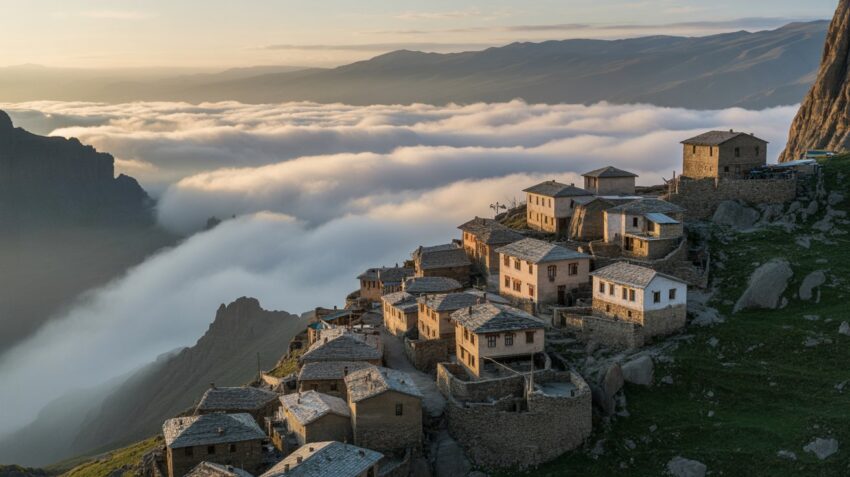
Kurkli Village is one of Dagestan’s most striking high-altitude settlements, perched so high in the mountains that clouds frequently drift through its rooftops. Located deep within Dagestan’s rugged interior, Kurkli feels suspended between earth and sky, offering travelers sweeping panoramas, rare silence, and an intimate encounter with mountain life shaped by altitude.
Unlike destinations defined by monuments or dramatic single landmarks, Kurkli’s appeal lies in its atmosphere. The village is not merely high; it feels elevated in every sense. Time slows, sound softens, and daily routines follow rhythms dictated by weather, light, and terrain. For travelers drawn to remote places that reward patience and presence, Kurkli Village offers an unforgettable experience.
Accessible only by demanding mountain roads, Kurkli remains largely untouched by mass tourism. Its isolation preserves authenticity while positioning the village as an emerging destination for slow travel and high-altitude cultural exploration in Dagestan.
Geography That Shapes Perspective
High-Altitude Location and Natural Setting
Kurkli Village sits at an elevation exceeding eight thousand feet in words, placing it among Dagestan’s highest permanently inhabited settlements. From this height, views extend across layered mountain ridges, deep valleys, and distant plateaus that dissolve into haze.
The village occupies a narrow ledge carved into the mountainside. On clear days, sunlight floods the stone houses, while on others, dense cloud cover envelops the settlement, reducing visibility to a few steps. This ever-changing environment gives Kurkli its defining character and makes every visit unique.
The surrounding terrain alternates between rocky slopes and sparse alpine meadows. Vegetation is limited due to altitude, yet hardy grasses and wildflowers emerge briefly during warmer months, adding color to the otherwise stark landscape.
Climate and Seasonal Conditions
Weather in Kurkli is unpredictable and often extreme. Summers are short but intense, marked by strong sun, cool nights, and sudden fog. Winters are long, with heavy snowfall and limited access.
Tourism is therefore seasonal, concentrated between late spring and early autumn. Even during these months, travelers must be prepared for rapid weather changes. This climate has historically restricted development, preserving Kurkli’s raw beauty and reinforcing its reputation as a destination for experienced and mindful travelers.
Architecture and Village Life
Stone Homes Built for Survival
The architecture of Kurkli Village reflects centuries of adaptation to altitude and climate. Houses are constructed from local stone, thick-walled to retain heat and resist wind. Roofs are low and sturdy, designed to withstand heavy snow loads.
Buildings cluster tightly together, minimizing exposure and conserving space. Narrow paths weave between homes, often doubling as communal areas where residents gather during favorable weather.
From a traveler’s perspective, Kurkli’s architecture blends seamlessly with the mountainside. The village appears less built upon the land and more carved from it, reinforcing a sense of harmony between human settlement and natural forces.
Daily Rhythm Above the Clouds
Life in Kurkli follows a demanding yet balanced rhythm. Residents rely on livestock, limited agriculture, and strong community ties. Supplies are planned carefully, especially before winter, when access becomes uncertain.
For visitors, observing this daily routine provides insight into a way of life increasingly rare. Activities such as herding, food preparation, and maintenance of paths and structures are visible and continuous, offering a genuine cultural experience rather than a curated one.
Hospitality in Kurkli is sincere and understated. Travelers are welcomed as guests, often invited to share meals or stories, creating meaningful exchanges that define the travel experience more than any attraction.
Kurkli Village as a Travel Destination
A Place for Slow and Reflective Tourism
Kurkli Village appeals to travelers seeking reflection rather than entertainment. There are no cafes, museums, or viewing platforms. Instead, the village itself becomes the destination.
Walking through Kurkli, pausing to watch clouds roll through valleys or listening to wind echo against stone walls, forms the essence of travel here. This aligns with global trends toward slow tourism, where value is measured by depth of experience rather than number of activities.
Photography enthusiasts are particularly drawn to Kurkli for its dramatic light conditions. Sunrise and sunset transform the village into a shifting canvas of shadow and color, while fog creates surreal scenes unmatched elsewhere.
Access and Travel Planning
Reaching Kurkli Village requires careful planning and suitable transport. Mountain roads leading to the village are narrow and challenging, often requiring local drivers familiar with the terrain.
Travelers typically include Kurkli as part of a broader journey through Dagestan’s highlands, combining it with nearby plateaus, gorges, and traditional villages. Independent travel is possible, but local guidance enhances safety and understanding.
Accommodation options are limited to simple guesthouses or homestays. These arrangements offer comfort appropriate to the environment while immersing visitors in village life.
Cultural Etiquette and Responsible Travel
Respecting Privacy and Traditions
Kurkli Village is a living community, not a display. Visitors are expected to act with respect, particularly regarding photography and personal interactions. Asking permission and observing local customs are essential.
Dress modestly and behave quietly, especially in shared spaces. Such considerations ensure that tourism remains harmonious rather than disruptive.
Environmental Responsibility at High Altitude
The alpine environment surrounding Kurkli is fragile. Waste disposal options are limited, making it essential for travelers to carry out everything they bring in.
Staying on established paths prevents erosion, while minimizing noise preserves the village’s defining tranquility. Responsible behavior protects both the landscape and the quality of experience for future visitors.
Economic and Regional Significance
Supporting Sustainable Mountain Tourism
Tourism in Kurkli remains small-scale but meaningful. Guest stays, guiding services, and local food provision offer supplemental income without altering traditional livelihoods.
This form of tourism supports sustainability by valuing authenticity over volume. It also reinforces Kurkli’s role within Dagestan’s broader tourism narrative as a destination for high-altitude cultural exploration.
Kurkli in Dagestan’s Travel Identity
As Dagestan gains recognition for its diverse landscapes, villages like Kurkli highlight the region’s vertical dimension. While lowland coasts and dramatic canyons attract attention, cloud-level settlements add depth and contrast to the travel experience.
Kurkli represents Dagestan’s ability to offer journeys that challenge comfort while rewarding curiosity and respect.
Where Clouds Become Neighbors
Kurkli Village is not a destination for hurried itineraries or casual sightseeing. It is a place that asks travelers to slow down, adapt, and observe. In return, it offers rare perspectives shaped by altitude, weather, and tradition.
Standing above the valleys, watching clouds pass at eye level, visitors gain a sense of scale that extends beyond geography. Kurkli reminds travelers that some of the most powerful experiences come from places where human life persists against elemental forces.
For those willing to make the journey, Kurkli Village offers more than views. It offers a glimpse into resilience, simplicity, and the quiet beauty of life lived close to the sky.
The post Kurkli Village: Cloud-Level Views and High-Altitude Mountain Tourism in Dagestan appeared first on Travel And Tour World.
