
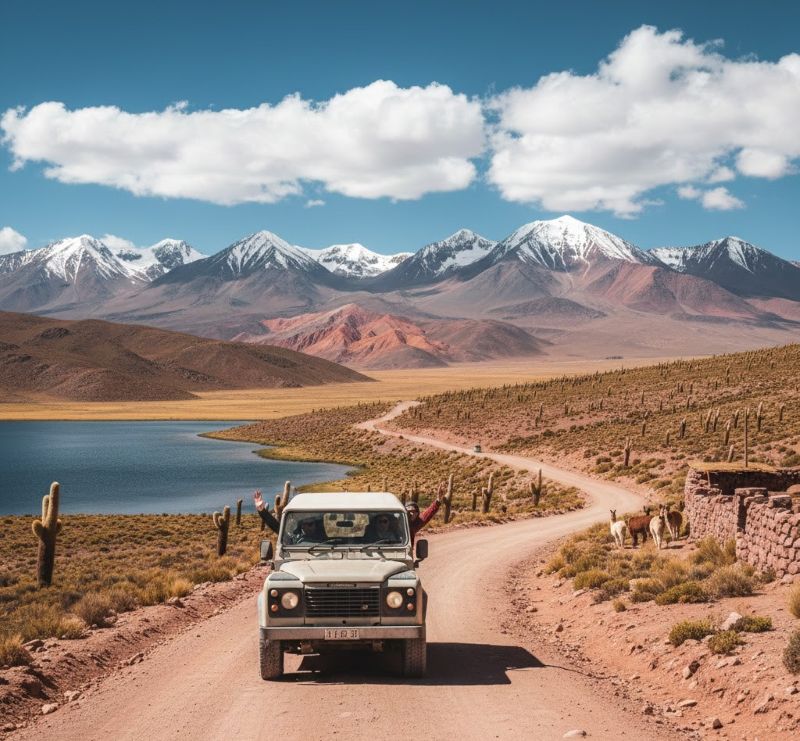

The La Paz to Uyuni road trip has become an iconic adventure for those seeking a profound connection with Bolivia’s diverse landscapes, history, and culture. Starting in the political capital, La Paz, and heading southward towards Uyuni, the journey takes travellers through diverse cities, including Cochabamba, Sucre, and Potosí, each showcasing the unique and complex heritage of Bolivia. Along the way, travellers can immerse themselves in Bolivia’s high-altitude cities, witness ancient mining legacies, explore colonial towns, and finally, experience the breathtaking natural beauty of the Salar de Uyuni, the world’s largest salt flat. This overland trip offers more than just a geographical crossing; it is a journey through time and space, touching on Bolivia’s varied geography and vibrant cultural heritage. From the altitudes to the vast salt flats, this experience takes travellers from the bustling life of La Paz to the awe-inspiring and surreal Uyuni.
The Route: Connecting La Paz to Uyuni
The drive from La Paz to Uyuni spans a significant distance, covering some of Bolivia’s most stunning and historically rich landscapes. The road trip offers a route from La Paz, the country’s highest capital city, down through the Andes, touching Cochabamba, Sucre, Potosí, and eventually leading to Uyuni. Along the way, travellers experience a blend of mountainous terrains, valleys, and rich cultural heritage in Bolivia’s most significant cities. Each city offers a unique perspective, providing a comprehensive experience of Bolivia’s history, geography, and culture. This journey is truly an exploration of how Bolivia’s landscapes and culture intertwine, with each stop providing a new chapter in the story.
Key Stops Along the Journey
La Paz: Bolivia’s High-Altitude Gateway
The journey starts in La Paz, the highest capital city in the world. Situated at over 3,600 meters, travellers must acclimatise to the altitude, which can be challenging. La Paz offers a unique combination of modernity and traditional Andean culture, with its steep streets and vibrant markets providing a glimpse into the daily lives of its residents. The Witches’ Market, a popular stop, offers a fusion of Bolivian traditions with contemporary life, where visitors can explore the spiritual and cultural significance of the region. Another must-see is the cable car system in La Paz, which provides stunning panoramic views of the city and surrounding mountains. As the first stop, La Paz sets the stage for the journey, offering both historical and cultural insights into Bolivia’s life at high altitudes.
Lake Titicaca – Copacabana and Isla del Sol
After leaving La Paz, the road leads travellers to Lake Titicaca, the highest navigable lake in the world. Copacabana, a peaceful town located on its shores, serves as the starting point for a boat trip to Isla del Sol. This sacred island is central to the beliefs of the indigenous Aymara and Quechua peoples. The island offers Inca ruins and a tranquil environment, perfect for reflection and connection with Bolivia’s ancestral roots. The boat ride to Isla del Sol is not just about enjoying the stunning views of the lake, but also about immersing oneself in the spiritual significance this place holds for the local communities. This stop allows travellers to disconnect from the hustle and bustle of daily life, offering them an authentic experience in a tranquil and sacred environment.
Cochabamba: The Fertile Heart of Bolivia
Next, the journey heads towards Cochabamba, located in the country’s tropical lowlands. Known for its agricultural abundance, Cochabamba offers a break from the high-altitude landscapes of Bolivia’s Altiplano region. The city is often referred to as the “Valley of Abundance” due to its fertile soil and thriving agricultural output. It’s a place where travellers can experience Bolivian cuisine at its best, with local markets offering fresh produce, traditional dishes, and vibrant cultural experiences. The city is a wonderful midpoint on this journey, providing both physical relief from the altitude and an immersion into Bolivia’s agricultural heart.
Sucre: A Slow Journey Through Colonial History
After Cochabamba, travellers head to Sucre, Bolivia’s constitutional capital and a UNESCO World Heritage site. Known for its well-preserved colonial architecture, Sucre presents an opportunity to step back in time and experience Bolivia’s colonial past. The whitewashed buildings, cobblestone streets, and historic plazas offer a snapshot of the country’s history. Sucre is also home to the House of Liberty, where Bolivia declared its independence from Spain. The city’s slower pace of life provides a stark contrast to the bustling atmosphere of La Paz, allowing visitors to relax and enjoy Bolivia’s cultural richness. Sucre offers a deep connection to Bolivia’s independence, making it an essential part of the journey.
Potosí: Echoes of the Silver Mining Era
Continuing south, the route leads to Potosí, a city that became one of the wealthiest in the world during the colonial period due to its silver mining industry. Cerro Rico, the mountain that supplied vast amounts of silver to Spain, dominates the landscape. The Casa de la Moneda, or House of the Mint, is an important historical site, where silver was processed during the colonial era. Visiting Potosí provides an opportunity to reflect on Bolivia’s mining history, its impact on global economies, and the hardships faced by the indigenous people involved in the mining operations. Potosí’s dramatic high-altitude setting and its mining legacy make it a poignant stop on the journey.
Uyuni: The Majestic Salar de Uyuni
Finally, the journey reaches Uyuni, a remote town at the edge of the Salar de Uyuni — the largest salt flat in the world. Uyuni serves as the gateway to this surreal and awe-inspiring natural wonder. The salt flats stretch as far as the eye can see, creating an otherworldly landscape. When it rains, the Salar de Uyuni transforms into a reflective surface, creating mirror-like images of the sky and clouds. The vastness and the silence of the salt flats offer a sense of isolation and beauty that is unparalleled. The town of Uyuni offers opportunities for stargazing and exploring nearby cactus islands, adding to the mystique of this location. Uyuni is the perfect conclusion to the road trip, providing a stark contrast to the historical and cultural experiences encountered along the way.
Distance and Travel Time: More than Just a Simple Road Trip
While it is possible to drive from La Paz to Uyuni in under ten hours, most travellers choose to take more time to enjoy the journey. Extending the trip over seven to eleven days allows for a more thorough exploration of the diverse cities and landscapes along the way. Acclimatisation is also important, especially when travelling at high altitudes. By taking the time to immerse themselves in the culture and natural beauty of Bolivia, travellers can gain a deeper appreciation for the country’s landscapes and heritage. This journey is not just about the destination; it’s about the transformative experience that occurs during the trip itself.
Highlights Along the Route
Key highlights of the journey include:
- Lake Titicaca, where visitors can explore sacred islands and learn about indigenous cultures.
- Sucre, a colonial gem, offering a glimpse into Bolivia’s historical past.
- Potosí, a city that reflects Bolivia’s mining legacy and its effects on global economies.
- The Salar de Uyuni, with its vast salt flats, creating a surreal and unforgettable landscape.
The Best Time to Travel: Weather Considerations
The best time to travel from La Paz to Uyuni is during the dry season from May to October. During this period, clear skies and stable weather make road conditions more manageable. Visibility is also improved, making the views of Bolivia’s landscapes all the more spectacular. While the rainy season from December to March can transform the Salar de Uyuni into a stunning reflective mirror, rain can make certain roads more difficult to navigate, and visibility may be impaired. However, the rainy season offers unique photo opportunities for those seeking a surreal experience at the salt flats.
The Death Road: Bolivia’s Most Dangerous Route
One of Bolivia’s most infamous roads is the Death Road (also known as Yungas Road), a 64-kilometre stretch that descends sharply from La Paz into the Yungas foothills. The road is famous for its narrow paths, steep cliffs, and unpredictable weather conditions. Although a safer paved road has been built, the original route remains a popular choice for cyclists and thrill-seekers looking to experience one of the world’s most dangerous roads. Death Road continues to attract adventurers, offering a dramatic challenge for those daring enough to tackle its twists and turns.
Santa Cruz to Sucre: A Journey Through Bolivia’s Diversity
For those interested in exploring a different part of Bolivia, the journey from Santa Cruz de la Sierra to Sucre offers a gentler experience. Santa Cruz, located in Bolivia’s tropical lowlands, contrasts sharply with the high-altitude cities of the Altiplano. The journey showcases Bolivia’s geographic diversity, from tropical plains to highland valleys. This route is perfect for those who want to explore the country’s varied climates and ecosystems without the extreme altitude changes.
Oruro Carnival: Bolivia’s Cultural Extravaganza
The Oruro Carnival is one of the most important cultural events in Bolivia and Latin America. Known for its vibrant parades, colourful costumes, and traditional dances, the carnival is a feast for the senses. The Oruro Carnival Drive offers travellers the chance to experience Bolivia’s folkloric traditions firsthand. The event usually takes place in February, attracting visitors from around the world who want to witness this cultural spectacle.
La Paz to Lake Titicaca: Nature Meets Mythology
A scenic loop connecting La Paz, Lake Titicaca, Copacabana, and Isla del Sol provides an opportunity to explore Bolivia’s mythological landscapes and natural beauty. The route combines road travel with boat journeys, offering stunning views of the lake and exploring Inca sites. This journey allows travellers to connect with Bolivia’s sacred history while experiencing its breathtaking natural surroundings.
A Journey that Transforms
The journey from La Paz to Uyuni, along with other routes like Death Road, Santa Cruz to Sucre, and Oruro Carnival, provides a rare and profound insight into Bolivia’s geography, culture, and history. It is an adventure that not only takes travellers through landscapes but also opens doors to cultural exchange, eco-tourism, and a deep connection with the natural and historical world. Bolivia offers an incredible blend of adventure, history, and natural beauty, making it a transformative experience for all who visit. For the travel industry, this road trip exemplifies the growing demand for immersive, multi-layered travel experiences that connect travellers to the heart of a destination. As Bolivia continues to attract global travellers, its rugged beauty and rich history will undoubtedly continue to captivate those seeking adventure and cultural depth.
The post La Paz, Potosí, Cochabamba, Lake Titicaca, And Salar de Uyuni, The Travel Adventure In Bolivia That Will Break The Internet appeared first on Travel And Tour World.
