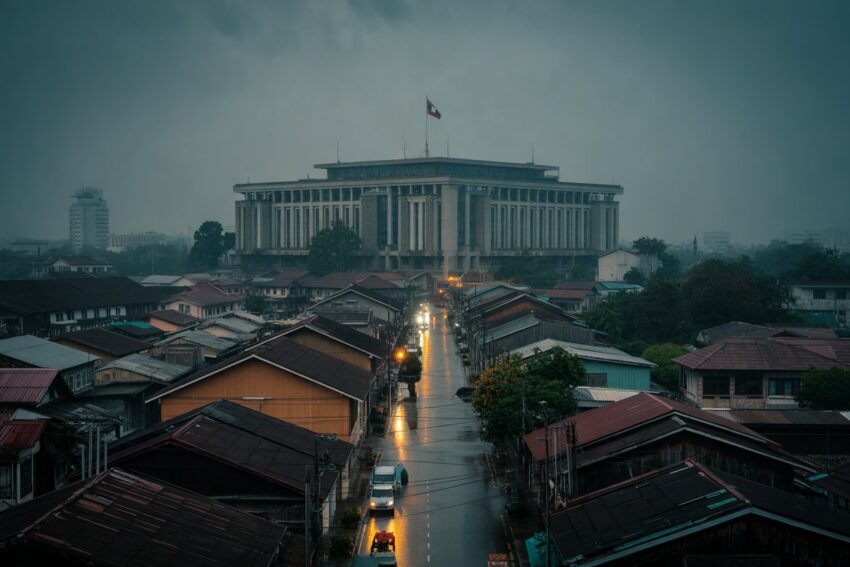
For the first time, Laos corruption rankings have surpassed those of Thailand, signaling that the country is slowly moving in the right direction when it comes to governance and transparency. According to official data from the 2025 Corruption Perceptions Index, Laos scored 34 points—up from 33 in 2024 and a significant leap from 28 in 2023. This upward movement highlights the government’s ongoing efforts to implement meaningful government reforms and strengthen public sector transparency.
Although this progress is encouraging, the country still remains below the international threshold of 50, indicating that serious challenges persist. Countries with scores under 50 are generally considered to struggle with corruption in ways that can affect the economy, public trust, and policy effectiveness.
Steady Gains in Regional Rankings
Laos’ rise in the rankings didn’t happen in isolation—it reflects shifts across Southeast Asia governance as a whole. While Thailand experienced a slight decline following its February 2025 elections, Laos made measurable progress:
- Philippines: Scored 32, trailing behind Laos
- Vietnam: Increased slightly to 41
- Timor-Leste: At 44, showing moderate governance improvement
- Singapore: Leading the region with 84, third globally
- Brunei: Steady at 63
- Cambodia: Dropped to 20, highlighting ongoing governance challenges
- Myanmar: Remaining critically low at 16 due to political instability and limited civic participation
Government officials note that Laos’ improvements reflect a growing focus on systemic anti-corruption measures rather than short-term fixes, and its ranking now positions it as a regional example of measured progress.
Key Factors Behind Laos’ Climb
Several factors contribute to Laos’ rising position in the Laos corruption rankings:
- Score improvements: From 28 in 2023 to 34 in 2025
- Regional leap: Overtaking Thailand and the Philippines
- Structural focus: Strengthened oversight mechanisms and institutional reforms
- Financial compliance: Efforts to address concerns that led to Laos being placed on the FATF grey list in February 2025
- Public engagement: Increasing transparency in government decision-making and media oversight
These initiatives demonstrate that Laos is not just improving numbers on a chart; officials report that real changes are being made in how the public sector operates, including better accountability and more consistent enforcement of government reforms.
The Bigger Picture in Southeast Asia
Looking at the broader regional landscape:
- Singapore continues to serve as a model for public sector transparency, ranking third in the world with 84 points
- Thailand’s dip coincides with post-election instability, showing how political tensions can directly affect Southeast Asia governance outcomes
- Myanmar highlights the risks of weak institutions and limited anti-corruption measures, remaining near the bottom of global rankings
Officials from Laos stress that the region’s mixed performance underscores the importance of sustained government reforms and long-term commitment to reducing corruption. Countries that have embedded transparency into their institutions tend to maintain higher CPI scores, while those relying on reactive interventions continue to struggle.
Global Context
On the world stage, corruption continues to be a pressing issue:
- Top performers: Denmark (90), Finland (88), and Singapore (84)
- Lowest scores: Somalia and South Sudan (9 each)
According to official analyses, even established democracies face pressures that can erode governance standards over time, emphasizing the importance of continuous enforcement of anti-corruption measures and commitment to public sector transparency. For Laos, climbing the CPI ladder is a sign that systematic reform efforts can produce measurable results.
Challenges Ahead
Despite the positive momentum, challenges remain for Laos:
- Financial integrity: Remaining on the FATF grey list reflects ongoing risks from financial crimes
- Institutional strengthening: Agencies responsible for enforcement need greater independence and authority
- Civic and media freedoms: Protecting transparency relies on maintaining a free media and enabling citizen oversight
- System-wide reform: Success depends on moving from case-by-case enforcement to comprehensive, long-term changes
Officials emphasize that continued focus on government reforms, stronger institutions, and sustainable anti-corruption measures is critical to building lasting improvements in the Laos corruption rankings.
Looking Ahead to the 2026 Elections
Laos is preparing for the national elections on February 22, 2026. Government reports highlight plans to integrate reforms into the electoral process, including:
- Improved oversight in campaign financing
- Enhanced accountability in procurement and administration
- Measures to increase citizen trust through transparency
These steps aim to solidify gains in Laos corruption rankings and ensure that progress in governance is not temporary but reflects structural improvements that last.
Key Takeaways
- Steady improvement: CPI score rose from 28 in 2023 to 34 in 2025
- Regional leap: Surpassed Thailand and the Philippines for the first time
- Ongoing challenges: Still below the global benchmark of 50, requiring continued government reforms
- Focus on structure: Long-term success depends on public sector transparency and strong enforcement of anti-corruption measures
- Regional context: Laos’ gains contribute to broader discussions about Southeast Asia governance and the benefits of systemic transparency
Conclusion
The increase in Laos corruption rankings demonstrates that sustained, deliberate reforms can produce tangible results. While the country still faces hurdles, ongoing government reforms, robust anti-corruption measures, and stronger public sector transparency suggest that Laos is on a path toward more effective and accountable governance. By prioritizing systemic change over temporary fixes, Laos can continue to improve its standing regionally and globally, setting an example for neighboring countries in Southeast Asia governance.
The post Laos Climbs Corruption Rankings Surpassing Thailand, Philippines, and Vietnam as Governance Reforms Signal Greater Transparency and What It Means for Citizens – All Countries in the List You Need to Know appeared first on Travel And Tour World.
