
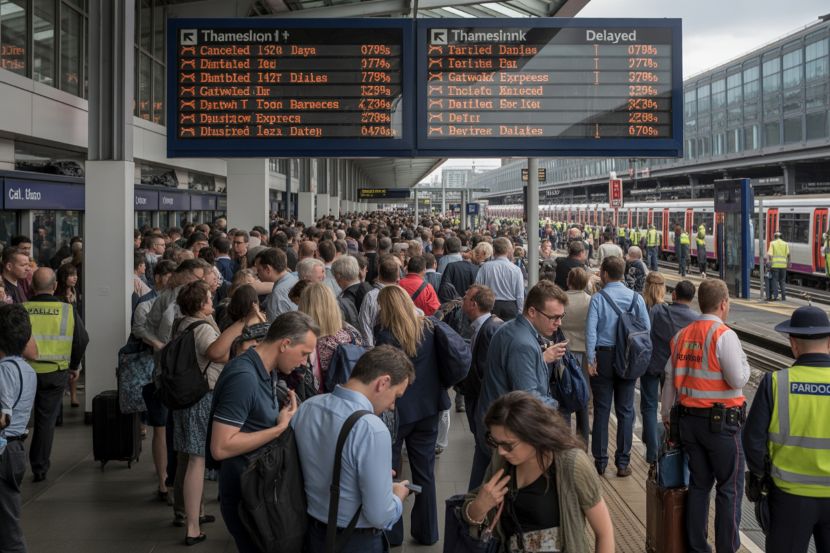
On Wednesday morning, Govia Thameslink Railway (GTR) issued an urgent ‘do not travel’ alert due to multiple incidents affecting Southern, Thameslink, and Gatwick Express services in south-east London. The severe disruption was caused by a train derailment at Selhurst depot and a signalling fault between London Blackfriars and Norwood Junction, leading to significant delays and cancellations across major rail routes. Passengers were advised not to travel unless absolutely necessary, as the situation was expected to continue throughout the day.
This disruption affected key routes in the GTR network, including services to popular destinations such as Brighton, East Grinstead, and Bedford, causing chaos for commuters, business travelers, and tourists alike. With the train derailment preventing other trains from leaving the depot and the signalling fault reducing rail lines, travelers faced hours of delays and uncertainty.
Train Derailment and Signalling Fault Causes Chaos for Travelers
The train derailment at Selhurst depot was a major factor behind the travel chaos. The train involved in the incident remained upright, and fortunately, no injuries were reported. However, the derailment blocked access to the depot, preventing other trains from leaving. This caused widespread cancellations and delays, impacting the Southern, Thameslink, and Gatwick Express lines.
At the same time, the signalling fault between London Blackfriars and Norwood Junction further compounded the situation. This issue reduced the number of available tracks for trains, forcing the remaining services to travel at slower speeds. This added even more delays and created a bottleneck effect, severely disrupting travel across multiple routes.
Major Train Services Affected: What Passengers Need to Know
The disruptions caused by the Selhurst derailment and signalling fault had a profound impact on travelers. Affected services included:
- London Bridge to East Grinstead and Orpington to Luton routes were temporarily suspended.
- Brighton to Cambridge, Bedford to Three Bridges, and Rainham to Luton services were also disrupted.
- Passengers on trains running between Welwyn Garden City and Sevenoaks were only able to travel between London Blackfriars and Sevenoaks.
- Some services between Horsham and Peterborough or Brighton and Bedford were rerouted via Selhurst instead of Norwood Junction.
Govia Thameslink Railway (GTR) advised passengers to use alternative routes or consider other modes of transport, including buses or taxis, to reach their destinations. Unfortunately, no direct alternative routes were available for certain key services, and many passengers were left stranded or experiencing extended delays.
Impact on Commuters, Tourists, and Business Travelers
The train disruptions heavily impacted commuters in the London area, especially those traveling to work or for business meetings. The delays and cancellations created a ripple effect, making it difficult for business professionals to stay on schedule. For tourists, particularly those heading to London for sightseeing or onward travel, the disruptions caused frustration, as key routes to destinations like Gatwick Airport, Brighton, and East Grinstead were affected.
For business travelers, the uncertainty caused by the disruptions made it challenging to plan timely arrivals for meetings or conferences. Tourists visiting London for leisure activities or traveling to nearby attractions also faced delays, potentially missing tours or experiencing significant delays.
GTR’s Response: Working to Resolve Disruptions
In response to the ongoing disruption, Govia Thameslink Railway expressed regret and assured passengers that efforts were being made to restore normal services as quickly as possible. The company worked in collaboration with Network Rail to resolve the signalling fault and address the blockage caused by the train derailment. Passengers were advised to check GTR’s website and social media for real-time updates on service availability and alternative travel options.
For those whose journeys were disrupted, GTR advised passengers to use their tickets on alternative routes, including buses and other available services. While the situation was expected to improve gradually, it remained unclear when full services would resume.
How to Minimize the Impact of Travel Disruptions
For travelers affected by the disruptions, here are some helpful tips to minimize the inconvenience:
- Stay Updated: Keep an eye on National Rail Enquiries and GTR’s social media for live updates on service status and the latest travel advice.
- Consider Alternative Transport: If your usual train service is canceled, consider using buses or taxis for the remainder of your journey.
- Allow Extra Time: Expect delays and give yourself additional travel time to accommodate the disruption, especially if you have important meetings or flights.
- Check for Ticket Refunds: If your journey was significantly delayed or canceled, check with GTR for information on how to claim compensation.
- Plan for Future Travel: For future journeys, ensure that travel insurance covers disruptions, especially if you’re traveling for business or leisure.
Conclusion: The Need for Upgraded Rail Infrastructure
The disruptions caused by the Selhurst derailment and signalling fault underscore the ongoing challenges facing the UK’s rail network, particularly in the heavily trafficked London region. While Govia Thameslink Railway worked hard to mitigate the situation, these incidents highlight the importance of continued investment in rail infrastructure to prevent similar disruptions in the future.
For now, passengers are advised to stay informed, plan ahead, and consider alternative routes to navigate the ongoing disruptions. As the rail network continues to evolve, improvements in signal systems, train management, and passenger communication will be crucial in ensuring that travelers, whether for business or tourism, can rely on efficient and timely services.
Key Points:
- Disruptions: A train derailment at Selhurst depot and signalling fault between London Blackfriars and Norwood Junction caused significant delays and cancellations.
- Affected Routes: Services on several major routes, including those to Brighton, East Grinstead, and Luton, were impacted.
- Alternative Routes: Passengers were advised to use buses or other available services.
- Passenger Support: Govia Thameslink Railway is working with Network Rail to resolve the issues and has offered alternative travel options for affected passengers.
- Travel Tips: Stay updated, allow extra time, and consider alternative transport to minimize disruptions.
The UK rail system must continue evolving to meet the needs of an increasingly mobile population, ensuring smoother travel experiences for commuters, tourists, and business travelers alike.
Disclaimer: The Attached Image in This Article is AI Generated
The post London: Major Rail Disruptions Caused by Train Derailment—What You Need to Know About Travel Delays appeared first on Travel And Tour World.
