
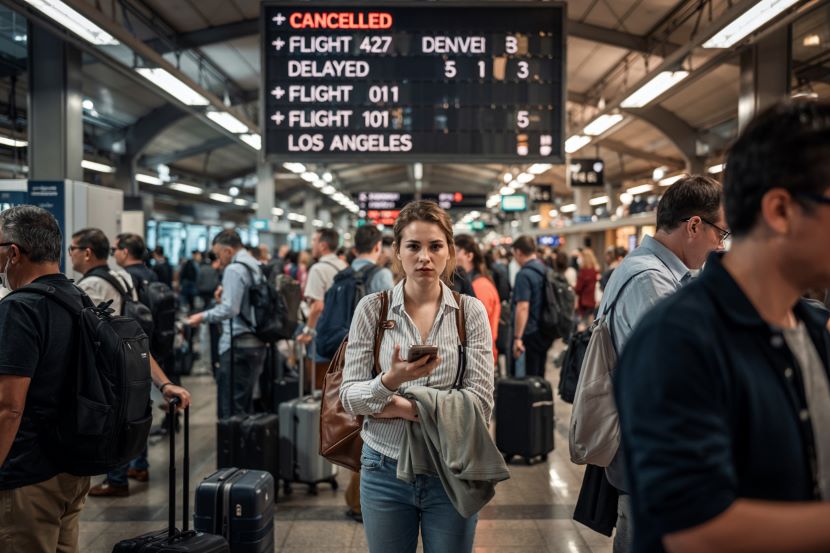
Dubai International Airport (DXB), one of the busiest and most significant hubs in the Middle East, has become the focal point of a massive travel disruption, with over 900 flights cancelled across major international airlines. The chaos unfolded as Emirates, flydubai, Saudia, Air Canada, United, Spirit Airlines, and several other global carriers were forced to ground flights in response to escalating US-Israel military strikes and retaliatory actions by Iran. The ongoing conflict, which erupted in late February 2026, has had a devastating effect on travelers across multiple continents, leaving thousands stranded in key cities such as Jeddah, Riyadh, London, New York, Miami, Los Angeles, Dallas, and more.
The Root Cause: US‑Israel Military Strikes and Iran’s Retaliation
The wave of flight cancellations began when the United States and Israel launched coordinated military airstrikes against Iranian targets in the region. The strikes were part of a larger campaign against Iranian-backed groups, which had been escalating tensions in the region. Iran, in response, retaliated with missile strikes aimed at Saudi Arabia, the UAE, and several international destinations. The rapid deterioration of the situation led to airspace closures and travel restrictions, severely impacting civil aviation in the Middle East and beyond.
With the risk of missile attacks targeting civilian airliners, several Middle Eastern countries, including the UAE, Saudi Arabia, and Qatar, temporarily shut down large portions of their airspace, and many airports were closed for hours or even days. This forced airlines to reroute flights, cancel scheduled services, or suspend operations altogether to ensure the safety of passengers and crew members.
The Airlines Affected
Among the airlines most affected by the military escalation were some of the Middle East’s flagship carriers, including Emirates, flydubai, and Saudia. These airlines are known for their extensive international networks, and their operations have been hit hard by the closure of critical air corridors. Emirates, the world-renowned Dubai-based airline, alone cancelled more than 300 flights from Dubai International, primarily affecting routes to Europe, Asia, and the Americas.
FlyDubai, a low-cost carrier also based in Dubai, was similarly impacted, with 150 flights grounded, primarily to regional destinations. Similarly, Saudia, the national carrier of Saudi Arabia, cancelled a significant number of flights from Jeddah and Riyadh, as the geopolitical situation threatened air travel in the entire region.
International carriers were not spared either. Air Canada, United Airlines, and Spirit Airlines all faced major disruptions, with flights to and from North America being severely limited. These airlines, which serve key routes between the Middle East and major US cities such as New York, Miami, Los Angeles, and Dallas, had to suspend services due to the unstable situation. The flight cancellations extended far beyond the Middle East, affecting international hubs like London Heathrow, Zurich, and New York JFK, as international air traffic took a hit amid growing safety concerns.
Aviation Safety and Airspace Closures
One of the critical factors contributing to the flight disruptions was the closure of airspace over large parts of the Middle East. Airports like Dubai International (DXB), King Khalid International (RUH) in Riyadh, and King Abdulaziz International (JED) in Jeddah saw massive flight delays and cancellations. The United Arab Emirates, in particular, imposed flight restrictions, with flights from Dubai and Abu Dhabi being rerouted to avoid conflict zones and missile strike paths.
Dubai International Airport, one of the busiest travel hubs in the world, experienced a dramatic reduction in air traffic. The UAE’s aviation authorities had to reconfigure flight paths and temporarily suspend air traffic between Dubai and several international destinations. These actions led to a standstill of thousands of travelers, who found themselves unable to reach their final destinations or return home.
Stranded Travelers and Airports in Crisis
The cancellation of nearly 900 flights stranded thousands of passengers at airports across the region and beyond. Travelers in cities such as Jeddah, Riyadh, London, New York, Miami, Los Angeles, and Dallas faced long delays, flight cancellations, and limited access to rebooking options. The major airports involved, such as JFK in New York, Heathrow in London, and Los Angeles International, quickly became overwhelmed with stranded passengers, leading to overcrowded terminals, long lines at customer service counters, and severe delays.
In Dubai, travelers were left in limbo as airlines scrambled to make alternate arrangements. Hotels in the vicinity of the airport were fully booked, and passengers had to contend with unscheduled layovers for an indefinite period, with little information from airlines on when flights would resume.
Impact on International Routes
While the Middle East was the epicentre of the disruption, the ripple effect was felt worldwide. International routes from cities like London, New York, Zurich, Bangkok, Seeb, and New Delhi saw major disruptions due to the grounding of flights by affected airlines. Flights from North America to the Middle East were either cancelled or rerouted, leading to a significant drop in transatlantic air traffic. Notably, flights between New York and Dubai saw delays of up to 10 hours, with some passengers missing their connecting flights.
Looking Ahead: Ongoing Disruptions and Travel Advice
The geopolitical situation remains tense, and travelers should anticipate ongoing disruptions for the foreseeable future. Airlines have urged passengers to check their flight status regularly, as delays and cancellations are likely to continue until airspace conditions improve.
Travelers departing from or arriving in the Middle East are advised to stay updated on the latest travel advisories from their respective airlines and to remain in contact with customer support to secure alternate arrangements. The UAE’s aviation authorities, along with international regulators, have been working to restore air traffic safety and open up air corridors that have been temporarily closed due to the missile threats.
For those planning trips to or from the Middle East, flexibility and patience will be key, as the fallout from these strikes continues to impact air travel schedules.
Conclusion
The current flight chaos at Dubai International Airport, along with widespread disruptions at airports across Jeddah, Riyadh, London, New York, Miami, Los Angeles, Dallas, and beyond, underscores the vulnerability of global aviation to geopolitical tensions. As the situation unfolds, travelers can expect a continued ripple effect on international flight operations. While airlines are working to manage the situation, airspace closures, safety concerns, and a strained global aviation system mean that the road to normalcy may take some time.
Source: Regional airport and FlightAware
The post Massive Flight Chaos at Dubai International as Emirates, Saudia, Air Canada, United, Spirit Airlines and More Ground 900 Flights Due to US‑Israel Strikes, Stranding Thousands Across Jeddah, Riyadh, London, New York, Miami, Los Angeles, Dallas and Beyond appeared first on Travel And Tour World.
