

In 2025, Canada abandons America, and its effects are being felt across the U.S., from Montana to Vermont, Maine, Florida, and New York. The massive tourism decline from Canada is sending shockwaves through U.S. states, leaving hotels, casinos, and entertainment parks scrambling to recover. Montana now joins other states like Vermont and Maine, where Canadian visitors once filled rooms, casinos, and attractions. But as Canada turns its back on America, the loss of these valuable visitors is causing devastating financial repercussions for states that depend heavily on cross-border traffic.
From New York’s bustling streets to Florida’s sunny beaches, U.S. tourism is facing a catastrophe like never before. Canadian travellers, who have historically flocked to America’s most popular tourist spots, are now looking elsewhere. This abrupt change has left Montana, along with states like Vermont, Maine, Florida, and New York, struggling with empty hotel rooms, vacant casinos, and deserted entertainment parks.
This isn’t just a minor blip in the tourism industry; it’s a full-blown crisis. Keep reading to learn how Canada abandoning America is drastically reshaping the tourism landscape, and why hotels, casinos, and parks are feeling the deep, lasting effects.
Shocking Decline in Canadian Travel: U.S. Border States Face Major Tourism Crisis
In a shocking turn of events, Canadian tourism to the United States has suffered a catastrophic blow in 2025, with devastating impacts felt across major U.S. border states. The number of Canadians travelling to the U.S. has dropped at an alarming rate, and the ripple effects are reverberating through economies that have long relied on Canadian visitors. This drop is not just a passing trend; it’s a full-scale crisis that threatens to undermine tourism revenues across the U.S.
With a 21.6% drop in Canadian visits to the U.S. in the second quarter of 2025, coupled with a 14.9% drop in spending, it’s clear: the U.S. is losing its top international visitor market. And the worst part? The worst-hit areas are the U.S. border states that have relied heavily on Canadian tourism. Maine, Vermont, Washington, New York, and even Florida are feeling the economic sting as Canadian travellers seek alternatives elsewhere.
The numbers don’t lie. 5.5 million fewer Canadians crossed the border in 2025, and tourism-dependent states are beginning to feel the impact of a sharp decline in tourist dollars.

U.S. Border States Hit Hard: Can They Survive the Canadian Exodus?
The states that share a border with Canada are suffering the most. Maine, New Hampshire, and Vermont — traditionally thriving on the influx of Canadian visitors — are now facing a tourism crisis of unprecedented scale.
Reports from U.S. Customs and Border Protection show that cross-border travel has plunged by 30% in these states, with a staggering loss of tourism revenue. In Vermont, Canadians accounted for nearly 49% less spending in 2025, and New Hampshire faced an unprecedented 30% drop in Canadian visits. These aren’t just numbers on paper; these are real jobs at risk and local businesses seeing empty hotel rooms and deserted attractions.
Meanwhile, in Washington State, which has long relied on Canadian visitors to fuel its tourism industry, cross-border vehicle traffic from Canada fell by more than 32% in the past six months alone. The tourism-dependent businesses in Seattle and Spokane are struggling to stay afloat, with no Canadians in sight.
Montana Hit Hard by 20% Decline in Canadian Visitors from Saskatchewan, Sending Tourism into Crisis
In 2025, Canada abandons America, and its effects are being felt across the U.S., from Montana to Vermont, Maine, Florida, and New York. The massive tourism decline from Canada is sending shockwaves through U.S. states, leaving hotels, casinos, and entertainment parks scrambling to recover. Montana now joins other states like Vermont and Maine, where Canadian visitors once filled rooms, casinos, and attractions. But as Canada turns its back on America, the loss of these valuable visitors is causing devastating financial repercussions for states that depend heavily on cross-border traffic.
From New York’s bustling streets to Florida’s sunny beaches, U.S. tourism is facing a catastrophe like never before. Canadian travellers, who have historically flocked to America’s most popular tourist spots, are now looking elsewhere. This abrupt change has left Montana, along with states like Vermont, Maine, Florida, and New York, struggling with empty hotel rooms, vacant casinos, and deserted entertainment parks.
This isn’t just a minor blip in the tourism industry; it’s a full-blown crisis. Keep reading to learn how Canada abandoning America is drastically reshaping the tourism landscape, and why hotels, casinos, and parks are feeling the deep, lasting effects.
Write 7 best prompts for supporting realistic images and 1 featured composite, impactful and dynamic overlay youtube thumbnail image.(no youtube logo required)
Supporting Image Prompts:
- A deserted U.S. border crossing between Canada and Montana, with empty lanes and closed toll booths.
- Empty hotel lobbies in Vermont, with signs indicating a lack of guests, showcasing the tourism downturn.
- A quiet, almost abandoned casino in New York, with empty slot machines and vacant gaming tables.
- Florida’s iconic beaches with no tourists in sight, showcasing the impact of the Canadian exodus on beach tourism.
- A family walking past closed entertainment parks in Maine, with faded signage and an eerie stillness in the air.
- A desolate shopping street in Montana, once filled with Canadian shoppers, now devoid of visitors.
- A once-bustling ski resort in Vermont, now abandoned and closed for the season, with no Canadians in sight.
Featured YouTube Thumbnail Prompt:
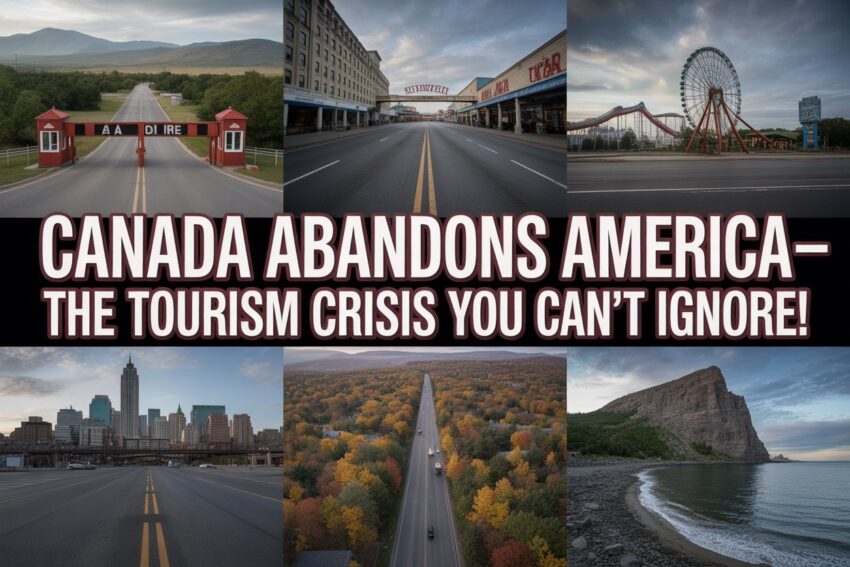
A dynamic composite image showing empty U.S. border crossings, deserted hotels, and vacant entertainment parks in Montana, Florida, New York, Vermont, and Maine, with bold, powerful text overlay: “Canada Abandons America – The Tourism Crisis You Can’t Ignore!”. The image should have a striking contrast between vibrant, thriving tourist spots and the emptiness left behind, with attention-grabbing typography to emphasize the deep impact on the tourism industry.
Tourism officials in Montana are feeling the economic impact of a sharp decline in Canadian visitors, particularly from Saskatchewan, a historically reliable source of consistent visitation. New data from U.S. Customs and Border Protection, as reported by CBC News, shows 62,000 fewer travelers crossed from Saskatchewan into the U.S. in 2025, equating to a 20% decline in Minot and 16% decline in Big Sky, two of the more popular destinations, according to the communities’ tourism agencies. REwrite in 450 words
Tourism officials in Montana are grappling with the significant economic consequences of a sharp decline in Canadian visitors, particularly those coming from Saskatchewan. This province has long been a reliable source of steady tourism traffic to the U.S., but recent trends have disrupted this flow. According to new data from U.S. Customs and Border Protection, as reported by CBC News, 62,000 fewer travelers crossed the border from Saskatchewan into the United States in 2025. This represents a notable 20% decline in visitors to Minot and a 16% drop in Big Sky, two of Montana’s most popular tourist destinations.
For decades, Saskatchewan has been a dependable source of tourism for Montana, especially during peak seasons when Canadian families, snowbirds, and holidaymakers make their way south to enjoy everything from outdoor adventures to cultural experiences. However, the sharp decline in Canadian tourists has left tourism officials and business owners scrambling to understand the root causes and figure out how to recover.
Minot, known for its historical landmarks, festivals, and shopping experiences, has felt the impact keenly. While the city has built its tourism reputation largely on Canadian cross-border visitors, the downturn has forced local officials to reconsider their tourism strategy. This 20% decrease in visitors from Saskatchewan is contributing to a slowdown in both tourism-related spending and hotel bookings, which are critical to the local economy.
Similarly, Big Sky, a renowned destination for ski lovers and outdoor enthusiasts, has seen a marked reduction in Canadian arrivals. Although this area is known for attracting international visitors, Saskatchewan residents have traditionally made up a significant portion of its tourist base. The 16% decline in Canadian visitation has affected everything from lodging occupancy to the local hospitality industry, with fewer Canadians making their way to the resort to enjoy skiing, hiking, and other recreational activities.
Experts point to several potential factors driving this decline. The weakening Canadian dollar, rising travel costs, and border-crossing delays have been cited as major deterrents for Canadian travelers. Additionally, the ongoing political climate in the U.S. and tightening travel restrictions have caused some Canadians to reconsider their trips to America altogether. Other Canadians are opting for closer, more affordable, or less politically charged destinations within Canada or elsewhere in the world.
Tourism agencies in both Minot and Big Sky are now working tirelessly to revive the tourism economy, with initiatives aimed at encouraging both local residents and new international visitors to fill the gap left by declining Canadian travelers. Yet, the path to recovery remains uncertain, as these communities look for ways to overcome the challenges posed by these recent shifts in cross-border tourism. For now, Montana tourism officials are doing their best to adapt and reimagine their strategies to recover from this financial blow.
Florida and Nevada: Once Safe Havens for Canadian Tourists, Now Struggling
Florida, the sun-soaked paradise that Canadians have long flocked to for their winter escapes, is now experiencing the brunt of the tourism collapse. According to Visit Florida, the state has seen a 15% drop in Canadian visitors in 2025, a trend that has continued through the year. Hotels that once saw Canadians filling up rooms during the winter months are now seeing empty spaces. Restaurants, theme parks, and beaches that once hummed with Canadian voices are now quiet, with Canadians staying home.
And it’s not just Florida. Las Vegas, a city that thrives on international tourism, especially from Canada, has seen a significant drop in Canadian visitors. Nevada’s tourism officials report that the sharp drop in Canadian tourism is taking a serious toll, with hotels and casinos struggling to make up the difference.
U.S. Tourism Revenues Are Plummeting: The Domino Effect Is Real
The economic impact of this Canadian tourism collapse is already evident. In states like Maine, New Hampshire, and Vermont, local economies are seeing the financial fallout from the loss of Canadian tourist dollars. Retailers, hotel owners, and local businesses that once relied on Canadian tourists are now scrambling to stay afloat. Tourism revenue in these areas is down hundreds of millions of dollars — and the decline shows no sign of reversing anytime soon.
Take Maine, for instance. The loss of Canadian visitors has meant a $70 million reduction in tourism revenue for the state, and Vermont has seen a similar downturn, with local economies reeling from the impact. New Hampshire, which also relies heavily on Canadians for its tourism, is now facing a deep recession in its tourism sector. Businesses that once thrived in these states are now struggling to survive without the flood of Canadian money that once filled their coffers.

Why Are Canadians Flocking Elsewhere? What’s Driving the Decline?
The question on everyone’s mind is: Why are Canadians leaving the U.S. behind?
There are several factors contributing to this sudden tourism exodus:
- Rising Travel Costs: With higher fuel prices, expensive travel insurance, and the weakened Canadian dollar, it has become increasingly difficult for Canadians to justify the costs of cross-border travel.
- Visa and Border Hassles: Increasingly strict visa requirements and long wait times at the border have made it more difficult for Canadians to visit the U.S. These restrictions have created an atmosphere of frustration, prompting many to opt for alternative destinations.
- Emerging Destinations: As Canadian travellers become more budget-conscious and culturally aware, they are exploring new domestic and international destinations that offer better value for money and a warmer welcome.
- Political Climate: The current U.S. political climate is also playing a role in this decline. The perception of the U.S. as a less welcoming destination has caused many Canadians to look elsewhere, especially with rising political tensions and social instability south of the border.
Can U.S. States Reclaim Their Canadian Tourists?
The U.S. is in desperate need of a solution. What can border states do to regain Canadian tourists? The answer is clear: U.S. states must address the core issues that are driving Canadians away.
First, reducing visa restrictions and simplifying travel procedures could help make it easier for Canadians to visit the U.S. Second, offering promotions and discounts for Canadian tourists could encourage them to return to U.S. destinations. Finally, states must invest in targeted marketing campaigns that highlight the unique attractions of the U.S., emphasizing value for money and warm hospitality.
However, these solutions won’t work overnight. U.S. states need to act quickly, or they risk losing their largest international market forever.

The Future of U.S. Tourism: Is There Hope?
While the outlook for U.S. tourism in the wake of this Canadian exodus is bleak, there is hope. Collaboration between tourism boards, government agencies, and private industry could help the U.S. weather this storm. By adapting to the changing needs of Canadian tourists and offering compelling reasons to visit, U.S. states can reclaim their Canadian market and rebuild their tourism economies.
But the window of opportunity is closing fast. U.S. states must act now to stem the tide of lost Canadian tourists or risk watching Canada’s once-thriving tourism relationship with the U.S. fade into the distance.
The post Montana Joins Vermont, Maine, Florida, New York and US States Leaving in Dust as Canada Abandons America, Creating a Deep Impact in Hotels, Casinos and Entertaiment Parks: Everything You Need To Know appeared first on Travel And Tour World.
