
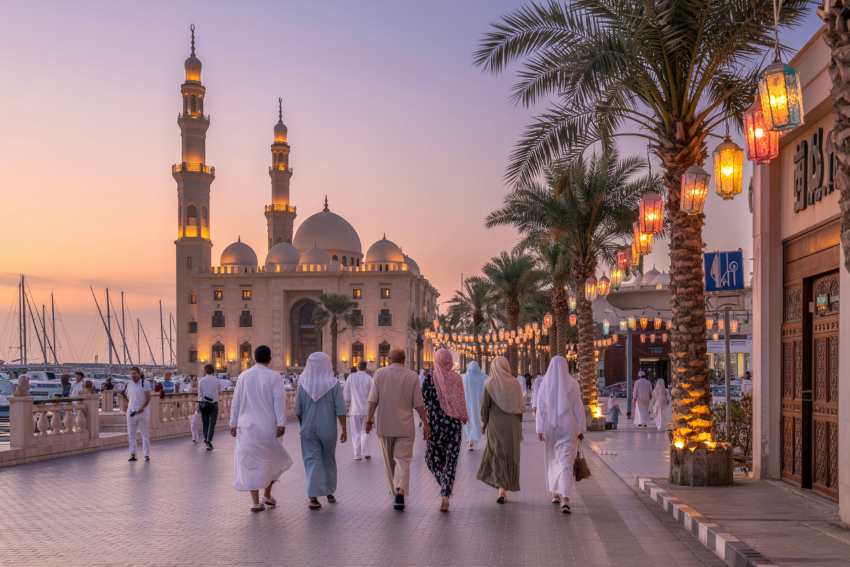
The start of the holy month of Ramadan in 2026 has resulted in a renewed emphasis on cultural mindfulness in the coastal sanctuary of Hurghada. Dar al-Ifta sighted the crescent moon on Tuesday, marking February 19 as the first official day of fasting, and the Russian Consulate in Hurghada issued a set of essential guidelines. These guidelines are intended to ensure that the influx of international visitors is in harmony with the local community during this deeply spiritual time.
Respecting the Sanctity of the Daylight Fast
A primary request has been extended by the Consulate toward all foreign nationals to observe the traditional fasting hours with the utmost sensitivity. It is requested that the consumption of food, beverages, and the use of tobacco products be avoided in public thoroughfares between sunrise and sunset. While the vibrant resort infrastructure of the Red Sea continues to cater to guests, a discreet approach is encouraged when visitors find themselves outside of private hotel boundaries. By maintaining this boundary, a bridge of mutual respect is built between the vacationing public and the local residents who are observing one of the most significant pillars of their faith.
Adopting a Modest Aesthetic in Public Spaces
Beyond the practices of fasting, the visual and auditory landscape of the city is also a point of focus in the recent diplomatic advisory. Travellers are advised by the Consulate to select attire that aligns with the conservative nature of the holy month. Inappropriate or revealing clothing is discouraged, particularly when excursions lead tourists into residential neighbourhoods or into the vicinity of the city’s many architectural marvels—its mosques.
Furthermore, the acoustic environment is being monitored with equal care. The playing of loud music in public or near religious sites is listed as an activity to be avoided. Instead, a quieter, more reflective atmosphere is encouraged, allowing the evening calls to prayer and the spiritual serenity of the month to take precedence. These measures are seen as vital steps in preserving the cultural privacy that Egypt holds dear during this sacred time.
Navigating the Ramadan Rush: Driving and Safety
The logistical rhythm of Hurghada undergoes a significant transformation during Ramadan, a shift that is most visible on the city’s roadways. A specific caution has been issued regarding the period immediately preceding Iftar, the meal where the fast is broken. During these peak hours, heavy traffic congestion is frequently encountered as residents hasten to join their families for the sunset feast.
Extra care is required from those behind the wheel to navigate these surges in traffic volume safely. The Consulate has emphasized that the period leading up to the evening meal is often characterized by heightened urgency on the roads. Visitors are encouraged to plan their movements around these peak times or to exercise increased patience and vigilance if travel is unavoidable. Safety, both for the driver and the pedestrian, remains a top priority in the official guidance provided to the expatriate and tourist communities.
Fostering Positive Community Relations
At the heart of these directives is a larger goal: to maintain the long-standing positive relationship between Egyptians and international tourists who visit the Red Sea coast. By adhering to these localised customs, tourists are viewed as respectful participants in the country’s seasonal fabric rather than an intrusion.
As the month progresses, visitors who follow these protocols are frequently welcomed into the festive atmosphere of the evenings. Once the sun goes down, the “quiet” Hurghada of the afternoon is replaced by a city brimming with life, light, and hospitality. By simply following these consular recommendations, a traveller’s journey becomes a more profound, culturally immersive experience that honours the host nation’s traditions.
The post Navigating Ramadan 2026 in Hurghada: A Guide to Cultural Etiquette and Local Traditions appeared first on Travel And Tour World.
