
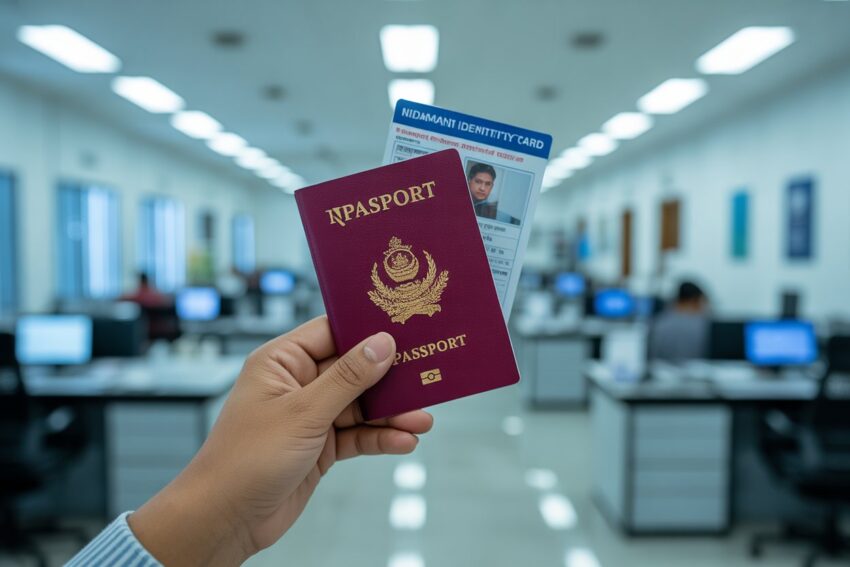

For many years, the journey of a thousand miles for a Nepali citizen began with a simple blue book: the passport. However, as of early 2026, that journey now requires a crucial preceding step. Following a landmark decision by the Government of Nepal, the National Identity Card (NID) has been officially transitioned from a “recommended” document to a “mandatory” prerequisite for all passport services.
This shift, reported by Khabarhub, represents a major leap in Nepal’s efforts to digitize governance and streamline citizen services. While the change brings a new layer of bureaucracy, it is designed to create a more secure, “one-window” system for identity verification.
The Core of the Change: Why Now?
The Department of Passports (DoP) and the Department of National ID and Vital Registration have worked in tandem to integrate their databases. The primary goal is to eliminate identity fraud and reduce the processing time for passport verification.
In the past, manual verification of citizenship certificates often led to delays and errors. By linking the passport to the National ID—which contains biometric data including fingerprints and iris scans—the government can now instantly verify a person’s identity. For the citizen, this means that once the NID is in hand, the actual passport issuance becomes a significantly more automated and “hassle-free” experience.
The Mandatory Requirement: What You Need to Know
According to the official notice, the National ID card number is now compulsory for:
New Passport Applications: First-time applicants can no longer apply using only their Citizenship Certificate.
Passport Renewals: Even if you have held a passport for decades, your renewal will be paused until an NID number is provided.
Lost or Damaged Replacements: Any administrative action regarding your travel document now triggers the NID requirement.
A Human Approach: Navigating the “Digital Hurdle”
For many, especially those living in rural districts or the elderly, the word “mandatory” can spark anxiety. It’s important to view this not as a barrier, but as a modernization of your rights as a citizen.
If you are planning to travel for work, education, or tourism in 2026, the “human” way to handle this is through early preparation. You cannot wait until your flight is booked to check your documents. The NID registration process involves a physical visit for biometrics, which can take time depending on the queue at your local District Administration Office (DAO).
The Implementation Timeline
The government has adopted a phased but firm approach. While the announcement was made in late 2025, the full enforcement has become the standard operating procedure at the start of 2026.
- Kathmandu Valley Residents: Have been under this mandate for several months, acting as the pilot group for the integration.
- District Offices: All 77 districts are now equipped to handle NID registrations, ensuring that citizens don’t necessarily have to travel to the capital to get their ID.
- For Nepalis Abroad: The government is working on coordinating with embassies to facilitate NID registration for the diaspora, though currently, most are advised to complete the process during their next visit home.
How to Transition Smoothly
To avoid the stress of a rejected passport application, follow these humanized steps:
- Step 1: The Pre-Enrollment. Fill out the NID form online to save time. It generates a “Pre-Enrollment Number” which is your golden ticket at the district office.
- Step 2: The Biometric Visit. You must show up in person. Wear dark clothing (for the photo contrast) and ensure your citizenship certificate is original and undamaged.
- Step 3: The Virtual ID. You don’t actually need the physical plastic NID card to apply for a passport. The NID Number provided on your slip after biometrics is sufficient for the Department of Passports to proceed.
The Long-Term Vision: One ID to Rule Them All
The integration of the NID into the passport process is just the beginning. The Ministry of Home Affairs envisions a future where the NID is linked to your bank account, your social security, and even your driver’s license.
For the traveler, this means a more respected “Global Ranking” for the Nepali passport. As international security standards move toward biometric-only verification, Nepal’s adoption of the NID ensures that its citizens remain compliant with global aviation and border standards.
Final Thoughts
Change is rarely easy, especially when it involves the documents that allow us to see the world or provide for our families. However, the move to link the National ID with the Passport is a necessary evolution. It’s about moving Nepal into a future where your identity is secure, digital, and indisputable.
If you have family members planning to go abroad for the 2026 season, the kindest thing you can do is remind them to check their NID status today. A little bit of paperwork now saves a world of headaches at the boarding gate.
The post Nepal Implements New National Identity Card Requirement for Passports: A Guide for Citizens and Travelers appeared first on Travel And Tour World.
