
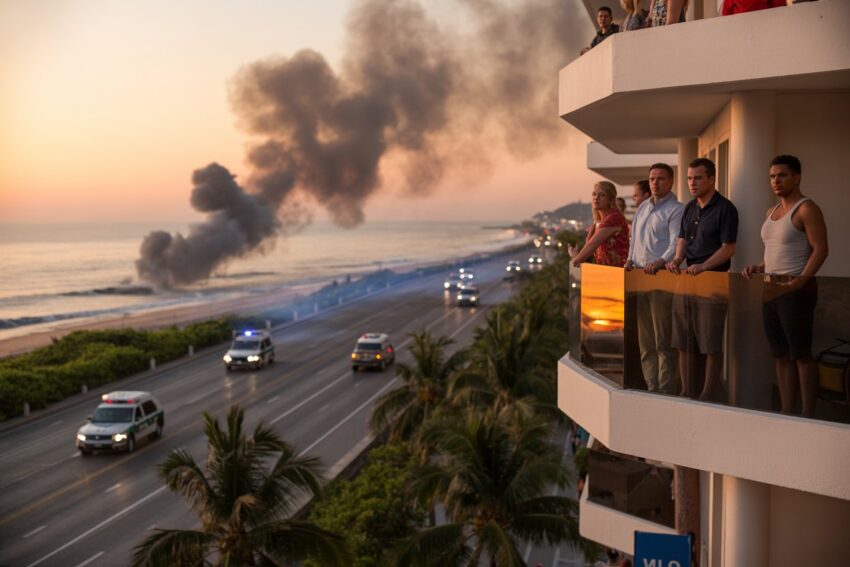
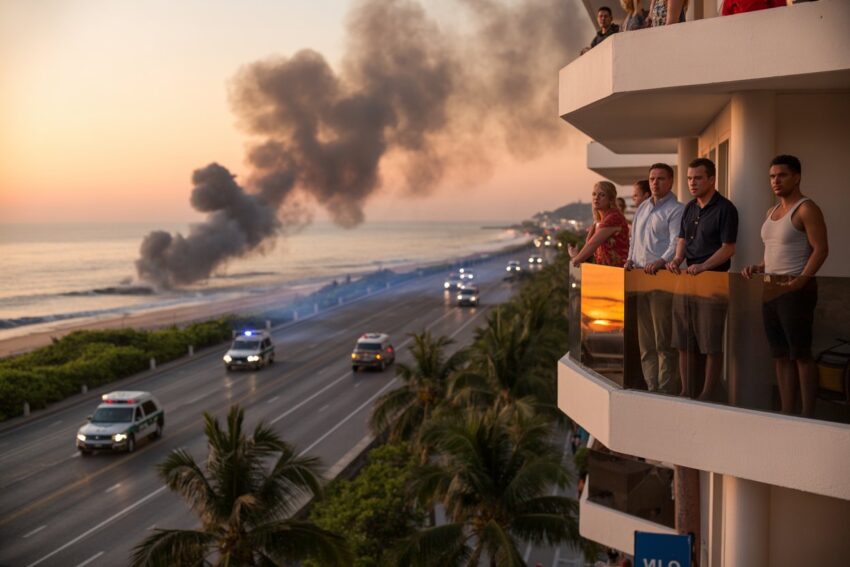
When Maria Santiago stepped out onto her hotel balcony in Puerto Vallarta last weekend, the scent of sea salt was replaced abruptly by plumes of smoke rising from roadways blocked by burning vehicles — a stark symbol of unrest rippling across western Mexico. What began as a holiday escape for dozens of U.S. visitors quickly turned into a tense waiting game as the U.S. Embassy issued an expanded shelter-in-place advisory for Americans scattered across the region. The advisory — rooted in an official security alert from the U.S. Mission in Mexico — reflects the aftermath of a large-scale operation by Mexican forces in Tapalpa, Jalisco, aimed at dismantling one of the country’s most powerful criminal networks. While authorities confirmed the death of cartel leader Nemesio “El Mencho” Oseguera Cervantes during that operation, the immediate response from armed groups magnified safety concerns for foreign travelers and local residents alike.
Operation Sparks Nationwide Alert
On February 22, 2026, Mexican military and security forces engaged in a coordinated mission to apprehend Oseguera Cervantes, widely considered the top leader of the Jalisco New Generation Cartel (CJNG). According to official accounts, the cartel chief was wounded during the engagement and later died from his injuries. The operation triggered intense retaliation by cartel factions across Jalisco and several neighboring states, with incidents of arson, road blockades, and confrontations disrupting daily life. In response, the U.S. Department of State and U.S. Embassy in Mexico rapidly expanded advisories urging U.S. citizens to stay indoors and avoid travel outside secure locations. What initially focused on western states such as Jalisco and Nuevo Vallarta soon grew to cover areas stretching from Baja California to Quintana Roo after reports surfaced of sporadic unrest and uncertainty about local conditions.
Who Is Advised to Shelter in Place
The updated advisory applies to American travelers and residents in multiple Mexican states that are among the most popular with U.S. tourists:
- Jalisco — including Puerto Vallarta, Guadalajara and popular lake towns.
Baja California — encompassing border cities like Tijuana and coastal destinations such as Ensenada.
Quintana Roo — home to Cancun, Cozumel, Playa del Carmen and Tulum, though parts of this region have seen advisories adjusted as conditions evolve.
Wider regions including parts of Sinaloa, Oaxaca, Tamaulipas, Veracruz and Zacatecas are also included in expanded warnings.
Officials stress that advisories do not imply blanket closure of these destinations, but rather reflect concerns over unpredictable and potentially dangerous incidents linked to criminal activity and security operations.
Travel Disruptions and Airport Impact
Beyond the advisory itself, major transportation hubs have been affected. Airports in Puerto Vallarta and Guadalajara experienced temporary disruptions due to road closures and personnel safety concerns, leading several airlines — including major U.S. carriers — to cancel or delay flights. Some operators have since resumed limited service while continuing to monitor security conditions. In Cancun, one of Mexico’s busiest international gateways, travelers reported scattered delays and cancellations amid heightened security measures, even as authorities worked to maintain normal operations at the airport.
Official Advice: Precaution Over Panic
The U.S. Embassy’s guidance follows the ongoing framework of the U.S. State Department’s Travel Advisory for Mexico, which historically rates regions based on safety considerations involving crime, organized criminal activity, and civil unrest. As of this advisory cycle, varying travel levels — from “exercise increased caution” to “do not travel” — apply depending on the latest security assessments.
U.S. officials recommend that Americans:
- Remain indoors and avoid unnecessary movement in affected areas.
Stay in touch with family and consular services through the Smart Traveler Enrollment Program (STEP).
Follow local authorities’ instructions and monitor updates from government channels.
Local Mexican authorities, for their part, have emphasized efforts to contain the unrest and protect civilians, with military and national guard units deployed to stabilize key regions.
Traveler Voices: Between Sun and Smoke
For tourists like Maria, the abrupt shift from beach days to indoor waiting highlights the emotional toll these events can take. “We came for sunshine and it almost feels like we’re stuck in a war movie,” she said, recounting the tension and uncertainty as smoke curled over coastal highways. Such firsthand experiences underscore the complex realities travelers face when geopolitical and security events intersect with leisure destinations.
Looking Ahead: A Cautionary Season for Travel
As Spring Break approaches and travel plans remain in flux, the expanded shelter-in-place advisory serves both as a safety measure and a reminder of the broader security landscape in Mexico. While many destinations are working to maintain operations, the emphasis from government advisories is clear: safety first, movement second.
Whether travelers choose to postpone, reroute or proceed with heightened awareness, the evolving situation will likely shape travel behavior in the weeks ahead — especially for those with plans to visit vibrant coastal cities that now balance stunning scenery with renewed caution.
In the end, what travelers remember may not be the beaches themselves, but the resilience and adaptability demanded by a season when ordinary holidays collided with extraordinary security challenges.
The post Puerto Vallarta, Cancun, and Jalisco Face Heightened Security Alert as US Expands Shelter-in-Place Advisory Following Cartel Leader’s Death, Triggering Travel Disruptions and Safety Concerns Across Mexico appeared first on Travel And Tour World.
