
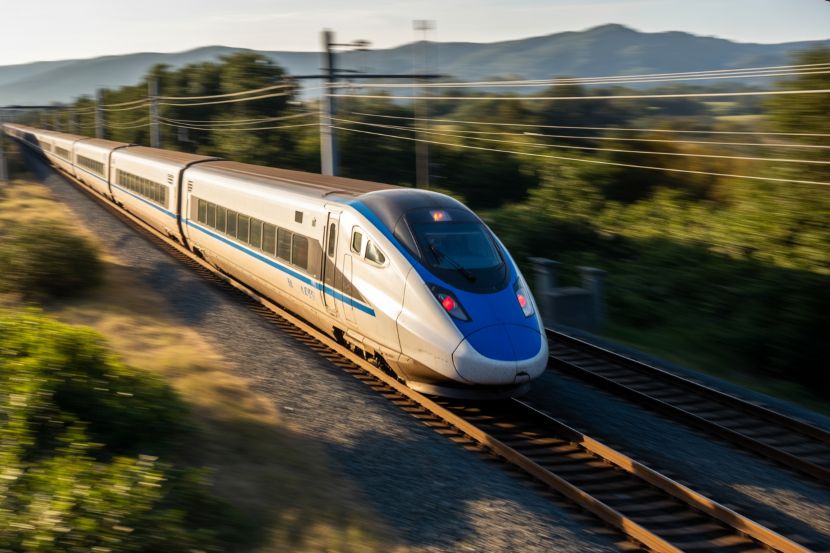

For travellers and rail enthusiasts around the world, the L0 Series maglev train in Japan is now at the centre of a global breakthrough in high‑speed rail. The next‑generation magnetic levitation train, developed by Central Japan Railway Company (JR Central), has repeatedly confirmed its ability to reach astonishing speeds far beyond today’s conventional high‑speed trains. This innovation is not just a technical feat but a potentially transformative force for travel across Japan and, eventually, for global rail networks.
A Personal Journey Into Speed: Japan’s Technological Leap
From the moment you step onto a maglev platform in Japan, there is a sense that you are about to witness history in motion. Unlike ordinary trains that run on steel wheels, the L0 Series floats above its guideway using superconducting magnets. This eliminates friction and allows the train to glide with astonishing smoothness. The experience is so serene that passengers may feel calm even as they travel at speeds that once seemed impossible.
Japan’s maglev project has already made headlines by achieving a world speed record of 603 km/h, a figure verified in controlled tests on the Yamanashi Maglev Test Line. This landmark milestone was first reached in April 2015 when a seven‑car L0 Series prototype shattered previous records. What makes this achievement remarkable is how it rewrites our understanding of rail travel’s potential, pushing the boundaries far above what current commercial high‑speed services can offer.
Understanding the L0 Series: Technology Behind the Record
The L0 Series train is engineered using superconducting magnetic levitation, often referred to as SCMaglev. In this system, powerful magnets along the guideway and train interact to lift the vehicle a small distance above the track. This method eliminates the friction that limits conventional high‑speed trains and enables extraordinary acceleration and top speeds.
JR Central has built multiple L0 Series vehicles — a fleet of fourteen preproduction cars assembled by leading manufacturers including Mitsubishi Heavy Industries and Nippon Sharyo. These vehicles form the basis of the future operational trainsets on the Chūō Shinkansen line, a new maglev corridor currently being constructed to connect major Japanese cities.
Breaking Records, Rethinking Travel Times
The 603 km/h world rail speed record is not just a number. It represents the culmination of decades of research and development in magnetic levitation technology. During the April 2015 test run, the prototype sustained that speed for over ten seconds while carrying a full complement of crew on board. This achievement eclipsed previous land speed records for rail vehicles and cemented Japan’s position at the forefront of high‑speed rail innovation.
While the record was achieved under test conditions, the L0 Series also has a planned operational speed of around 500 km/h for commercial passenger services once the new maglev lines open. Even at this reduced top speed, the system will still significantly cut travel times between key cities. For example, the trip from Tokyo to Nagoya is expected to take around 40 minutes, and the entire Tokyo‑Osaka journey could be completed in just over an hour — a dramatic improvement over current bullet train services.
Chūō Shinkansen: Japan’s Next Big Rail Link
The L0 Series is being developed specifically for Japan’s new Chūō Shinkansen line, which will ultimately link Tokyo in the east with Osaka in the west through a high‑speed maglev route. Construction of this line began in the early 2010s, and major engineering work is well underway. When complete, it will be one of the world’s most advanced rail systems, capable of handling both business commuters and travellers looking to explore Japan’s rich cultural landscapes with unprecedented convenience.
The design of the maglev guideway and stations ensures that travel will be both fast and efficient. Tokyo’s bustling downtown hubs will be connected with other major city centres, reducing what once took hours into trips that can be completed faster than many domestic flights. This shift in travel patterns is expected to boost both domestic tourism and international visitor experiences in Japan.
Impact on Travel and Tourism
For global travellers, the arrival of the maglev era could transform the way Japan is experienced. Imagine landing in Tokyo and, within 40 minutes, exploring the historic sites of Nagoya or moving onward to Osaka’s vibrant food and cultural scenes in just over an hour. Those kinds of travel times will make regional itineraries more flexible and appealing, especially for visitors on short trips or multi‑city tours.
The profound reduction in travel time also means new day‑trip possibilities. Tourists could enjoy ancient temples in Kyoto, bustling markets in Osaka, and serene landscapes near Mt. Fuji — all within a single day from a Tokyo base. These convenience gains are likely to enhance Japan’s appeal as a destination where speed and culture coexist seamlessly.
Looking Ahead: A New Chapter in Rail Travel
Japan’s maglev initiative is more than a technical wonder. It represents a new chapter in travel, combining engineering excellence with real‑world utility. By pushing the limits of what rail systems can achieve, the L0 Series encourages travellers to rethink long‑distance journeys. It sets a powerful example for future rail projects around the world and opens the door to faster, greener, and more interconnected travel experiences.
As construction progresses and test achievements continue to inform final designs, this project stands as a beacon of innovation. The promise of reaching commercial operation is drawing attention not just from rail enthusiasts but from the travel industry at large, eager to explore how such technology can make travel faster and more accessible than ever before.
The post Revolutionizing Travel: Japan’s Record-Breaking Maglev Train Sets New Speed Standards with the L0 Series-Here Is What You Need To Know! appeared first on Travel And Tour World.
