
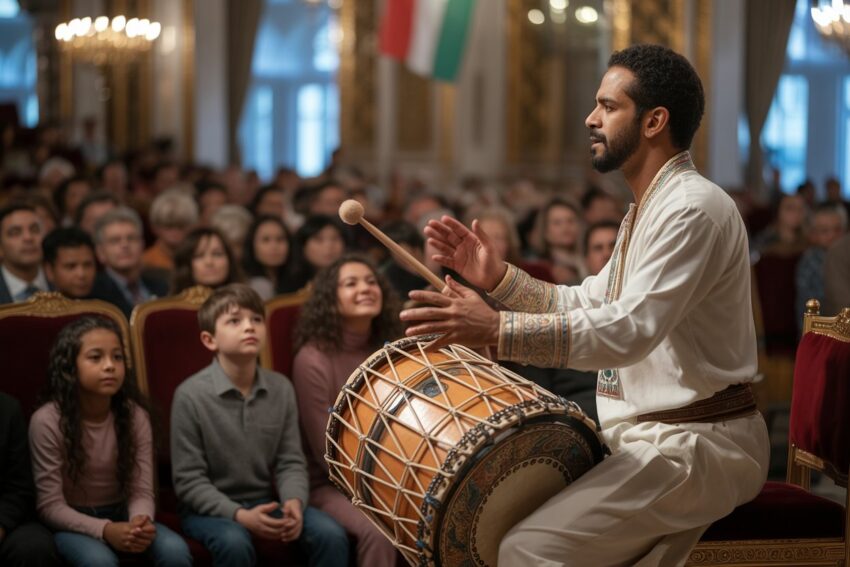

In the heart of Moscow, far from the sun-drenched banks of the Nile, a different kind of warmth is spreading. It isn’t the heat of the Egyptian sun, but the resonant, grounding beat of the Al Tabla—the iconic Egyptian hand drum. This rhythmic pulse is the centerpiece of a sophisticated new cultural initiative by the Egyptian Embassy in Moscow, designed to bridge the distance between two nations through the universal languages of music and travel.
As global tourism evolves, countries are looking beyond traditional sightseeing to “experience-based” travel. The Egyptian Embassy’s latest push is a masterclass in this shift, proving that cultural heritage isn’t just something you see in a museum; it’s something you feel in your chest.
The Beat of the Heart: Traditional Percussion as a Bridge
A recent report by TV BRICS highlighted a series of vibrant events organized by the embassy to showcase the soul of Egypt. One of the standout activities was a musical evening dedicated entirely to Egyptian percussion. While the Pyramids and the Sphinx are the faces of Egypt, the Al Tabla is its heartbeat.
Hamdy Shaaban, Egypt’s Ambassador to Russia, noted that these musical evenings are part of a broader, strategic initiative. In cooperation with various Russian cultural institutions, the embassy is using performance art to create an emotional connection with Russian audiences. By focusing on the rhythm and energy of Egyptian music, they are inviting Russians to experience the “spirit” of the country before they even book a flight.
Fostering the Next Generation: Education and Curiosity
Cultural diplomacy is most effective when it plants seeds for the future. Ilya Gafershin, Deputy Director of the Russian State Children’s Library, has observed a remarkable trend: a growing fascination among Russian children with ancient Egyptian civilization.
It’s no longer just about looking at pictures of mummies. Through modern, engaging educational tools, Russian youth are diving into the ancient Egyptian language and Arabic. This curiosity is being nurtured by the embassy and Russian libraries, ensuring that the bond between the two nations remains strong for generations to come. When a child learns the rhythm of an Egyptian drum or the basics of a new language, they aren’t just gaining a skill; they are building a lifelong interest in a foreign land.
From Moscow to Luxor: The Rise of Family Tourism
The numbers tell a compelling story of success. Last year alone, approximately two million Russian citizens visited Egypt. What is particularly notable is that nearly half of these travelers were families with children.
Egypt has long been a favorite for Russian sun-seekers, but the embassy is working to ensure these visitors see more than just the beaches of Hurghada or Sharm El-Sheikh. Mohamed El-Sergany, Egypt’s Cultural Counselor in Russia, explained that new initiatives are explicitly linking tourism with culture.
One of the most exciting developments is a new camp program for Russian schoolchildren. These programs take students on a journey through the “real” Egypt. They spend several days traveling between the bustling streets of Cairo and the majestic southern cities of Aswan and Luxor. Here, history isn’t something they read about in a textbook; it’s the towering pillars of Karnak Temple and the serene waters of the Nile.
A Shared Commitment to Culture
The success of these programs is rooted in a deep mutual respect between Egypt and Russia. The collaboration between the Egyptian Ministries of Tourism, Culture, and Education and their Russian counterparts demonstrates a high-level commitment to cultural exchange.
This isn’t just about selling plane tickets. It’s about creating a “cultural corridor” where music, art, and history flow freely. By promoting the Al Tabla in Moscow, the embassy is essentially providing a soundtrack to the Egyptian experience. They are telling a story of a country that is ancient yet vibrant, traditional yet welcoming.
The Future of Music Tourism
As we look toward 2026 and beyond, “Music Tourism” is poised to become a significant draw for international travelers. People want to go where the music is; they want to experience the festivals, the street performers, and the local rhythms that define a culture.
The Egyptian Embassy in Moscow has recognized this potential early. By bringing the rhythms of Cairo to the halls of Moscow, they are sparking a desire for authentic exploration. For the two million Russians who visit Egypt annually, the trip is no longer just a holiday—it’s a homecoming to a culture they have already begun to love through the beat of a drum.
In a world that can sometimes feel divided, the resonance of a percussion instrument and the shared awe of an ancient temple provide a powerful reminder of our common humanity. Through the “Rhythms of the Nile,” Egypt and Russia are writing a new harmony together.
The post Rhythms of the Nile in Russia: How the Egyptian Embassy in Moscow is Redefining Music Tourism appeared first on Travel And Tour World.
