
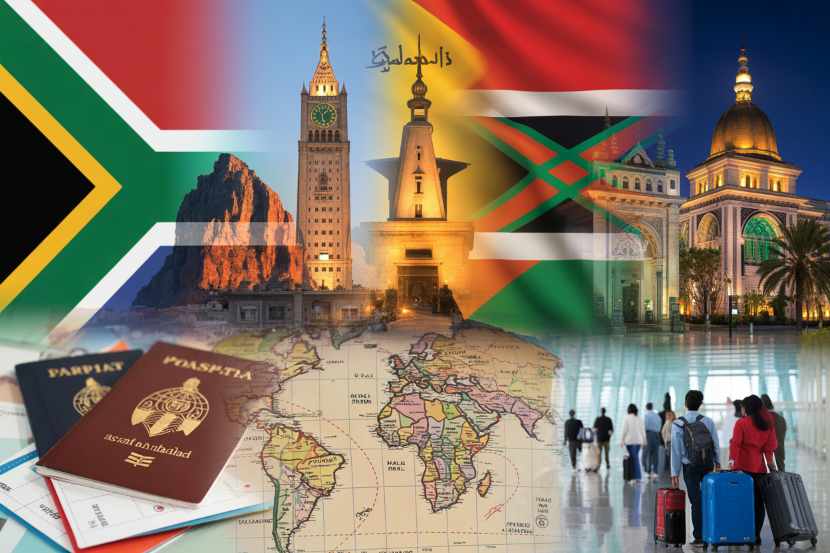

In 2026, South Africa has outperformed countries like Saudi Arabia, Thailand, Morocco, Tanzania, and Zambia in the global passport ranking. The South African passport now claims stronger travel freedom, offering access to one hundred and one destinations without the need for a visa. This marks a significant improvement, reflecting South Africa’s growing mobility power on the global stage. While countries such as Saudi Arabia and Thailand have long been considered powerful in terms of passport strength, South Africa’s rise in global rankings showcases its expanding diplomatic reach and enhanced travel opportunities. This progress places South Africa among the more competitive countries in terms of visa-free access, granting its citizens greater freedom to explore and conduct business worldwide. The rise of South Africa’s passport serves as a testament to its growing global influence.
What Does South Africa’s Ranking Mean for Its Global Mobility?
Being ranked 48th globally might not seem like a big deal at first glance. However, this middle-of-the-pack position places South Africa far behind countries like Japan, Singapore, and even South Korea, which dominate the rankings. These top passports offer access to 180+ destinations. In comparison, South Africa’s 101 destinations puts it at a considerable disadvantage, especially when its closest competitors, such as Brazil and India, are only a few positions ahead, each offering around 120 destinations.
A Glimpse into the Top Passports in 2026
To put things into perspective, the Henley Passport Index 2026 reveals that Singapore holds the top position, with access to a staggering 192 destinations without the need for a visa. Japan and South Korea come in second and third, respectively, with 189 and 187 visa-free destinations. These countries’ passports are often considered the most powerful globally.
While South Africa’s 101 destinations might sound impressive, it’s important to understand that countries like Germany, Sweden, and Finland are still well ahead of South Africa, boasting access to 190+ destinations. This global mobility gap highlights the intense competition in the global passport rankings and the reality that South Africa may not be keeping pace with the world’s leaders.
The Visa-Free Power: How Does South Africa Compare?
Let’s delve into how South Africa’s passport compares when it comes to visa-free access. South Africans can enjoy relatively easy access to many countries in Africa, South America, and parts of Asia and the Middle East. These are regions where South Africa’s mobility remains strong. The African continent, in particular, benefits from strong inter-country agreements that allow South Africans to travel without the need for a visa.
Visa-Free Access Within Africa
South Africa’s passport offers unrestricted mobility within Africa, granting visa-free access to countries like Kenya, Botswana, Tanzania, and Mauritius. This is vital for trade, tourism, and political relations within the continent. Additionally, countries like Zambia, Zimbabwe, and Namibia also allow South Africans to travel freely across their borders. This intra-Africa access is a significant advantage and a key aspect of South Africa’s passport power.
However, there are exceptions. South African passport holders are not granted visa-free access to all African countries. For instance, countries like Mauritania and Nigeria have recently tightened visa requirements, reducing the overall strength of South Africa’s African passport access.
Visa-Free Access to the Americas
In the Americas, South African passport holders have unrestricted access to Brazil, Argentina, and several smaller Caribbean nations. However, access to some parts of Central America and the Caribbean may still require a visa, making South Africa’s passport somewhat less attractive compared to top-ranking passports in this region.
Access to Asia and the Middle East
When it comes to Asia, South Africa enjoys visa-free or visa-on-arrival access to popular tourist destinations such as Thailand, Sri Lanka, and parts of the United Arab Emirates (UAE). In the Middle East, countries like Jordan and Qatar provide visa-on-arrival options. This access is particularly advantageous for business travellers, tourists, and those involved in regional diplomacy.
However, South Africa has lost access to a few critical countries, including Pakistan and Kosovo, which may limit travel options for certain South African passport holders who previously enjoyed easier access to these destinations.
Key Destinations South Africa Has Lost Access To
Despite still enjoying access to 101 destinations, South Africa has faced a decline in its global passport ranking primarily due to losing access to several important countries in 2026. Countries like Mauritania, Kosovo, Nigeria, and Pakistan have recently implemented stricter visa policies, making it harder for South African passport holders to enter without a visa.
The loss of access to these nations is a significant blow to South Africa’s overall visa-free score. For South African passport holders who regularly travel to these regions, this means additional time, money, and effort spent on visa applications.
A Global Trend of Diminishing Mobility
South Africa’s slip in the rankings mirrors a global trend in diminishing passport mobility for many countries. The number of visa-free destinations a country’s passport holds is constantly changing due to shifting diplomatic relations, economic policies, and security concerns.
In recent years, many countries have tightened their visa policies to address security and immigration concerns. For example, the European Union and the United States have increasingly become more selective about who can enter their countries visa-free.
Similarly, South Africa’s policy shifts—both internally and externally—may influence the number of countries it can access without a visa. South Africa’s future ranking may improve if it engages in new visa-waiver agreements, but it is essential to note that global diplomacy and international relations play a huge role in determining the strength of any passport.
What This Means for South African Travellers
For South African travellers, the 2026 Henley Passport Index highlights the importance of planning and being aware of changing visa requirements. While the country’s passport still holds significant power globally, travellers should prepare for the possibility of visa applications when visiting certain countries.
The overall mobility score of South Africa’s passport affects not only individual travellers but also the business landscape. Companies involved in international trade and business will need to consider visa processing times and the potential extra costs associated with stricter visa requirements.
Moreover, the tourism sector may also feel the effects of South Africa’s decreasing global mobility. While South Africa remains a popular destination for tourists, some international visitors may now face additional barriers to entry due to the country’s relative position on the passport index.
The Future of South Africa’s Passport: What’s Next?
As we look ahead to future years, South Africa’s global mobility will continue to evolve in response to diplomatic relations, economic agreements, and global security dynamics. The country can improve its passport power by engaging in new visa-waiver deals, strengthening regional alliances, and ensuring that visa restrictions do not disproportionately affect its ability to compete in the global mobility race.
Possible Improvements for South Africa’s Passport Power
• Expanding visa-free access to additional countries, particularly in the Middle East and Europe, could significantly boost South Africa’s position in the Henley Passport Index.
• Bilateral agreements between South Africa and Asia-Pacific countries would help South African passport holders enjoy more unrestricted travel.
• Enhancing regional partnerships within Southern Africa and Africa would also increase the number of countries South Africans can travel to without a visa.
Ultimately, South Africa’s passport is at a crossroads, and its ranking will likely be shaped by a series of strategic policy decisions. As global mobility becomes an increasingly competitive field, South Africa must continue to adapt and position itself as a player in this high-stakes international arena.
A Rising Star or a Falling Giant?
South Africa’s passport is still among the top in the world in terms of global mobility. However, as competition intensifies, the country’s relative position in the Henley Passport Index may continue to shift. With 101 destinations still accessible without a visa, South African passport holders continue to enjoy considerable global access. But with recent losses in visa-free destinations, there is a clear indication that South Africa’s passport power is facing new challenges.
For South African travellers, businesses, and policymakers alike, it’s essential to keep a close eye on how global diplomacy and visa policies continue to unfold. With the right strategic moves, South Africa could improve its passport power and ensure continued easy access to countries worldwide. However, it’s crucial to recognize that the global mobility landscape is always in flux, and South Africa’s future passport rankings will be shaped by its ongoing international relationships and efforts to secure visa-free agreements.

Saudi Arabia’s Passport in 2026: A Strong Contender with Growing Access
In 2026, Saudi Arabia holds a mid-tier position on the global passport index. Ranked around 57th to 54th, Saudi Arabian passport holders can visit 88 to 91 destinations visa-free or with a visa on arrival. This shows that while Saudi Arabia may not have the strongest passport in the world, it certainly has significant travel power, especially within the Middle East and parts of Asia and Africa.
Saudi Arabia’s mobility score has been improving due to increased diplomatic efforts. It now enjoys visa-free access to many countries in Africa and parts of Asia. For instance, countries like Mauritius, Kenya, and Jordan allow Saudi passport holders to visit without the need for a visa, making it easier for them to explore these regions.
However, Saudi Arabia still faces limitations when it comes to Europe and North America. Countries such as the United States and the Schengen Area typically require a visa for Saudi citizens. Despite this, Saudi Arabia is increasingly improving its global mobility as it strikes new diplomatic deals and visa-waiver agreements.
Saudi Arabia’s Strategic Growth in Visa-Free Access
The recent surge in Saudi Arabia’s visa-free access is linked to stronger international ties, particularly with Asian, African, and some European countries. As Saudi Arabia continues its efforts to enhance global mobility, its passport strength will only grow, benefiting its citizens and opening doors for international business, tourism, and travel.

Thailand’s Passport: Balancing Travel Freedom and Regional Strength
Thailand ranks slightly higher than Saudi Arabia, sitting around 53rd globally in 2026. With a mobility score of 94, Thai citizens can access 94 destinations visa-free or with a visa on arrival. This makes Thailand’s passport a strong contender, especially within the Southeast Asian region and other parts of Asia.
Visa-Free Access for Thai Passport Holders
Thai citizens enjoy visa-free access to destinations like Japan, South Korea, and Malaysia. In addition to visa-free destinations, Thailand offers visa-on-arrival options to countries such as Sri Lanka, Maldives, and Nepal. This gives Thai passport holders the flexibility to travel to a wide range of countries with relative ease.
However, Thailand’s passport is still far from the top. Western countries like the United States and countries in the European Union require a visa for Thai citizens. Thailand’s strong travel freedom is largely focused within Asia and the Pacific but is somewhat limited in accessing North America and parts of Europe.
Despite these limitations, Thailand is seeing a growing global presence, with easing visa policies in many countries. As Thailand continues to improve its international relations, the passport’s strength is expected to rise, allowing Thai citizens to travel more freely.

Morocco’s Passport: Moderate Access with Regional Power
Morocco holds a solid position with a global ranking of around 60th in 2026. The Moroccan passport offers visa-free access to 42 destinations, and additional visa‑on‑arrival or ETA options. This places Morocco in the moderate tier of global passports, with reasonable access to Europe and Africa.
Morocco’s Mobility Across Africa and Europe
Morocco’s passport strength is notable in Africa, where Moroccan citizens can travel visa-free to countries like Tunisia, Egypt, and Mauritius. Additionally, Europe is a major region of access for Morocco. France, Spain, and other European nations provide visa-free travel for Moroccan passport holders. However, these travel freedoms are not universal, and Northern Europe and Eastern Europe sometimes impose more stringent visa requirements.
While Morocco’s global mobility score is less impressive than Thailand and Saudi Arabia, its strategic position in the Mediterranean and its growing connections with Europe make it an important player in the region. Tourism is one area where Morocco is benefiting from increased global mobility, making it an attractive travel destination for international tourists.
Morocco’s Path to Global Mobility
As Morocco strengthens its ties with European Union countries, it may gain easier access to other EU member states in the future. The country’s passport could continue to improve as the demand for visa-free agreements grows in the coming years, especially in the Middle East and parts of Asia.

Tanzania’s Passport: Emerging Power in East Africa
Tanzania offers moderate global mobility with a global ranking around 69th and visa-free access to 71 destinations in 2026. While not at the top of the Henley Passport Index, Tanzania is making significant strides in improving its passport strength.
Visa-Free Access and Regional Influence
Tanzanian passport holders enjoy visa-free or visa-on-arrival access to countries in Africa, such as Zambia, Kenya, and Uganda. Tanzania has growing links within East Africa, allowing its citizens to travel freely across the region. Additionally, Tanzanians can enter certain Middle Eastern countries without a visa, and there are growing tourism opportunities in the region.
While Tanzania is a rising star in East Africa, its passport still faces limitations in Europe and North America. Tanzanians often need to secure visas to travel to major Western destinations. However, Tanzania’s recent growth in terms of regional agreements and tourism expansion is contributing to a stronger passport with more access to Asia and the Pacific.
Tanzania’s Passport Growth Potential
Tanzania’s passport power is expected to grow in the coming years as the country works on expanding its diplomatic relationships across Africa and beyond. Stronger regional agreements could enhance Tanzania’s mobility, making it easier for citizens to travel globally.

Zambia’s Passport: Slowly Gaining Ground in Global Mobility
Zambia, with a global ranking of around 73rd, offers visa-free access to 66 destinations as of 2026. This gives Zambian passport holders modest travel freedom, particularly in Southern Africa and other regions like the Middle East and parts of Asia.
Access Across Africa and Beyond
Zambian citizens enjoy visa-free access to several African nations, such as Botswana, Zimbabwe, and Namibia. The passport also provides visa-on-arrival access to countries like Thailand and the Maldives, broadening opportunities for Zambians to travel outside Africa. However, access to countries in Europe and North America remains more restrictive, as these regions usually require Zambians to apply for a visa.
Zambia’s Potential for Future Mobility
Zambia’s passport is still in the development phase, but its access to visa‑on‑arrival destinations and growing regional relationships places it on an upward trajectory. Diplomatic agreements with neighbouring countries could improve Zambia’s position on the Henley Passport Index, giving its citizens more travel freedom in the future.
A New Era of Global Mobility for Saudi Arabia, Thailand, Morocco, Tanzania, and Zambia
As we move into 2026, the passports of Saudi Arabia, Thailand, Morocco, Tanzania, and Zambia each offer distinct levels of global mobility, with a mix of visa-free and visa-on-arrival access. These countries are rising stars in the world of travel, each improving its passport strength through regional agreements, tourism partnerships, and diplomatic efforts.
For Saudi Arabia, the future looks bright as the kingdom strengthens ties with Asia, Africa, and parts of Europe, opening doors for more travel opportunities. Thailand and Morocco maintain strong regional access, while Tanzania and Zambia are emerging as important players in East and Southern Africa, with growing access to new travel destinations.
These countries’ citizens enjoy the freedom to explore a variety of regions, and as these nations continue to expand their global mobility, they will find new doors opening for business, leisure, and international collaboration.
By securing more visa-free agreements and diplomatic partnerships, the passports of Saudi Arabia, Thailand, Morocco, Tanzania, and Zambia are set to become even stronger contenders in the world of global travel freedom.
The post South Africa Beats Saudi Arabia, Thailand, Morocco, Tanzania, Zambia in Global Passport Ranking for 2026 Claiming Stronger Travel Freedom with Access to One Hundred and One Destinations and Rising Mobility Power appeared first on Travel And Tour World.
